India's Bold Bid to Become a Global Semiconductor Powerhouse
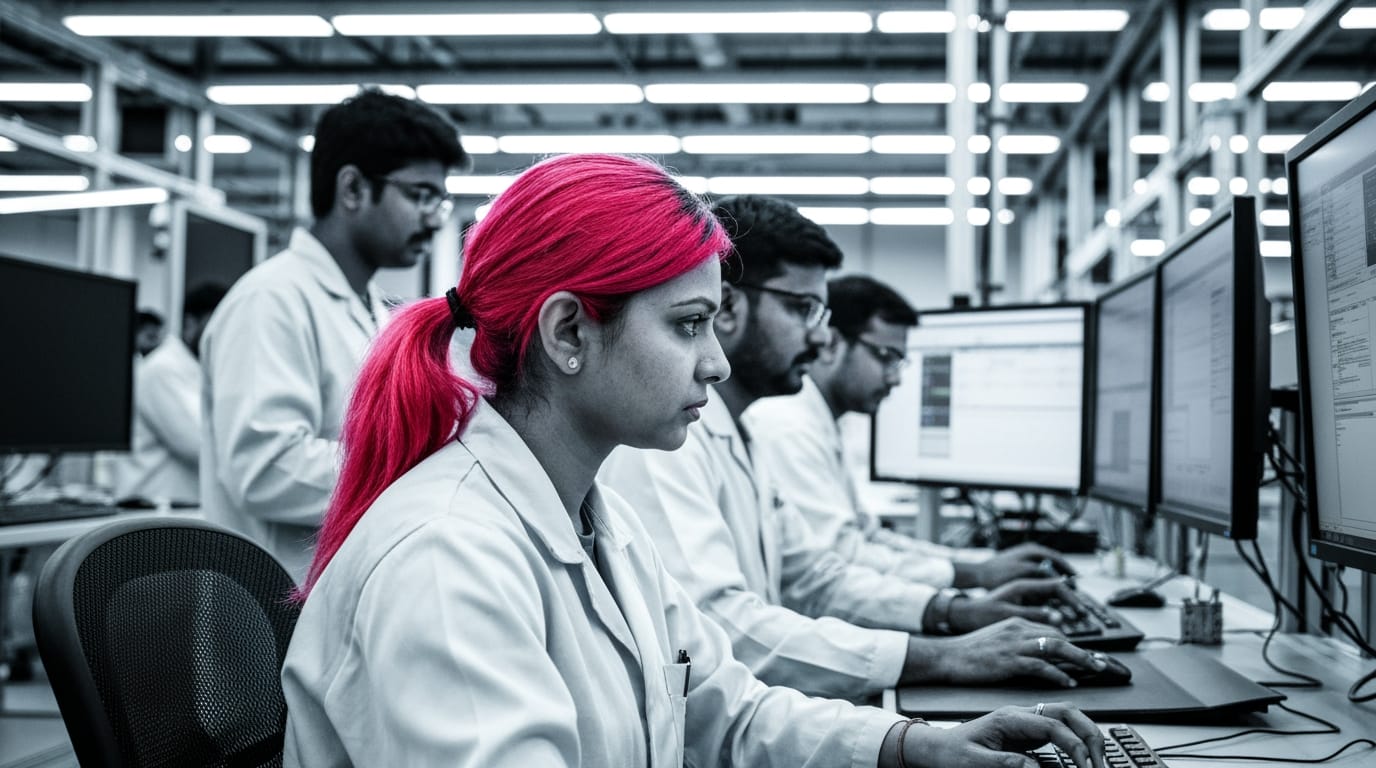
New Delhi, India – In a strategic pivot that could reshape the global technology landscape, India is making an aggressive push to establish itself as a major hub for semiconductor manufacturing. Driven by geopolitical shifts, the imperative for supply chain resilience, and a rapidly expanding domestic electronics market, the nation is channeling substantial financial incentives and policy reforms to attract leading chipmakers and cultivate a robust indigenous semiconductor ecosystem. This ambitious undertaking, spearheaded by the India Semiconductor Mission (ISM), aims to transition India from a significant chip consumer and design talent pool to a formidable player in the production of these critical components, essential for everything from smartphones to advanced defense systems.
The Global Chip Race and India's Strategic Imperative
Semiconductors are the bedrock of modern technology, underpinning virtually every electronic device and digital system. The global semiconductor industry, projected to exceed $1 trillion by 2030, has long been concentrated in a few key regions, making supply chains vulnerable to disruptions, as starkly highlighted during the recent global chip shortages. This concentration has spurred nations worldwide to re-evaluate their reliance on external sources and invest heavily in domestic manufacturing capabilities. India's foray into this high-stakes arena is motivated by a desire to reduce its substantial import dependence, which currently sees it importing over 80% of its semiconductor requirements, primarily from East Asian countries. Beyond economic considerations, building a domestic semiconductor industry is viewed as a strategic imperative for national security, technological sovereignty, and fostering economic growth across various sectors, including electric vehicles, telecommunications, artificial intelligence hardware, and defense.
Historically, India has been a strong player in semiconductor design, boasting approximately 20% of the world's chip design engineers. However, manufacturing has remained an elusive goal since a 1989 fire disrupted its nascent fabrication capabilities. Now, with renewed vigor and a comprehensive strategy, India is attempting to bridge this gap, transforming policy intent into concrete factory-floor execution.
Unprecedented Incentives Fueling the Mission
At the core of India's semiconductor ambition is the India Semiconductor Mission (ISM), established in December 2021 with an initial outlay of approximately ₹76,000 crore (around $10 billion). ISM acts as the nodal agency under the Ministry of Electronics and Information Technology (MeitY), offering significant fiscal support and incentives to attract investments across the semiconductor value chain.
Under the ISM, the government provides up to 50% fiscal support for approved projects, covering fabrication plants (fabs), Outsourced Semiconductor Assembly and Test (OSAT) facilities, compound semiconductor units, and display manufacturing facilities. This makes it one of the most generous incentive programs globally. The program permits 100% Foreign Direct Investment (FDI) through the automatic route, further streamlining investment pathways.
Building on the initial phase, the Indian government approved Semicon 2.0 with a substantial budget outlay of ₹1.275 trillion (approximately $13.23 billion) in July 2026. This expanded program broadens support beyond attracting chip manufacturers to encompass the entire semiconductor ecosystem. Semicon 2.0 focuses on six key pillars: chip design, semiconductor equipment and materials, new fabrication plants, strengthening the Assembly, Testing, Marking and Packaging (ATMP)/OSAT industry, research and development, and talent development. This holistic approach aims to build indigenous capabilities, reduce import dependence, strengthen supply chain resilience, and encourage innovation-led manufacturing.
Groundbreaking Investments and Emerging Clusters
The financial incentives and policy clarity have already started yielding tangible results. As of May 2026, 13 semiconductor projects have been approved or are under development across seven states under ISM and the Scheme for Promotion of Manufacturing of Electronic Components and Semiconductors (SPECS). Three facilities have commenced commercial production, while two others are expected to begin by year-end.
Key projects highlight the breadth of India's ambition:
- Micron Technology's ATMP Facility: Prime Minister Narendra Modi inaugurated Micron Technology's Semiconductor Assembly, Test and Packaging (ATMP) facility in Sanand, Gujarat, in July 2026. This facility has already commenced commercial production and shipment of "made-in-India" semiconductor memory modules, marking a significant milestone.
- Tata-PSMC Fab: The Tata-PSMC fab in Dholera, Gujarat, represents a significant investment of ₹91,000 crore (approximately $10 billion) and is among the 10 approved projects totaling ₹1.6 trillion in investment.
- SiCSem Private Limited: India's first commercial silicon-carbide (SiC) wafer fab is being set up in Bhubaneswar, Odisha, to produce high-quality SiC wafers crucial for electric vehicles and clean energy applications.
- Other ATMP/OSAT Facilities: Beyond Micron, other ATMP/OSAT facilities like Kaynes Semicon and CG Power OSAT have also commenced commercial production, further solidifying India's backend processing capabilities.
These investments are leading to the formation of distinct regional semiconductor clusters, not necessarily in traditional metropolitan areas but in emerging industrial powerhouses. Gujarat and Karnataka, for instance, have implemented targeted semiconductor policies to strengthen their competitive positions. Bengaluru, often dubbed the "Silicon Valley of India," continues to be a hub for design and R&D, with global players like AMD and NXP establishing large design centers.
Navigating the Hurdles and Headwinds
Despite the enthusiastic push, India's journey to becoming a semiconductor hub faces significant challenges. The capital-intensive nature of chip manufacturing, with fab plants often requiring $5-10 billion or more, presents high entry barriers. Beyond the initial investment, a sophisticated and reliable infrastructure is paramount. Semiconductor manufacturing demands uninterrupted high-voltage power, large volumes of ultrapure water, and stringent cleanroom environments, which remain inadequate in many parts of India.
A critical challenge is the significant shortage of specialized talent. While India produces approximately 600,000 electronics-related engineering graduates annually, only a small fraction possess the highly specialized skills required for fabrication, advanced packaging, and precision equipment maintenance. Industry estimates project a shortfall of 250,000–300,000 skilled professionals by 2027, highlighting a substantial talent gap that needs addressing through focused skill development programs. Initiatives like the India Semiconductor Workforce Development Program (ISWDP), a collaboration between IISc, Synopsys, and Samsung Semiconductor India Research, are working to bridge this gap by offering specialized training.
Furthermore, India currently lacks domestic production capabilities for essential semiconductor inputs, such as high-purity chemicals, specialty gases, and silicon wafers, relying on imports for over 90% of these materials. This reliance increases costs, lengthens lead times, and exposes Indian projects to global supply shocks. India also faces intense competition from well-established semiconductor hubs like China, Singapore, Malaysia, South Korea, and Taiwan, which have decades of experience and deeply entrenched ecosystems.
A Long-Term Vision with Global Implications
India's ambition to become a semiconductor hub is not merely about domestic production; it is about strategically positioning itself within the global technology order. The Semicon 2.0 program, by focusing on ecosystem development rather than just chip manufacturing, acknowledges the intricate and extensive global supply chain involved in the semiconductor industry. By building capabilities across design, materials, equipment, and advanced packaging, India aims to reduce its vulnerability and contribute to a more diversified and resilient global supply chain.
The robust domestic semiconductor market, valued at approximately $38 billion in 2023, is projected to reach $100–110 billion by 2030, underscoring the significant demand driving these efforts. The government's willingness to invest alongside venture capital firms and take equity stakes in chip startups, as announced under Semicon 2.0, demonstrates a long-term commitment to nurturing indigenous innovation and addressing the inherent risks of this capital-intensive sector.
While the path is fraught with challenges, India's strategic vision, coupled with significant financial commitments and a burgeoning talent pool in design, suggests a determined effort to overcome historical impediments. The early successes in ATMP facilities and the ongoing development of fabrication plants indicate a tangible shift from aspiration to execution. If India can effectively address its infrastructure deficits, cultivate a highly specialized workforce, and integrate seamlessly into the global semiconductor supply chain, it has the potential to emerge as a trusted and competitive global hub, playing a pivotal role in shaping the future of technology.


