India's 'Cockroach Janta Party' Swarms Online, Reflecting Youth Discontent
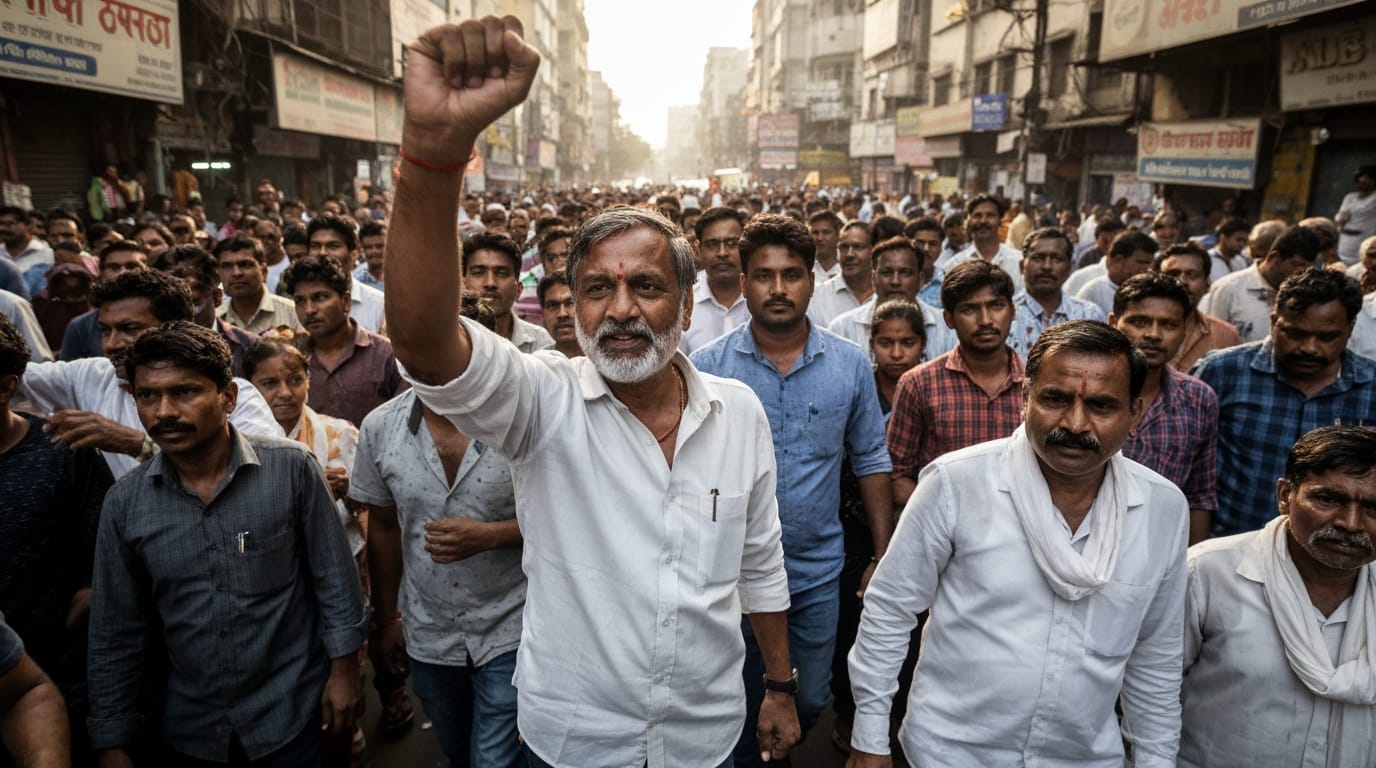
NEW DELHI – A satirical online movement, dubbed the "Cockroach Janta Party" (CJP), has rapidly swept across India's digital landscape, drawing millions of followers and sparking widespread debate about political satire, youth frustration, and the power of social media to galvanize public sentiment. What began as a pointed response to a judicial remark has quickly evolved into a significant online phenomenon, highlighting deep-seated grievances among a segment of the Indian populace, particularly its youth.
The movement's unexpected genesis dates back to May 15, 2026, when Chief Justice of India Surya Kant, during an open court hearing, delivered remarks that would soon ignite a social media firestorm. Speaking on a case concerning fraudulent professional credentials, Justice Kant described "parasites" attacking the system and equated young individuals who are unemployed or lack professional standing to "cockroaches." He further suggested some might become media personnel, social media activists, or RTI activists, "attacking everyone". These comments swiftly provoked considerable ire online, especially among young people, journalists, and activists who perceived the remarks as demeaning and insulting. Although Justice Kant later clarified that his comments were aimed at those acquiring fraudulent degrees and not India's youth in general, whom he called "the pillars of a developed India," the initial statement had already set a viral chain of events in motion.
In the immediate aftermath of Justice Kant's controversial statement, Abhijeet Dipke, a 30-year-old digital media strategist with a background in public relations and prior experience in the Aam Aadmi Party's social media team, seized the moment. On May 16, Dipke posted a Google Form-based invitation on the social media platform X, asking, "What if all cockroaches come together?" This question served as the rallying cry for what he described as a platform for the "lazy and unemployed". Thus, the "Cockroach Janta Party" was born. The name itself is a deliberate play on the ruling Bharatiya Janata Party (BJP), employing satire as its primary tool for expression. Supporters have embraced the term "cockroach," transforming it from a derogatory label into a symbol of survival and resilience against challenging conditions. The CJP's quirky slogan, "Secular, Socialist, Democratic, Lazy," further encapsulates its satirical and self-aware identity.
The digital uptake of the Cockroach Janta Party has been nothing short of explosive. Within days of its inception, the movement garnered massive online attention, with reports indicating over 40,000 members joined within the first two days. The movement’s Instagram page reportedly accumulated 3.7 million followers, crossing the 3 million mark in just three days, while its X account quickly amassed tens of thousands of followers. Over 100,000 individuals are reported to have signed up for the party's membership, including political figures like Mahua Moitra and Kirti Azad, who joined the online conversation. This rapid ascent is largely attributed to the CJP's strategic use of humor, relatable memes, and sarcastic commentary on politics and bureaucracy, resonating particularly strongly with younger internet users. Its bio describes itself as "a political front of the youth, by the youth, for the youth," underscoring its youth-centric positioning.
Beyond its satirical veneer, the Cockroach Janta Party articulates a clear set of grievances that resonate with a significant portion of India's youth. The movement portrays itself as a voice for frustrated young Indians contending with pressing issues such as unemployment, rising living costs, and perceived corruption. It also highlights anxieties around exam scandals, precarious work conditions, cyberbullying, and a growing sense of alienation from traditional institutions. The CJP's reported five-point manifesto focuses squarely on these critical issues: inflation, employment, corruption, governance, and accountability. Senior advocate Prashant Bhushan noted that the movement reflects the frustration among millions of young Indians seeking change within the existing political system, suggesting that its popularity stems from its ability to convert widespread frustration into humor.
The viral surge of the Cockroach Janta Party has initiated a broader conversation about its potential long-term implications. While some observers view it as a transient online trend, others speculate whether it could evolve into a more substantive political force. Critics have voiced concerns that the movement, despite its engagement, might inadvertently reduce serious political issues to mere internet entertainment. However, the movement's sudden popularity undeniably underscores how rapidly public dissatisfaction and political humor can spread in the digital age. As social media continues to play an increasingly influential role in Indian politics, campaigns like the CJP might become more common, serving as barometers of public sentiment. The CJP has certainly triggered debates about politics, governance, public frustration, and the burgeoning meme culture within India's political discourse, cementing its place, for now, as one of the internet's most discussed trends in the nation.
Ultimately, the Cockroach Janta Party stands as a testament to the evolving dynamics of political expression in modern India. Born from a controversial comment and fueled by the collective frustration of a generation, it demonstrates the potent capacity of online platforms to amplify voices and challenge narratives. Whether it remains a powerful symbol of satirical dissent or morphs into something more, its rapid ascent signifies a critical shift in how political grievances are articulated and consumed, particularly among the nation's digitally savvy youth.


