India's "Cockroach" Movement Pivots to Government Schools, Demanding Fundamental Educational Reform
NEW DELHI – A youth-led movement that began as a satirical protest against perceived government indifference has now sharpened its focus on the crumbling foundations of India's public education system. Dubbed the "Cockroach" movement, after a dismissive remark by a top judicial official, this dynamic force has transitioned from successfully challenging national exam irregularities to launching a widespread campaign to overhaul government schools across the country. Their 'School Thik Karo' (Fix the Schools) initiative is bringing critical issues like dilapidated infrastructure, teacher shortages, and sub-standard learning environments to the forefront of national discourse, aiming to ignite systemic change from the ground up.
The Genesis of a Generation's Uprising
The "Cockroach" movement, officially known as the Cockroach Janta Party (CJP), emerged on May 16, 2026, as a direct, satirical response to Chief Justice of India Surya Kant. On May 15, 2026, Kant had controversially characterized certain activists and unemployed youth as "cockroaches" and "parasites of society" during a public hearing. Abhijeet Dipke, a political communications strategist, swiftly reclaimed the derogatory term, founding the CJP as a symbol of youth defiance and collective identity. The name itself, a wordplay parodying India's ruling Bharatiya Janata Party (BJP), quickly resonated with a disaffected Generation Z, frustrated by widespread political and economic discontent.
What began as an online phenomenon rapidly transformed into a powerful grassroots movement. Within days of its launch, the CJP garnered millions of followers across social media platforms, often surpassing the digital reach of established political parties. This initial online momentum quickly translated into tangible action, drawing thousands into protests in major cities like Delhi. The movement's ability to mobilize and amplify its message showcased the potent blend of digital activism and traditional street protests in contemporary India.
From Exam Leaks to Broad Educational Demands
The immediate catalyst for the CJP's initial wave of protests was the widespread outrage over irregularities in entrance examinations for undergraduate biomedical studies. Reports of question paper leaks led to the cancellation of exams that millions of students had already taken, sparking a national outcry over the integrity of the education system. Activists highlighted the severe human cost, linking these examination failures to a rise in student suicides, with over 20 such deaths reported, according to the Times of India.
The "Cockroaches" swiftly articulated specific demands, including the ouster of the then Education Minister, increased penalties for those responsible for leaking test materials, and financial compensation for students affected by the voided exams. The sustained pressure culminated in a significant victory for the movement: on July 25, 2026, Education Minister Dharmendra Pradhan resigned, marking a rare setback for the government and validating the CJP's influence. This success broadened the movement's scope, transitioning from specific grievances to a more comprehensive call for accountability and systemic reforms within India's education sector.
'School Thik Karo': A Battle for Basic Education
Following its initial triumph, the "Cockroach" movement has strategically pivoted to address a more fundamental challenge: the pervasive issues plaguing India's government schools. Under the banner of 'School Thik Karo' (Fix the Schools), the CJP, spearheaded by founder Abhijeet Dipke, launched a campaign aimed at improving the dilapidated condition of public educational institutions. Dipke initiated this drive from his native village in Hingoli, Maharashtra, symbolizing a ground-up approach to reform.
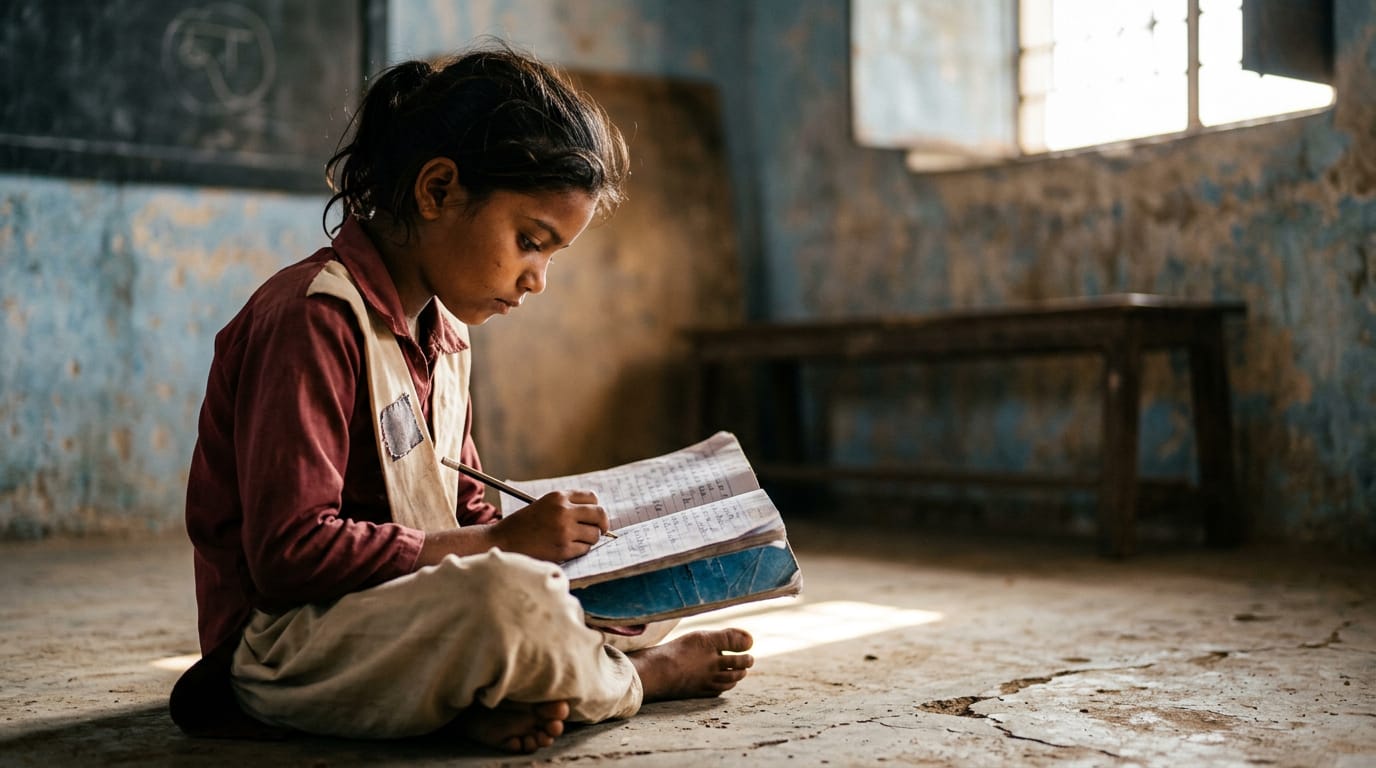
The movement's current focus highlights critical deficiencies that hinder effective learning in government schools, particularly in rural and underserved areas. These include:
- Infrastructure Deficits: A significant percentage of government schools still lack basic amenities. Approximately 13.8% do not have functional toilets, 15.6% are without electricity, and nearly 44% lack internet access. In rural areas, 27% of school buildings are partially damaged, and many suffer from inadequate classrooms, lack of clean drinking water, and poor ventilation.
- Teacher Shortages and Quality: The system grapples with a severe shortage of qualified educators, with over 1.1 million sanctioned teacher posts remaining vacant across the country. High student-teacher ratios and the prevalence of single-teacher schools, especially in remote regions, further compromise instructional quality.
- Outdated Curricula and Resources: Many government schools operate with outdated curricula, limited access to modern technology, and a general lack of resources, putting them at a disadvantage compared to private institutions.
- Systemic Corruption: Allegations of corruption, even in essential programs like mid-day meals, continue to undermine public trust and divert resources.
The 'School Thik Karo' campaign is not merely about identifying problems but actively seeking solutions. Local actions, such as demanding the suspension of a principal in Limbala village after repeated complaints and facilitating the delivery of the first-ever computer to a Hingoli government school, underscore the movement's commitment to tangible change.
Systemic Challenges and the Human Cost
India boasts one of the world's largest school systems, educating over 248 million students across 1.47 million schools. Government schools remain a vital educational pipeline for millions, particularly from marginalized socioeconomic backgrounds. However, beneath these impressive figures lies a complex web of challenges that deeply impact learning outcomes and student well-being.
The persistent issues in government schools contribute to a "learning crisis" where, according to the World Bank, India has a high percentage of Grade 2 students unable to perform basic subtraction or read simple text. The competitive pressure of India's education system, coupled with systemic mismanagement, has tragic consequences. The National Crime Records Bureau reported an alarming increase in student suicides, from 8,068 in 2014 to 14,488 in 2024, with examination failure often cited as a leading cause after family problems. This underscores the urgent need for comprehensive reforms that go beyond infrastructure to address pedagogical quality and student support.
The government's response to the CJP has been a mix of initial crackdowns, including arrests of young protesters, and more recently, attempts to engage with Gen Z's concerns. While some states initially restricted student participation in CJP-associated protests, these orders were later withdrawn following public criticism. The Supreme Court also intervened, ordering the release of arrested minors, though reports of police targeting social media accounts and filing cases against critics persist. Amidst this, the ruling party is reportedly revamping its strategy to connect with younger voters, recognizing the growing influence of movements like the CJP.
A Youthful Uprising and an Uncertain Future
The "Cockroach" movement represents a significant shift in India's political landscape, signaling the emergence of a highly engaged and vocal Generation Z. What began as a defiant embrace of an insult has evolved into a formidable force demanding accountability and fundamental change in critical sectors like education. The success in securing the Education Minister's resignation marked a turning point, demonstrating the collective power of youth activism.
With its 'School Thik Karo' campaign, the CJP is pushing for systemic improvements in government schools, tapping into a deep vein of public concern over educational equity and quality. The movement's ability to sustain momentum, translate online support into offline action, and articulate clear demands positions it as a vital voice for India's youth. While facing ongoing challenges, including potential government attempts to suppress or co-opt its message, the "Cockroach" movement has irrevocably altered the discourse around education in India, forcing a national reckoning with the state of its public institutions and the aspirations of its youngest citizens. Its future trajectory will undoubtedly shape the nation's educational policies and the engagement of its burgeoning youth population for years to come.