India's 'Cockroach' Movement Swarms Against Modi, Demanding Accountability
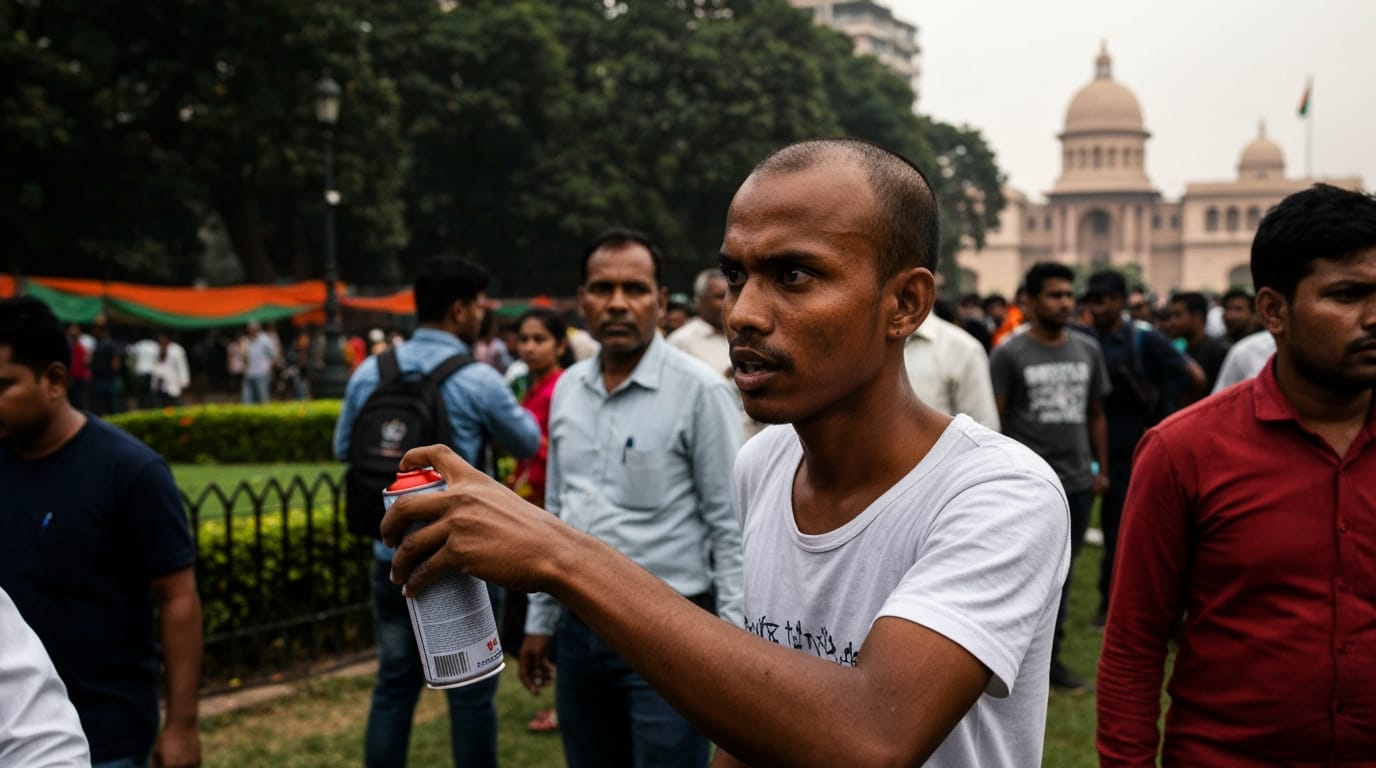
NEW DELHI – A potent youth-led movement, born from a judicial slight and fueled by simmering discontent over unemployment and educational corruption, has rapidly escalated into an unprecedented challenge to Prime Minister Narendra Modi's government. Dubbed the 'Cockroach Janata Party' (CJP), this initially satirical online phenomenon has spilled onto India's streets, mobilizing thousands and forcing a confrontation with authorities in the nation's capital. What began as a defiant embrace of an insult has evolved into a serious political force, compelling the Modi administration to contend with a new, vocal generation demanding systemic change.
The Genesis of a Resilient Rebellion
The 'Cockroach' movement sprang to life in May 2026, ignited by remarks from Chief Justice of India Surya Kant, who, during a Supreme Court hearing, compared some unemployed youth and activists to "cockroaches" and "parasites." This condescending comparison resonated deeply with a generation grappling with economic anxieties and a perceived lack of opportunities. Abhijeet Dipke, a 30-year-old Indian graduate recently returned from the United States, seized upon the Chief Justice's words, playfully querying on social media, "What if all the cockroaches unite?" The response was immediate and overwhelming.
Within days, Dipke launched the Cockroach Janata Party (CJP), a name deliberately chosen as a satirical jab at the ruling Bharatiya Janata Party (BJP). The CJP quickly amassed an unprecedented online following, with its Instagram page soaring past 22 million followers within two weeks, eclipsing the BJP's digital presence. The movement's online manifesto, mocking the establishment with a tagline, "A political party for the people the system forgot to count," provided a platform for millions of young Indians who felt neglected and unheard. This digital surge marked the rapid transformation of an online jest into a formidable collective expression of youthful frustration.
Unpacking the Core Grievances: Education, Unemployment, and Accountability
At the heart of the CJP's challenge lies a deep-seated anger over a perceived breakdown of institutional integrity, particularly within India's high-stakes education system. A primary catalyst for the movement's widespread support has been the series of alleged leaks in competitive examinations, most notably the National Eligibility cum Entrance Test (NEET) for medical college admissions. These leaks have shattered the aspirations of countless students and their families, many of whom invest significant financial resources into private coaching. The resulting retakes and perceived unfairness have fueled calls for the resignation of Education Minister Dharmendra Pradhan, with many holding him accountable for the repeated failures.
Beyond the immediate scandal of exam leaks, the CJP articulates broader concerns about rampant unemployment among India's youth, institutional corruption, and a lack of governmental accountability. Despite India's rapid economic growth, youth unemployment remains stubbornly high, with some reports indicating it could reach 40% among graduates. This economic anxiety, coupled with the systemic issues in the education sector, has created a fertile ground for dissent. The CJP's demands have expanded to include sweeping reforms to the examination system, compensation for families affected by suicides linked to exam pressures, and even a "right to employment" law. The movement represents a significant outcry from a generation feeling betrayed by a system they believe is rigged against them.
Confrontation on the Streets: Tactics and Crackdowns
The CJP's influence quickly transcended the digital realm, translating into tangible action on the ground. Recent weeks have witnessed thousands of CJP supporters taking to the streets, organizing protests and marches across various states, culminating in a major confrontation in New Delhi. On Monday, July 20, 2026, thousands attempted an unauthorized march to Parliament, leading to clashes with law enforcement. Police responded with tear gas and batons, attempting to disperse the demonstrators and imposing barricades, internet shutdowns, and restrictions on public gatherings. Despite these suppressive measures, protesters continued their demonstrations, vocalizing their anger at the Modi government.
A pivotal figure in the movement has been environmental activist Sonam Wangchuk, who joined the protests and embarked on a hunger strike, demanding the education minister's resignation. After 20 days without food, Wangchuk was forcibly removed by police and hospitalized due to deteriorating health, a move condemned by organizers who vowed to continue the fast. This incident, coupled with the police crackdowns, has only intensified the resolve of the CJP and its supporters, demonstrating the movement's resilience in the face of state opposition.
A Significant Challenge to the Establishment
The 'Cockroach' movement has emerged as one of the most unexpected and significant youth-led challenges to Prime Minister Modi's powerful right-wing government in years. While Modi and the BJP maintain a strong hold on power, having bounced back in state elections earlier this year despite losing an absolute majority in the 2024 parliamentary elections, the CJP represents a growing wave of disenchantment. Critics argue that the government has been intolerant of criticism, often suppressing protests and jailing activists. The BJP's chief, Nitin Nabhi, even accused the demonstrators of trying to "make the country hollow."
However, the movement's widespread support, especially among Gen Z, indicates a significant shift in the political landscape. The Modi government, which had largely dismissed the CJP, appeared to make its first official outreach on Monday when Health Minister J.P. Nadda met briefly with representatives of the movement. This engagement, though brief and without immediate commitments, signals that the government may be recognizing the growing pressure. The protests are also drawing international media attention, raising questions about India's democratic governance and potentially impacting its global image as a stable rising power. The CJP's ability to bypass traditional media, utilizing decentralized digital networks, has amplified its reach and impact.
Conclusion
The 'Cockroach' movement, born from an insult and nurtured by deep-seated frustrations, has transformed into a potent symbol of youth resistance in India. Its rapid ascent from an online satire to a nationwide protest movement underscores the profound impact of issues like unemployment, educational integrity, and governmental accountability on the younger generation. As the CJP continues to challenge the established order, its journey highlights the evolving dynamics of dissent in India and the persistent power of collective action, even in the face of state crackdowns. The coming weeks will determine whether this resilient movement can sustain its momentum and fundamentally alter the political discourse in India, compelling the government to address the grievances of its "forgotten" youth.


