India's "Cockroach" Protests Escalate, Government Engages in Critical Dialogue
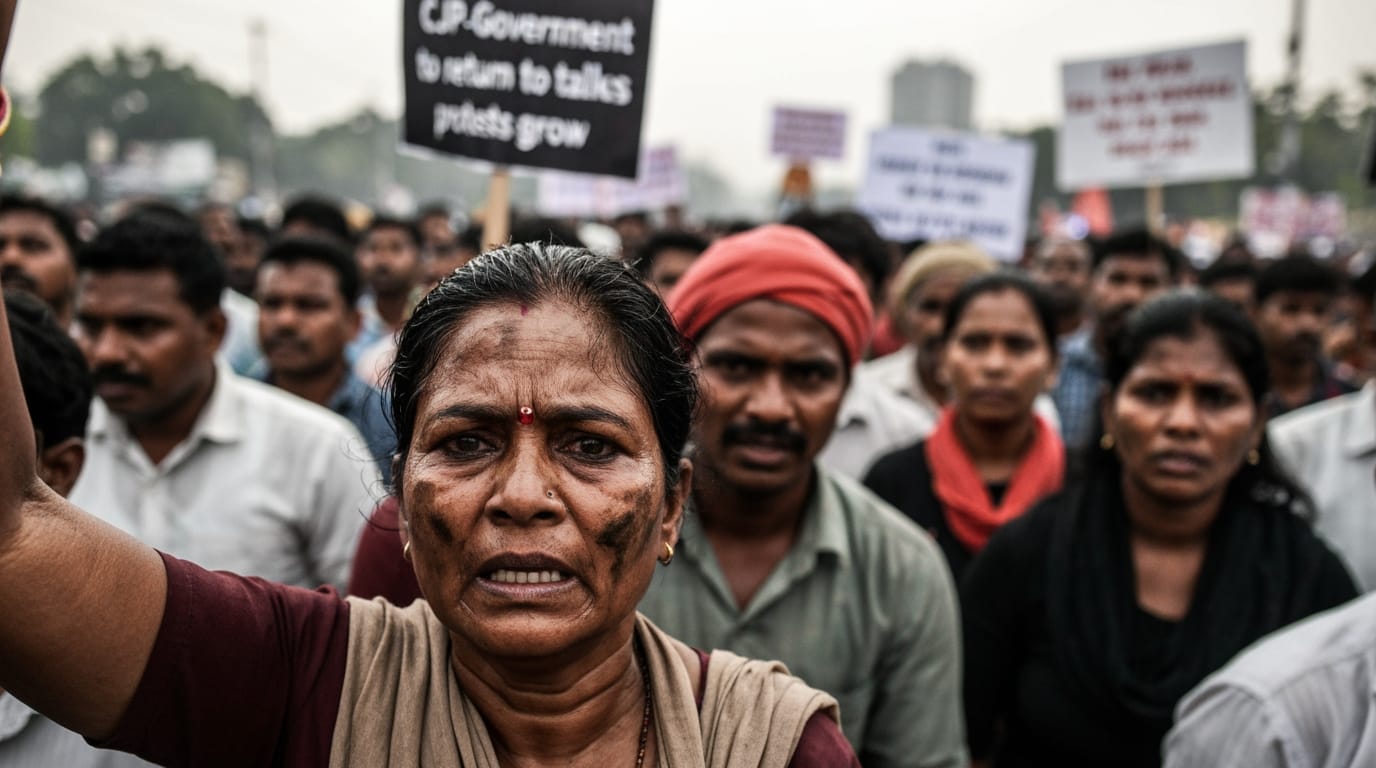
NEW DELHI – India finds itself at a pivotal juncture as nationwide protests, spearheaded by the youth-led Cockroach Janta Party (CJP), gain unprecedented momentum, compelling the government to engage in a series of high-stakes dialogues. The movement, born from public outrage over alleged national exam irregularities and the Chief Justice's controversial remarks, has coalesced into a significant challenge to the ruling establishment, pushing demands for accountability and comprehensive educational reform. With talks continuing, the nation watches closely to see if a resolution can be forged amidst escalating tensions and the unwavering resolve of a frustrated generation.
The Genesis of Discontent: From Insult to Insurgency
The Cockroach Janta Party (CJP) emerged as a satirical, yet potent, political force on May 16, 2026. Founded by Abhijeet Dipke, the movement was a direct response to reported comments by India's Chief Justice Surya Kant, who allegedly likened unemployed youth to "cockroaches" and "parasites" during a Supreme Court hearing. This perceived insult quickly galvanized a generation of discontented young Indians, transforming a derogatory term into a symbol of defiance. The CJP, whose name cleverly parodies the ruling Bharatiya Janata Party (BJP), swiftly amassed a vast online following, outstripping established political parties on platforms like Instagram.
The core grievance fueling this widespread mobilization is the alleged systemic corruption within India's highly competitive examination system. Millions of students have been directly affected by recurrent leaks of national entrance exams, most notably the National Eligibility cum Entrance Test (NEET) for undergraduate medical programs. These irregularities, compounded by a "botched school-grading system," have not only dashed the aspirations of countless students but have also been tragically linked to multiple student suicides across the country. The CJP articulates a broader critique of a political system it claims has failed India's youth, citing an education system in crisis and a job market struggling to absorb its graduates.
Protests Intensify as Demands Crystallize
As the CJP's influence grew, online activism spilled into the streets, transforming into mass protests across India. The movement's demands are clear and comprehensive, focusing primarily on accountability within the education sector. Foremost among these is the immediate resignation of Union Education Minister Dharmendra Pradhan. Protesters also call for substantial financial compensation, specifically ₹1 crore (approximately $104,000 USD), for the families of students who tragically died by suicide due to exam-related stress and corruption. Additionally, the CJP demands the swift withdrawal of all cases and First Information Reports (FIRs) filed against peaceful protesters and a written guarantee against future punitive actions for expressing dissent.
The growing scale and intensity of these demonstrations reached a flashpoint on July 20, 2026, when CJP-led protesters attempted to march towards the Indian Parliament. The march resulted in clashes with law enforcement, who reportedly deployed tear gas, batons, and even pellet guns to disperse the crowds. These actions led to numerous injuries and detentions, drawing condemnation from opposition leaders and human rights advocates. In response, the CJP announced plans to create a dedicated website to collect evidence and identify police personnel allegedly involved in the crackdown, vowing to pursue legal action against them. Solidarity protests have since erupted in major cities like Mumbai, Bengaluru, Patna, and Guwahati, underscoring the widespread nature of the discontent.
High-Profile Engagement and Lingering Sticking Points
The mounting pressure from the CJP movement and its allies has prompted a significant shift in the government's approach, moving from initial dismissal to direct engagement. After a period of government reluctance to meet with protesters at Jantar Mantar or ministerial residences, the CJP agreed to talks at a neutral venue. Formal discussions commenced on July 24, 2026, with the first round held at Vithal Patel House, followed by subsequent meetings at the Constitution Club of India in New Delhi. Union Ministers J.P. Nadda and Jitendra Singh have led the government's delegation, engaging with CJP representatives Saurav Das and Ashutosh Ranka.
During these critical talks, the government has reportedly shown willingness to concede on certain demands, including the withdrawal of legal cases against peaceful protesters and the provision of compensation to the families of students who died by suicide. Prime Minister Narendra Modi also broke his silence on the issue, releasing videos promising a stringent new law to combat exam malpractice, a move seen as an attempt to address the core grievance. However, the central demand for Education Minister Dharmendra Pradhan's resignation remains a significant sticking point, with the government requesting more time to consider this non-negotiable condition from the CJP.
Adding another layer of urgency to the situation was the 26-day hunger strike undertaken by renowned education reformer Sonam Wangchuk, in solidarity with the CJP. Wangchuk, who ended his fast after receiving assurances from the government and expressing concerns about potential crackdowns on student protesters, became a potent symbol of the movement's moral force. The Supreme Court has also been drawn into the unfolding crisis, agreeing to hear petitions regarding alleged police misconduct during the protests, highlighting the broad institutional impact of the movement.
A Nation Awaits: The Path Forward
As talks between the CJP and the Indian government continue into their third round on July 25, 2026, the future of this youth-led movement and its broader implications for Indian society hang in the balance. The CJP remains steadfast in its demand for Education Minister Pradhan's resignation, viewing it as the "strictest action" the government can take to demonstrate accountability.
The Cockroach Janta Party has not only galvanized a segment of the population previously perceived as disengaged but has also garnered significant support from opposition leaders, who have echoed the students' calls for justice and accountability. The ongoing dialogue, while a positive step toward de-escalation, is fraught with challenges. The government faces the delicate task of addressing the legitimate grievances of a generation while navigating the political repercussions of acceding to demands for ministerial resignations. The outcome of these discussions will undoubtedly shape the political landscape of India, determining the extent to which the voices of its youth can influence policy and governance in the world's largest democracy.


