India's "Cockroaches" Defy Parliament March Ban, Clash with Police in Escalating Youth Protest
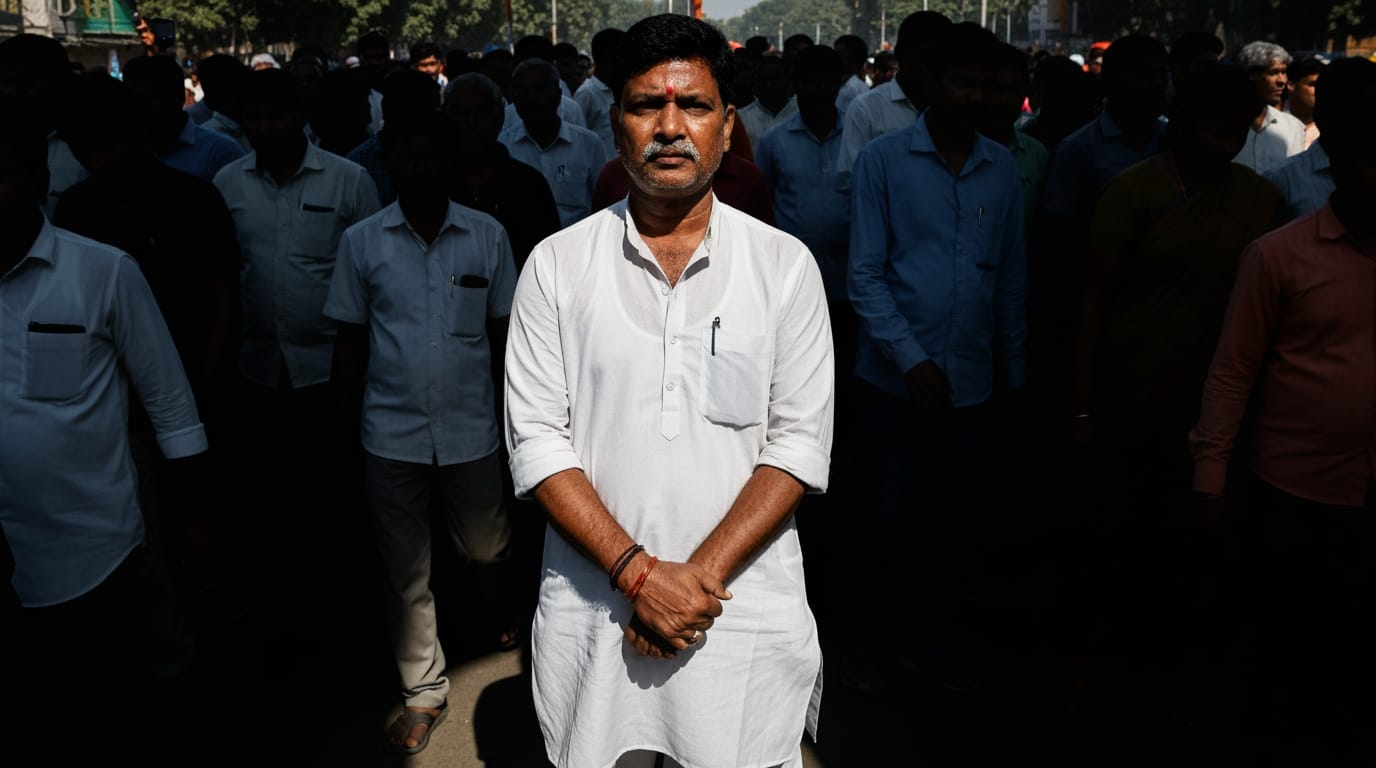
NEW DELHI – Thousands of young protesters, self-identifying as "Cockroaches," defied a police ban on Monday, July 20, 2026, attempting to march toward India's Parliament in New Delhi. The unauthorized demonstration, marked by clashes with security forces employing tear gas and batons, underscores a deepening crisis of youth frustration over systemic issues, primarily widespread examination paper leaks and high unemployment rates across the nation. This surge of activism, spearheaded by the Cockroach Janta Party (CJP), represents one of the most significant youth-led challenges to Prime Minister Narendra Modi's government in recent years.
The Genesis of a Mock Movement
The moniker "Cockroaches" originated in May 2026, following remarks by India's Chief Justice Surya Kant, who reportedly compared unemployed youth to "parasites" and "cockroaches" during a Supreme Court hearing. This perceived insult quickly galvanized a digital counter-movement. Abhijeet Dipke, a 30-year-old recent university graduate, responded by founding the Cockroach Janta Party (CJP) on May 16, 2026. What began as a satirical online platform, poking fun at the ruling Bharatiya Janata Party (BJP), rapidly evolved into a formidable political force. Within weeks, the CJP's Instagram page garnered over 22 million followers, surpassing the BJP's own social media reach and signaling the profound resonance of its message among disaffected youth. The CJP adopted a tagline: "A political party for the people the system forgot to count."
Unmasking Systemic Failures: Exam Leaks and Job Scarcity
At the heart of the CJP's burgeoning movement are deep-seated grievances surrounding India's education and employment systems. A primary catalyst has been the repeated leaks of high-stakes entrance examinations, most notably medical school entrance tests. These leaks have affected over 2 million students, necessitating retests and, tragically, being linked to multiple student suicides. Beyond medical admissions, similar irregularities have plagued entrance exams for government jobs, fueling widespread public anger and a perception of institutional corruption.
The protests extend beyond exam fraud, encompassing broader frustrations over rampant youth unemployment and a perceived lack of economic opportunities for India's vast young population. Protesters voice concerns about a lack of transparency, accountability, and technical failures within the examination system. The CJP's central demands include the immediate resignation of Education Minister Dharmendra Pradhan and comprehensive reforms to prevent future paper leaks and delays in results. Some protesters have also escalated their calls to include the resignation of Prime Minister Narendra Modi, framing the movement as "India's 2nd FREEDOM MOVEMENT."
Confrontation on the Capital's Streets
Despite police directives, the call for a march to Parliament on July 20, coinciding with the opening of Parliament's monsoon session, brought thousands of CJP supporters to New Delhi. Delhi police had explicitly denied permission for the march, citing strict security arrangements and existing prohibition orders on public gatherings in the New Delhi district.
Undeterred, a massive crowd, largely composed of students and members of Gen Z, filled the streets surrounding Jantar Mantar, a designated protest site. As demonstrators attempted to push past security barricades erected by the police and paramilitary forces, confrontations erupted. Police resorted to using tear gas and batons to disperse the advancing crowd, leading to chaotic scenes. Protesters vociferously chanted slogans such as "Quit, quit," demanding the resignation of Education Minister Pradhan and Prime Minister Modi. Many protesters, anticipating a long day, arrived with backpacks filled with water and food, signaling their resolve to continue the demonstration despite police action.
The Catalyst of a Hunger Strike
The movement gained significant momentum following the involvement of renowned engineer and education activist Sonam Wangchuk. Wangchuk commenced an indefinite hunger strike on June 28 at the protest site, demanding accountability for educational system failures. After 20 days without food, police forcibly moved Wangchuk to a government hospital on July 18, a move that further inflamed the protesters and galvanized broader support for the CJP.
From his hospital bed, Wangchuk issued a handwritten note, declaring his intent to continue his fast until the government acknowledged its accountability for the recent paper leaks and other systemic issues, or until CJP protesters were granted access to Parliament with assurances from lawmakers that their concerns would be addressed. Wangchuk's wife, Gitanjali Angmo, labeled his forced hospitalization an "illegal detention," citing the heavy police presence surrounding him. Authorities, however, maintained that his transfer was necessary for his health, with a Delhi court ruling the action legal. The CJP founder, Abhijeet Dipke, subsequently announced his own indefinite fast in solidarity.
An Unfolding Challenge to Power
The rise of the Cockroach Janta Party and the widespread youth protests it orchestrates represent a formidable and unexpected challenge to Prime Minister Modi's administration. The movement’s ability to transition from online satire to large-scale street demonstrations, mobilizing millions of young people across India, highlights a pervasive sense of disenchantment. While the government has attempted to contain the movement, including efforts to block CJP's social media accounts on national security grounds, the protests have continued to gain traction.
The CJP's resilience in the face of police action and its broad appeal across student and youth demographics underscore a critical moment in Indian politics. The ongoing protests reflect a broader trend of Gen Z activism seen across South Asia and globally, driven by demands for accountability and systemic change. As Parliament's monsoon session commences amidst these growing protests, the government faces increasing pressure to address the underlying issues of educational integrity and youth employment that have ignited the "Cockroach" movement. The resolve of these young protesters suggests that their voices, once dismissed, will continue to resonate loudly on the national stage until their demands are met.