India's Digital Ambition Collides with Growing Water Crisis
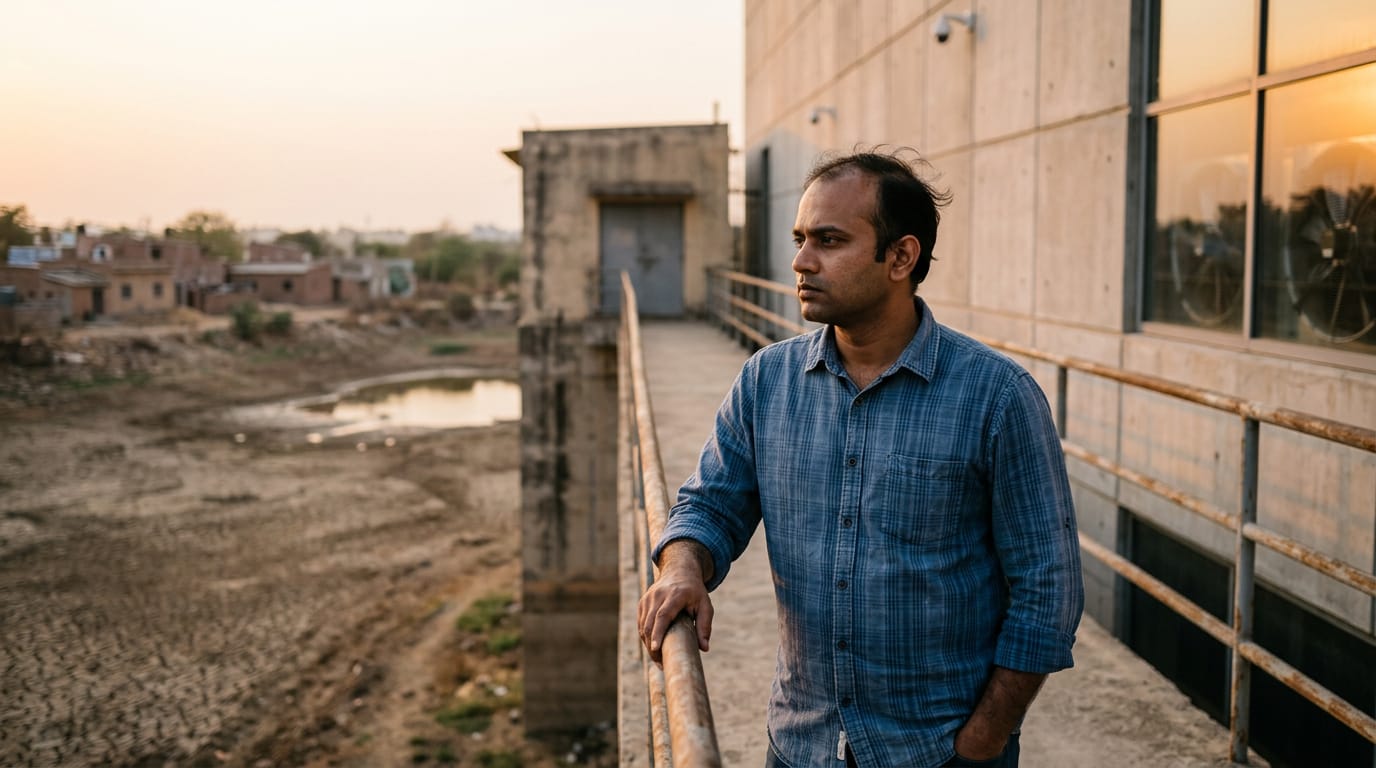
India's accelerating ascent as a global digital powerhouse is fueling an unprecedented boom in data center construction, yet this rapid expansion is increasingly clashing with the nation's severe and widespread water scarcity. The critical infrastructure underpinning the country's digitalization and artificial intelligence (AI) ambitions demands vast quantities of water, primarily for cooling, placing immense pressure on already strained freshwater resources and igniting concerns over environmental justice and equitable access.
The Digital Surge and its Engine Room
India is aggressively positioning itself as a global hub for data centers and AI, attracting significant investments from tech giants like Microsoft, Google, Amazon, and Meta. The nation's data center capacity has quadrupled from approximately 375 megawatts (MW) in 2020 to about 1,500 MW by 2025, with projections indicating a surge to as much as 13.56 gigawatts (GW) by 2031-32, and some estimates reaching 17 GW by 2030. This monumental growth is driven by increasing digitalization, cloud computing adoption, and the escalating demand for AI infrastructure. The Indian government has actively fostered this expansion, with the Prime Minister declaring an ambition for India to be the "back-end of the global AI economy" and offering incentives such as tax holidays and favorable policies in states like Andhra Pradesh, Uttar Pradesh, and Gujarat. These incentives include GST reimbursement, stamp duty exemptions, and support for establishing data center parks with essential infrastructure, including water availability. The economic promise is substantial, with the data center market projected to exceed $100 billion by next year.
The Thirst Beneath the Servers
The core of the conflict lies in the fundamental operational needs of data centers. Servers generate considerable heat, and to function optimally and prevent failures, they require continuous cooling. The dominant cooling method, particularly in many existing and planned facilities, is evaporative cooling, which involves shedding heat into the air as vapor, effectively removing water from the local watershed. AI workloads further intensify this demand, as the specialized chips used for training large language models run significantly hotter than conventional cloud hardware, making AI data centers even thirstier per square meter.
The statistics on water consumption are stark. India's data centers collectively consumed an estimated 150 billion liters of water in 2025. This figure is projected to more than double, reaching approximately 358 billion liters by 2030, according to various reports. To put this into perspective, a typical 100-megawatt (MW) hyperscale data center can consume around 2 million liters of water daily, equivalent to the annual water use of tens of thousands of households or approximately 6,500 households. Some estimations indicate that the electricity consumption of data centers had a water footprint of 4.5 trillion liters in 2025, enough to meet Chennai's water needs for 8.8 years, with projections to reach 9.3 trillion liters by 2030. This growing demand is set against a backdrop where India, home to 1.4 billion people, possesses only 4% of the world's freshwater resources and faces an ongoing crisis affecting hundreds of millions annually. The country already ranks 120th out of 122 countries for water quality, with nearly 600 million people experiencing high to extreme water stress.
A Regional Reckoning: Water Stress and Community Impact
The environmental and social implications are particularly acute because a significant portion of India's data centers are concentrated in already water-stressed regions. Major digital hubs such as Mumbai, Bengaluru, Chennai, Hyderabad, and Delhi-NCR, which are primary locations for data center development, are also areas grappling with acute water shortages and inequities. For example, Bengaluru's data centers alone consume over 26 million liters annually, even as the city experienced its "worst water crisis" in recent memory in 2024. Similarly, Hyderabad faces a projected water deficit, and Chennai endured a "Day Zero" event in 2019 when its reservoirs ran dry.
This geographical confluence of high water demand and low supply has led to public resistance. In Visakhapatnam, where Google and Adani are developing a 1GW AI hub, protests have erupted over concerns about the project's water requirements in a city that already experiences a daily water deficit. Critics argue that the prioritization of industrial development, particularly water-intensive data centers, over the basic water needs of local communities, agricultural sectors, and vulnerable populations, raises serious questions about environmental justice and resource equity.
Charting a Sustainable Course: Innovation and Policy
Addressing this impending "structural collision" between digital growth and water security necessitates a multi-faceted approach involving technological innovation, robust policy frameworks, and greater transparency. Technologically, advancements in cooling are emerging as crucial. Liquid cooling solutions, including direct-to-chip and immersion cooling, are gaining traction as they offer significantly improved energy efficiency and can reduce water consumption by enabling closed-loop systems. These systems virtually eliminate the 85% water loss associated with traditional evaporative cooling. Companies like NTT and Equinix are deploying these technologies in India, with local players like KuhlTherm also developing indigenous solutions adapted to Indian conditions. Seawater cooling systems, particularly for coastal data centers, are also being explored, though concerns about brine discharge into marine ecosystems require careful management.
From a policy perspective, experts advocate for a binding national framework that aligns data center siting and water consumption with hydrological realities. This includes mandatory disclosure of water usage, enforceable targets for water efficiency, and penalties for non-compliance. While some state policies, such as Rajasthan's, mandate wastewater recycling and zero liquid discharge, a unified national approach is largely absent. Current regulations often categorize data centers as "building and construction" projects, bypassing stringent environmental impact assessments and public hearings. There is a pressing need for dedicated impact assessments, bans on fresh groundwater extraction in critical areas, and a mandate for treated wastewater as the default source where feasible.
Balancing Progress and Preservation
India stands at a pivotal juncture, balancing its aspirations for digital sovereignty and economic growth with the urgent imperative of environmental preservation and community well-being. The data center boom, while a testament to the nation's digital ambition, has undeniably exposed and exacerbated existing water vulnerabilities. The sheer scale of projected water demand by data centers, concentrated in regions already battling severe scarcity, necessitates proactive and integrated planning. Without a concerted effort to mandate sustainable cooling technologies, ensure transparent water reporting, and implement comprehensive, water-sensitive policies, India risks building its digital future on an unsustainable foundation, ultimately compromising the very communities it seeks to serve. The challenge is not merely about technological advancement but about a conscious choice regarding whose claim on scarce resources will take precedence in the pursuit of development.


