India's Digital Census: A Double-Edged Sword of Progress and Public Apprehension
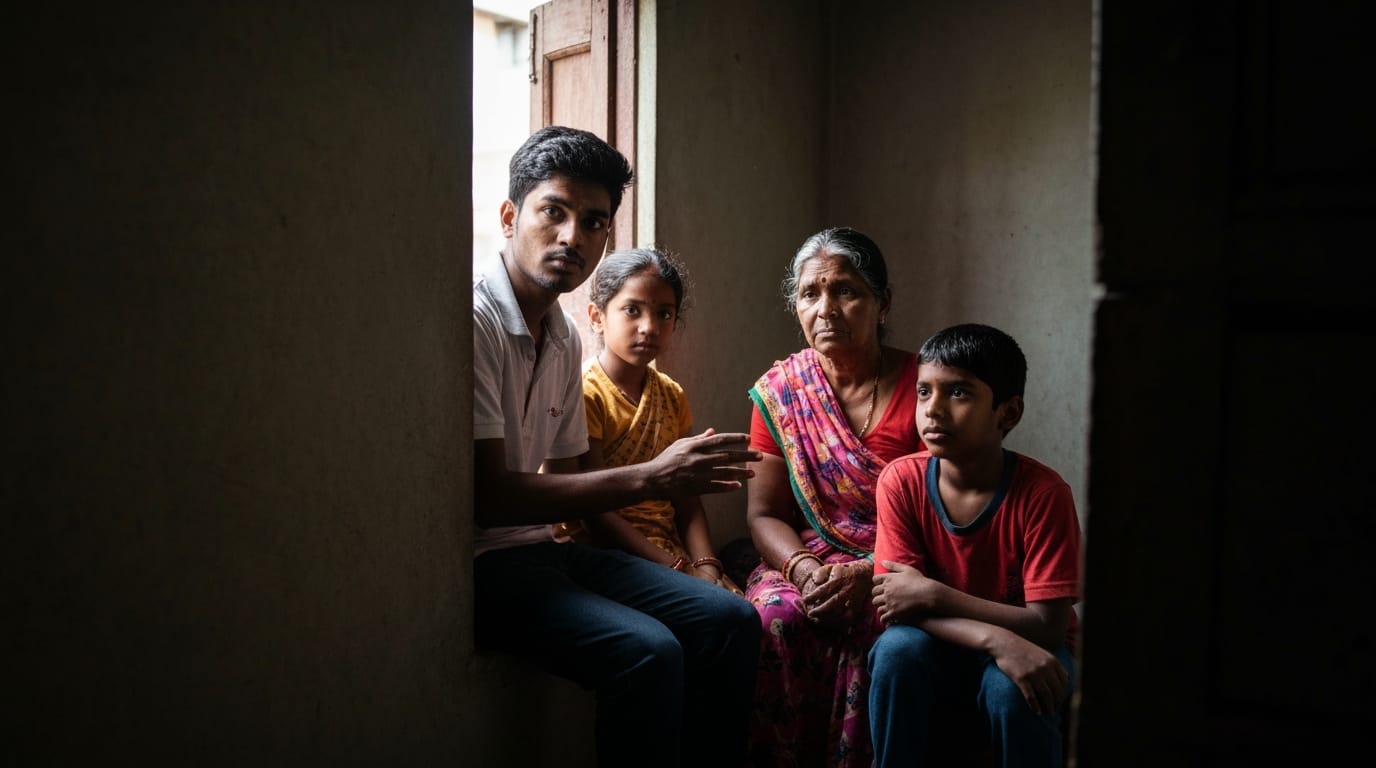
India is embarking on its most ambitious demographic undertaking yet: the 2027 Census, a monumental exercise set to be the nation's first fully digital population count. Touted by the government as a leap forward in efficiency, accuracy, and policymaking, this technological transformation aims to capture granular data on over 1.4 billion people. However, this digital shift, coupled with the inclusion of caste enumeration and the significant delay from its original schedule, has simultaneously ignited widespread public concern, with critics fearing hidden agendas that could compromise privacy, deepen societal divides, and reshape the political landscape.
The Dawn of a Digital Count: Promises of Progress
The 16th Census of India, and the 8th since the nation's independence, marks a decisive departure from traditional paper-based methods. The Registrar General of India (RGI) announced in July 2025 that digital tools, including mobile applications for enumerators and a web portal for self-enumeration, would be central to the 2027 exercise. This digital-first approach, which commenced its first phase of house listing on April 1, 2026, aims to streamline data collection, reduce manual errors, and accelerate the processing of information, allowing policymakers access to updated demographic insights much faster than the years it previously took. The government asserts that this modernization will lead to more effective governance, targeted welfare programs, and improved resource allocation, crucial for a rapidly evolving nation.
A notable feature of the upcoming census is the comprehensive enumeration of caste data, an exercise not undertaken at this scale since 1931. Proponents argue that updated caste statistics are vital for addressing social inequalities, informing affirmative action policies, and guiding discussions on social justice with empirical clarity. The census questionnaire, comprising 33 questions, delves into diverse aspects such as housing conditions, amenities, assets, education, occupation, migration, and fertility, aiming to create a detailed snapshot of Indian life. A hybrid model will be employed, combining online self-enumeration with traditional door-to-door visits by an estimated 3 to 3.2 million field workers, designed to ensure no segment of the diverse population is excluded.
The Shadow of Surveillance: Data Privacy and Security Concerns
Despite the promises of technological advancement, the digital census has amplified concerns over data privacy and security. The collection of highly sensitive personal information—including caste, religion, gender, socio-economic status, and even exact geolocation—in a digital format makes this data potentially more vulnerable to misuse or breaches. Experts point out that India currently lacks a robust enforcement mechanism for its Digital Personal Data Protection (DPDP) Act, 2023, with reports indicating a significant portion of organizations remain non-compliant. This regulatory vacuum raises alarms about the safety of vast datasets stored on government servers, which have not been immune to past vulnerabilities, such as the 2023 data leak from the CoWIN vaccination portal that exposed millions of citizens.
Moreover, India ranks second globally as a target for cyberattacks, making the digital census data a high-value target for malicious actors, including state-sponsored entities. Critics fear that altered or manipulated data could skew policy decisions, influence electoral outcomes, or facilitate targeted discrimination against vulnerable social groups. Concerns have also been raised that linking the digital census to existing databases like Aadhaar could establish an extensive surveillance apparatus, potentially exploited for political manipulation or voter suppression. Building and maintaining public trust is paramount, as citizens need explicit assurance that their personal information will be used solely for statistical purposes and not for surveillance or targeting.
Digital Divide and Demographic Manipulation: Equity and Political Implications
The transition to a digital-first census also brings to the forefront challenges related to India's significant digital divide. Low digital literacy and unequal internet access across the country pose a substantial risk of excluding marginalized communities. According to the National Family Health Survey (2021–22), only 57% of rural households had internet access compared to 80% in urban areas. Women are particularly disadvantaged, being half as likely as men to have internet access, raising questions about their equitable participation. Civil society groups and academics warn that the self-enumeration model, which assumes universal access to devices and digital literacy, could inadvertently exclude migrants, the urban poor, the elderly, and women without phone access, thereby perpetuating the very inequalities the census aims to address.
Furthermore, the delay in conducting the census, initially attributed to the COVID-19 pandemic and subsequently to administrative reasons, has sparked concerns about the government's intentions. Some scholars suggest the delay might be linked to the controversial National Population Register (NPR) exercise, which critics fear could serve as a precursor to the National Register of Citizens (NRC) and potentially lead to the exclusion or disenfranchisement of specific marginalized communities.
The political implications of the digital census are particularly contentious due to its direct link to the upcoming delimitation exercise, which will redraw the boundaries of electoral constituencies based on updated population data. Politicians in southern Indian states, where population growth has slowed, worry that a purely population-based delimitation could reduce their political representation in favor of northern states with higher population growth, exacerbating existing regional tensions. The comprehensive collection of caste data, while offering valuable insights for policy, also carries inherent political sensitivity and the potential for misuse in a deeply polarized societal context.
Calls for Transparency and Safeguards: Expert and Civil Society Views
In response to the mounting concerns, experts and civil society organizations are advocating for robust safeguards and increased transparency. The Population Foundation of India, for instance, has underscored the necessity of a hybrid approach that effectively merges digital innovation with extensive on-ground enumeration to guarantee accuracy and inclusivity, emphasizing that a "digital-first approach cannot assume universal access." They stress the importance of proactively addressing data security and cybersecurity threats to build public trust.
There are calls for the government to conduct a pilot survey before the full rollout to test the digital applications and rectify any problems to ensure desired precision. Additionally, a strong, independent enforcement mechanism for the DPDP Act and an independent authority to monitor data use and resolve grievances are seen as crucial for upholding public confidence. Clear public communication, coupled with awareness campaigns about the process and citizens' rights under data protection laws, is deemed essential to reassure the population.
The 2027 digital census represents a pivotal moment for India, offering the potential for unprecedented data-driven governance but also raising profound questions about privacy, equity, and democratic integrity. As India navigates this complex intersection of technology and demography, ensuring transparency, robust security measures, and an inclusive approach will be paramount to realizing the census's promise without compromising the fundamental rights and trust of its vast and diverse citizenry. The ultimate success of this monumental exercise will depend not just on technological sophistication but on the confidence it inspires and the fairness it embodies.


