India's Examination System in Crisis: National Testing Agency Under Fire After String of Cancellations
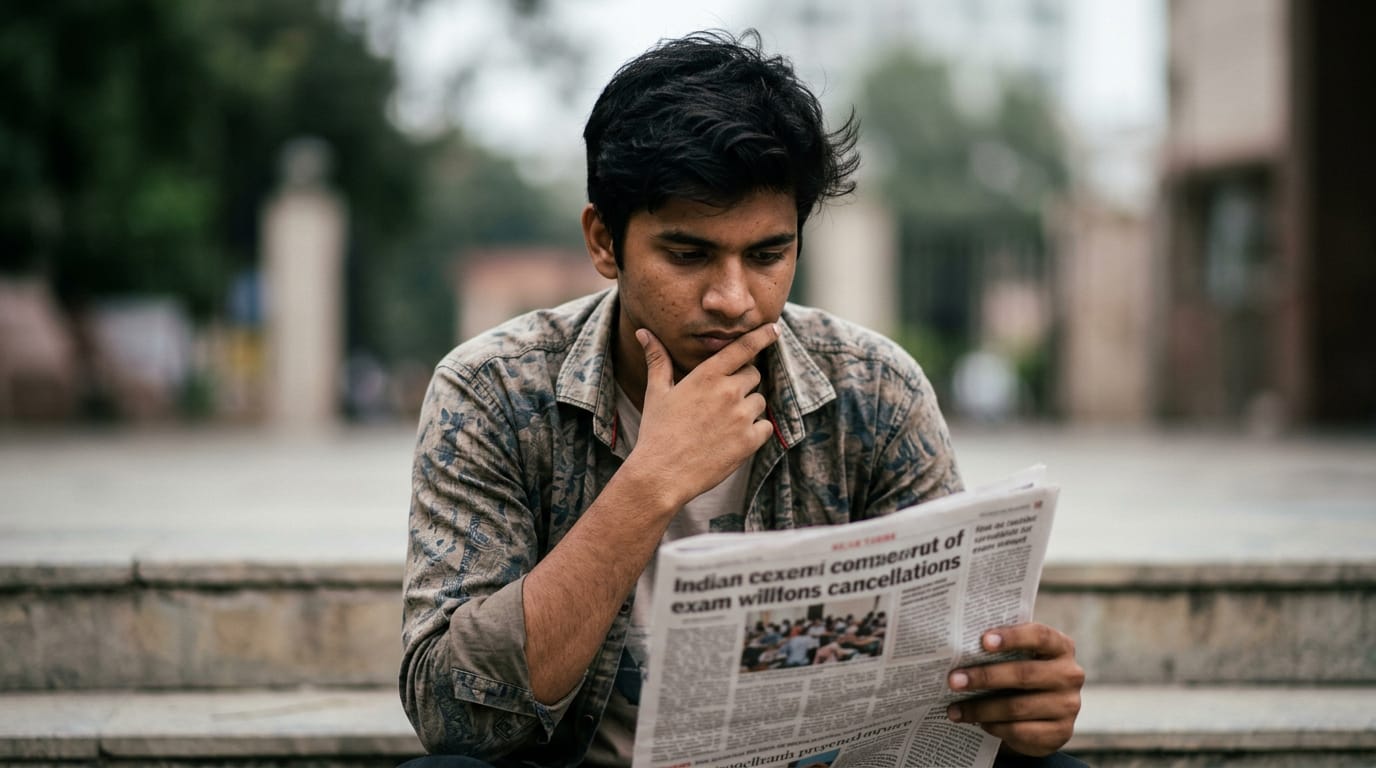
New Delhi, India – India's ambitious effort to streamline and standardize its vast entrance examination system is facing an unprecedented crisis, as the National Testing Agency (NTA), the body entrusted with conducting these crucial tests, finds itself embroiled in a series of controversies marked by paper leaks, alleged irregularities, and widespread cancellations. The credibility of the NTA has come under severe scrutiny following the recent cancellation of the NEET-UG 2026 examination and the re-conducting of several papers for the UGC-NET 2026, leaving millions of aspiring students in a state of despair and uncertainty. The consecutive failures have triggered nationwide protests, drawn sharp political criticism, and even led to the resignation of the Union Education Minister, signaling a deep-seated systemic problem that threatens the future of higher education in the country.
The recent cascade of disruptions began prominently with the NEET-UG 2024 examination, a vital gateway for admissions to undergraduate medical programs, which faced allegations of question paper leaks and irregularities in scoring. While the NTA initially denied widespread issues, subsequent police investigations in states like Bihar revealed that some medical aspirants had paid substantial sums for leaked question papers before the exam. Controversially, the results declared in June 2024 sparked further outrage due to an unusually high number of candidates achieving perfect scores and the awarding of grace marks to over 1,500 students, which many deemed mathematically impossible. Though the Supreme Court of India acknowledged that at least 155 students directly benefited from the paper leak, it ruled against a re-examination, citing a lack of credible proof for systemic failure beyond isolated incidents.
However, the 2024 controversy proved to be a prelude to an even larger storm. In June 2024, the University Grants Commission-National Eligibility Test (UGC-NET) for the June session, an examination taken by 1.1 million candidates for junior research fellowships and assistant professor positions, was abruptly cancelled by the Ministry of Education. The decision came just a day after the exam was conducted, based on inputs from the National Cyber Crime Threat Analytics Unit, which indicated that the "integrity of the examination may have been compromised". The matter was subsequently referred to the Central Bureau of Investigation (CBI) for a thorough probe, amidst widespread allegations of a paper leak similar to the NEET scandal. This marked the first instance of a centrally conducted public examination being scrapped since the introduction of the Public Examinations (Prevention of Unfair Means) Act earlier in the year.
The crisis deepened significantly with the National Eligibility cum Entrance Test (Undergraduate) 2026, held on May 3, 2026, for over 2.27 million candidates. Following allegations of a paper leak where a "guess paper" circulating in coaching centers was found to closely match questions in the actual exam, especially in Chemistry, the NTA cancelled the examination on May 12, 2026. The ensuing public outcry led to widespread protests across the country, with students and opposition parties demanding accountability and systemic reforms. The gravity of the situation was underscored by reports of at least 12 student suicides following the cancellation. The protests, particularly at Delhi's Jantar Mantar, eventually culminated in the resignation of Union Education Minister Dharmendra Pradhan on July 25, 2026. The CBI launched a full-scale investigation, arresting several individuals, including NTA officials, in connection with the leak.
Adding to the NTA's woes, in August 2026, the agency announced it would re-conduct the UGC-NET papers for English, Commerce, and Sociology. This decision came after a committee found "multiple errors" in the question papers, including factual inaccuracies, typographical mistakes, translation errors, misspelt names of prominent scholars, garbled book titles, and significant repetition of questions from previous examinations. This re-examination impacts over 1.5 lakh candidates and further highlights the agency's operational and quality control lapses.
Established in 2017 with the ambitious mandate to ensure "efficient, transparent and international standards" for India's entrance examinations, the NTA has instead become synonymous with repeated controversies. Its history is marred by allegations of paper leaks, unfair grace marks, technical glitches during exams, irregular scoring, and impersonation rackets. Past incidents include the JEE (Main) 2020 Assam topper scam, technical issues in JEE (Main) 2022, and discrepancies in NEET (UG) 2020. Critics have consistently questioned the NTA's management, transparency, and accountability, leading to numerous court cases and calls for fundamental reforms. In response to the recent controversies, the NTA reportedly removed 47 officials as part of a major administrative restructuring.
The human cost of these recurrent failures is immense. Millions of students, many from middle and working-class families, invest years of their lives and significant financial resources in preparing for these high-stakes exams. The sudden cancellations and uncertainties lead to immense psychological stress, anxiety, and often substantial financial burdens, including wasted coaching fees, accommodation costs, and travel expenses. Student bodies and organizations have consistently protested, demanding justice and a credible examination system. The Federation of All India Medical Association has even approached the Supreme Court, advocating for a complete overhaul of the NTA and its replacement by a "technologically advanced and autonomous body" to restore confidence in medical entrance examinations.
The continuous failures of the NTA have pushed India's examination system to a critical juncture. The trust deficit among students and the public is palpable, jeopardizing the integrity of the entire higher education landscape. While the government has initiated CBI probes and introduced new legislation like the Public Examinations (Prevention of Unfair Means) Act, the persistent nature of the problems suggests that deeper, structural reforms are imperative. The focus must now shift towards not just penalizing culprits but fundamentally re-evaluating the NTA's operational mechanisms, strengthening oversight, and implementing robust, tamper-proof systems to ensure fair and transparent examinations. Restoring faith in India's competitive examination process is crucial for the academic aspirations of millions and the nation's future human capital development.