India's Gen Z Forges New Battleground in Digital Sphere, Shaking Established Power Structures
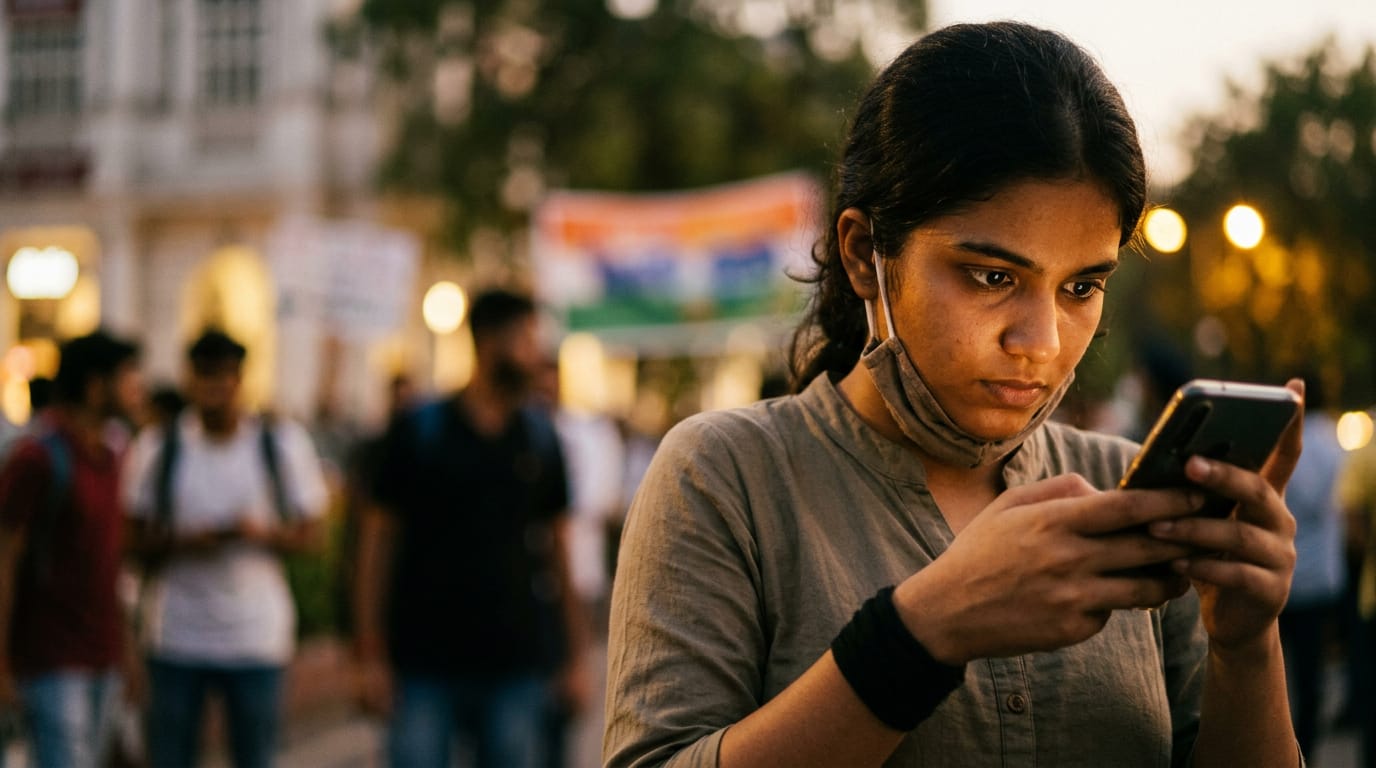
NEW DELHI, India — India's Generation Z has redefined the landscape of protest, transforming social media platforms into potent tools for mobilization and dissent, culminating in a recent, unprecedented online movement that challenged the nation's political establishment and secured a rare government concession. What began as a satirical response to a derogatory remark about unemployed youth quickly escalated into a widespread digital and physical uprising, demonstrating the formidable power of tech-savvy activists in the world's largest democracy. This shift underscores a growing trend where online engagement rapidly translates into real-world action, compelling authorities to address long-standing grievances.
The Digital Crucible: Memes, Reels, and a New Narrative
The catalyst for the recent wave of activism was a statement in May 2026 by a Supreme Court judge, who referred to unemployed young people as "cockroaches" and "parasites." This incendiary comment sparked outrage among India's Gen Z, who chose to reclaim the insults rather than simply condemn them. The result was the formation of the "Cockroach Janta Party" (CJP) and the "National Parasitic Front" (NPF), satirical entities that rapidly gained millions of followers across Instagram, X (formerly Twitter), and other platforms.
These digital natives employed a sophisticated online strategy, leveraging memes, reels, and short videos to disseminate their message, mock the government, and foster a collective identity. Instagram, in particular, topped the list of platforms used by surveyed youth for activism, followed by YouTube and Snapchat. This approach allowed activists to simplify complex political conversations and amplify issues often overlooked by traditional media, fostering a sense of immediacy and emotional connectivity. The online sphere became a vibrant arena where young Indians voiced concerns about high youth unemployment—a staggering 40% among graduates under 25—along with corruption, poor infrastructure, and pervasive exam paper leaks. This digital offensive proved highly effective in shaping public discourse and drawing attention to systemic shortcomings.
From Hashtags to the Streets: Mobilization and Confrontation
The online momentum of the CJP movement swiftly spilled into the physical realm, translating digital outrage into large-scale street protests. Thousands of young people, primarily students, mobilized in New Delhi and other cities, demanding accountability from the government regarding education system irregularities and the pervasive issue of unemployment. A planned march to Parliament on July 20, 2026, intended to coincide with the monsoon session, brought the nation's capital to a standstill.
These physical demonstrations were marked by significant confrontation. Police responded with barricades, batons, tear gas, and even pellet guns, injuring numerous protesters. In response to these crackdowns, and to counter what they perceived as biased coverage from mainstream media, Gen Z activists used their smartphones to document the events in real-time. Shaky footage, rapid-fire edits set to hip-hop tracks, and a torrent of memes flooded social media, offering an unfiltered perspective on the protests and alleged police excesses. This "televising of our revolution," as one young protester described it, created a powerful counter-narrative, exposing the dissonance between events on the ground and their portrayal by some traditional news outlets.
Navigating the Digital Divide and State Control
While social media offers unparalleled opportunities for mobilization, digital activism in India faces considerable challenges, including the spread of misinformation, algorithmic biases, and online harassment. The government has also employed various tactics to suppress digital dissent, such as internet shutdowns, censorship, and legal actions against activists. During the peak of the recent protests, authorities temporarily suspended mobile internet services in and around protest sites in New Delhi, ostensibly in the interest of public order.
However, India's Gen Z demonstrated remarkable adaptability. When internet services were cut, many protesters switched to peer-to-peer messaging apps like Bitchat, which uses Bluetooth to create ad-hoc networks, enabling communication without relying on conventional internet access. This innovative workaround underscored the determination of young activists to maintain their coordination and voice despite attempts at digital curtailment. Despite India's impressive internet penetration, a persistent digital divide remains, limiting equitable participation for millions who lack access or digital literacy, particularly in rural areas. Efforts to bridge this gap are crucial for fostering more inclusive digital discourse.
A New Era of Accountability: Shaking the Status Quo
The collective power of India's Gen Z, manifested through its hybrid online-to-offline activism, yielded a significant political outcome: the resignation of Education Minister Dharmendra Pradhan. This was a rare concession from a government typically perceived as unyielding to public pressure, especially from the youth. The movement not only achieved its immediate demand but also forced Prime Minister Narendra Modi's administration to acknowledge the burgeoning influence of young voters.
In the wake of the protests, reports indicated a shift in government strategy, with Prime Minister Modi reportedly engaging in increased outreach to Gen Z, including the use of short, vertical videos tailored for platforms popular with younger audiences. The CJP movement, initially dismissed as insignificant, ultimately challenged the long-held perception of the prime minister's invincibility and demonstrated that even a dominant political image could be tarnished by concerted youth activism. Beyond the ministerial resignation, the protests broadened to encompass fundamental issues of corruption, unemployment, and the fundamental right to peaceful assembly, signaling a profound reawakening of civic engagement among the younger generation.
Conclusion
India's Gen Z has undeniably ushered in a new era of social and political activism, characterized by its digital fluency, innovative strategies, and unwavering determination. By leveraging the pervasive reach of social media for mobilization, narrative control, and even bypassing traditional media gatekeepers, these young activists have carved out a powerful new battleground. While challenges such as misinformation, internet restrictions, and the digital divide persist, the recent successes of movements like the "Cockroach Janta Party" indicate a fundamental shift in how power is challenged and accountability demanded in India. The ability of a generation to convert likes and shares into tangible policy changes and to adapt to digital suppression tactics suggests that future political discourse in India will be increasingly shaped by the dynamic and digitally-empowered voices of its youth.


