India's Gen-Z Revolution: A New Era of Digital Activism Reshapes Political Landscape
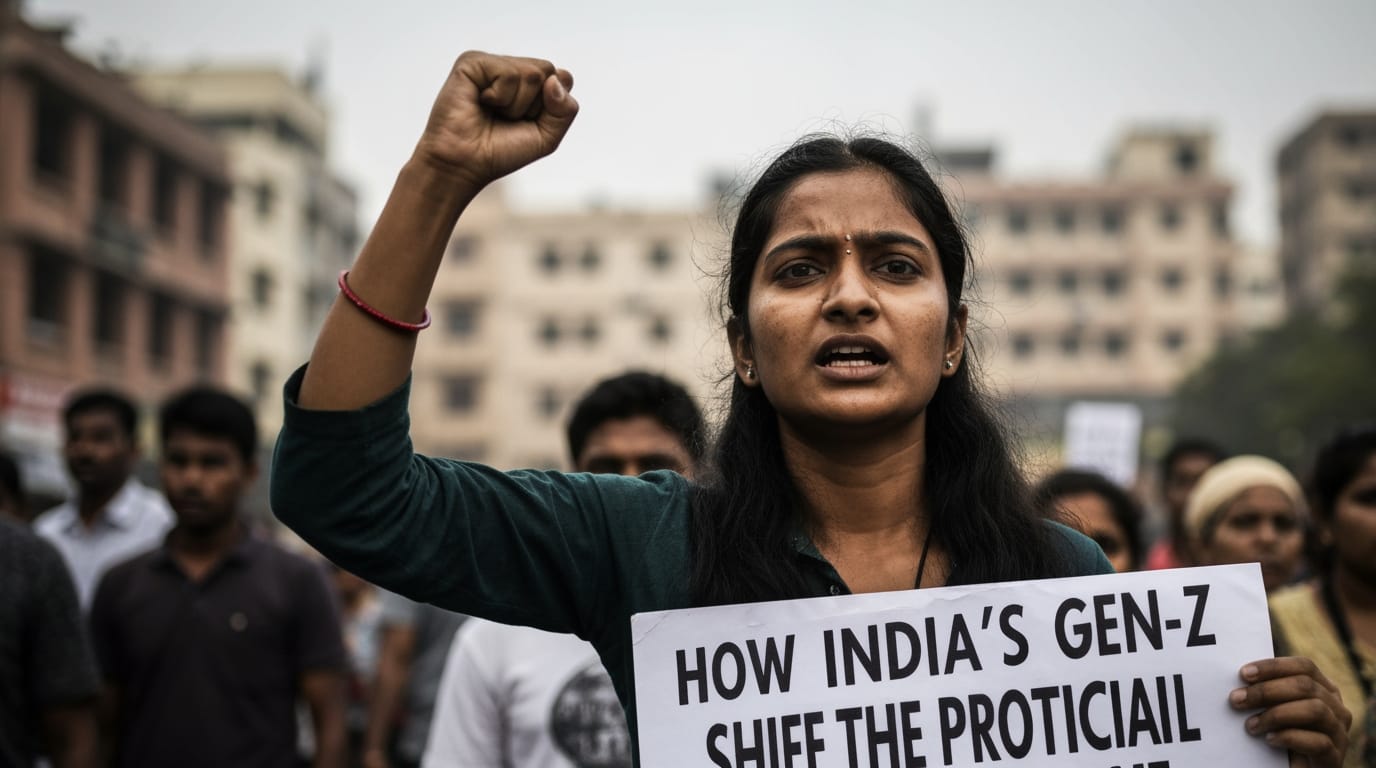
New Delhi, India – A burgeoning wave of youth activism, spearheaded by India's Generation Z, is fundamentally reshaping the nation's political discourse, leveraging digital platforms to challenge established narratives and compel rare concessions from a long-dominant government. What began as localized outrage over systemic failures has rapidly evolved into a powerful, decentralized movement, signaling a significant shift in political engagement in the world's largest democracy. This new generation of protesters, digitally native and politically aware, is rewriting the rules of dissent, proving that their collective voice, amplified through social media, can penetrate even the most entrenched political strongholds.
The Spark: Examination Leaks Ignite Broader Frustrations
The most recent and impactful demonstration of Gen-Z's growing influence erupted from a crisis in India's highly competitive education system. Repeated leaks of national entrance examination papers, particularly for undergraduate medical programs, sparked widespread anger among millions of students whose futures depend on these high-stakes tests. For many, these examinations represent not just academic milestones but critical pathways to economic mobility and a better life. When the integrity of these exams was compromised, it struck at the core of the state's promise of meritocracy, igniting a fervent and widespread backlash.
The discontent reached a boiling point after the Chief Justice of India, Surya Kant, reportedly described unemployed youth as "cockroaches." This perceived insult inadvertently catalyzed the movement, as students and young people embraced the derogatory term as a badge of resilience. Abhijeet Dipke, an Indian student residing in the United States, swiftly launched the satirical "Cockroach Janata Party" (CJP) on social media. This online initiative quickly garnered an immense following, amassing over 25 million followers on platforms like Instagram and X (formerly Twitter) within days, significantly surpassing the social media presence of the ruling Bharatiya Janata Party (BJP). The CJP's rapid growth underscored the potent combination of deep-seated grievances and Gen-Z's innate ability to mobilize digitally.
Beyond Academics: A Deep Dive into Systemic Issues
While the examination paper leaks served as the immediate trigger, the "Cockroach" movement swiftly broadened its scope to address a spectrum of deeper socioeconomic and governance concerns. Underlying the academic fraud is a pervasive and long-standing issue of youth unemployment, which has reached its highest point in 45 years, exacerbated by economic policies such as the 2016 demonetization. Protesters articulate profound frustration over the scarcity of government job opportunities, stagnant job prospects, and a declining trust in public institutions. Banners at protests like "Selling Paan (betel leaves) and Pakora (an Indian fried snack) is not employment" and "Is it wrong to dream of a Government Job?" encapsulate the despair and disillusionment felt by many young Indians.
Beyond employment, Indian Gen-Z has also been actively engaged in protests concerning social justice and environmental issues. Previous movements against the Citizenship Amendment Act (CAA) and contentious farm laws saw significant youth participation. Furthermore, climate activism has emerged as a crucial area of youth engagement, with organizations like the Indian Youth Climate Network (IYCN), established in 2008, consistently advocating for policy changes and raising awareness about climate change's impact on India. These movements collectively highlight a generation that is increasingly impatient with unresponsive governance and is demanding accountability across various sectors.
Digital Strategies and a Shifting Narrative Landscape
A defining characteristic of Gen-Z's activism is its sophisticated and agile use of digital platforms. In an environment where traditional media channels are often perceived as aligning with the government's narrative, platforms like Instagram, X, and others have become crucial tools for disseminating information, organizing, and challenging dominant viewpoints. This generation is adept at creating and consuming content through memes, short videos, and live streams, enabling rapid communication and widespread engagement.
The CJP’s strategy exemplifies this digital prowess. By reclaiming a derogatory term through satire and humor, they have managed to create an identity that resonates deeply with their peers, fostering a sense of community and shared purpose. This online momentum translates quickly into real-world action, with digital campaigns leading to coordinated street demonstrations. During protests, social media is used to document events in real-time, capturing and sharing evidence of police crackdowns, including the alleged use of batons, tear gas, and even pellet guns. This immediate, peer-to-peer reporting challenges official narratives and mobilizes broader public sympathy. Protesters at sites such as Jantar Mantar have openly criticized sections of mainstream television news for perceived bias, presenting their own counter-narratives through their digital channels.
Impact, Concessions, and Enduring Challenges
The Gen-Z-led protests have already yielded tangible results, demonstrating their capacity to influence policy. A significant victory came with the resignation of India's Education Minister, Dharmendra Pradhan, a rare concession from the Modi government under public pressure. This outcome has been widely interpreted as a direct result of sustained youth activism and has challenged the perception of Prime Minister Modi's political invincibility, signaling that a wider cross-section of society is now questioning the ruling party. Political analysts note that the movement has shown that public pressure can indeed compel policy changes and ministerial accountability.
However, the path of youth activism is not without its obstacles. Authorities have often responded to protests with harsh measures, including police crackdowns and frequent internet shutdowns, making India second globally in such disruptions in 2025. Despite these challenges, Gen-Z protesters have shown adaptability, even exploring tools like Bluetooth-based messaging apps to circumvent internet restrictions. While the immediate demands for accountability have seen some success, the broader challenge remains in translating these localized victories into systemic reforms and sustaining momentum for long-term change in areas like unemployment and governance.
A New Chapter in Indian Politics
India's Gen-Z has emerged as a potent and unpredictable force in the nation's political landscape. Their protests, characterized by digital fluency, creative dissent, and a focus on issues directly impacting their future, represent a fundamental shift from traditional forms of activism. The recent successes, particularly the forced resignation of a Union Minister, indicate a weakening of the long-held political narrative of unchallenged authority. As India approaches crucial state elections, the sentiment and engagement of this tech-savvy generation are expected to play an increasingly decisive role. The "Cockroach Janata Party" and similar movements signify not just a temporary moment of disillusionment but potentially the dawn of a new era where young Indians, armed with smartphones and a collective voice, are poised to continuously challenge and redefine the country's political future.


