India's Olympic Dream Under the Microscope: 2036 Bid Faces Rigorous Scrutiny
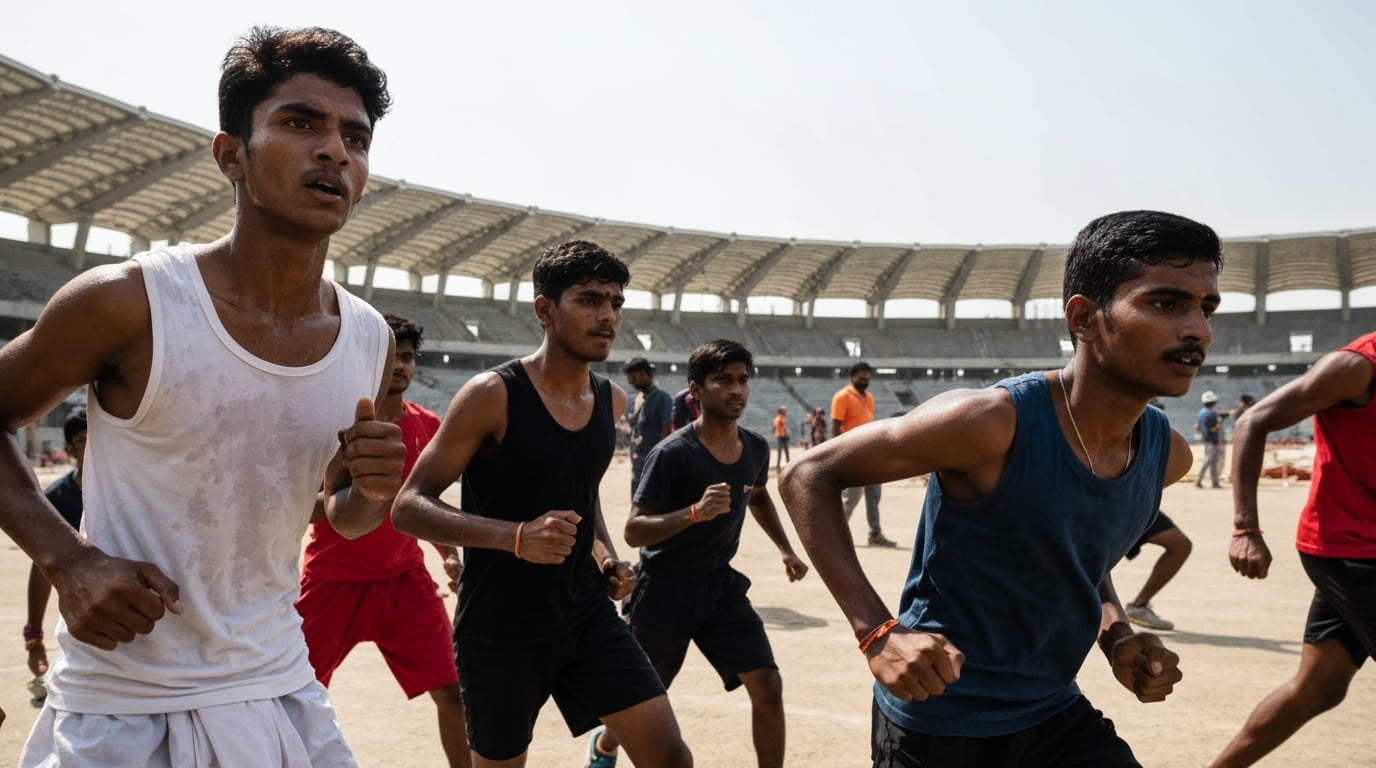
India's ambitious bid to host the 2036 Summer Olympics, formally declared by Prime Minister Narendra Modi, is now under intense international scrutiny, as the nation mobilizes its political will and economic might to secure the prestigious event. While the prospect of hosting the Games has ignited national pride and promises unprecedented development, a complex web of governance challenges, infrastructure demands, and fierce global competition threatens to test India's resolve and readiness on the world stage. Ahmedabad, the largest city in Gujarat, has emerged as the frontrunner host city, central to a vision that could redefine India's sporting future, yet the path to 2036 is paved with significant hurdles that extend far beyond mere infrastructure development.
The Grand Ambition and the Ahmedabad Vision
The dream of hosting the Olympic Games on Indian soil gained significant momentum when Prime Minister Narendra Modi officially declared India's interest in bidding for the 2036 Olympics at the 141st International Olympic Committee (IOC) Session in October 2023. This declaration was followed by the Indian Olympic Association (IOA) submitting a formal letter of intent to the IOC's Future Host Commission on October 1, 2024, signaling a definitive step forward in the bidding process. The government's backing is unequivocal, with the Prime Minister articulating the aspiration as an "age-old dream" of 1.4 billion Indians, positioning it as a matter of national pride and an opportunity to elevate India's global standing.
Ahmedabad has been identified as the primary candidate city, with comprehensive plans already underway to develop world-class sporting facilities. The Ahmedabad Urban Development Authority (AUDA) engaged PwC as a consultant in 2021, which identified 22 potential sites across Ahmedabad and Gandhinagar for Olympic venues. A cornerstone of this development is the Sardar Vallabhbhai Patel Sports Enclave, where ten major stadiums are planned, designed to meet Olympic standards. Union Home Minister Amit Shah has expressed confidence in Ahmedabad's ability to secure the hosting rights, with the Narendra Modi Stadium proposed as a potential venue for the opening ceremony. The projected budget for hosting the Games in Ahmedabad and Gandhinagar ranges between ₹34,700 crore and ₹64,000 crore (approximately $7.5 billion). Beyond a single city, a multi-city bid approach has also been proposed, aiming to spread events across various locations such as Bhubaneswar, Bhopal, Mumbai, Pune, Goa, and even Agra, aligning with the government's broader strategy to enhance sports engagement nationwide. This ambitious infrastructure drive is seen not only as essential for the Games but also as a catalyst for long-term development and an opportunity to upgrade the country's facilities.
Navigating the Hurdles: Governance, Doping, and Performance
Despite the strong governmental push and infrastructural blueprints, India's Olympic aspirations face considerable scrutiny, particularly from the International Olympic Committee. Reports indicate that the IOC has raised "candid" concerns regarding the Indian Olympic Association's governance issues, instances of mismanagement, and the persistent challenge of high doping rates within Indian sports. The World Anti-Doping Agency (WADA) identified India in 2023 as the country with the highest positivity rate for banned substances among major sporting nations at 3.8 percent and the second-worst offender in doping among minors, raising serious questions about the integrity of the nation's sports ecosystem. High-profile doping scandals, such as those involving wrestlers Narsingh Yadav and Bajrang Punia, underscore the systemic nature of the problem.
Further compounding the concerns is India's historical performance at the Olympics. At the Paris 2024 Games, India finished 71st in the medal table with a modest six medals, a figure that the IOC has reportedly flagged as needing significant improvement for a prospective host nation. As one Sports Ministry source noted, "Host countries scale up their Olympic performances to ensure that they don't feel left out of their own party," suggesting a strategic shift is imperative.
India's past experience with large-scale international sporting events also adds to the scrutiny. The 2010 Commonwealth Games in Delhi were marred by construction delays, corruption scandals, and widespread mismanagement, leading to significant cost overruns and damage to the nation's reputation. More recently, a diplomatic dispute with Bangladesh over the Men's T20 Cricket World Cup in January 2026 raised fresh doubts about governance and stability, just as India seeks to present itself as a reliable host. These historical and contemporary issues highlight the need for robust oversight and transparent management to assuage IOC concerns and build international confidence.
The Infrastructure Imperative and Financial Realities
Hosting the Olympics necessitates monumental investments in infrastructure, encompassing everything from world-class sports venues and athlete villages to robust transportation networks and accommodation for millions of visitors. While Ahmedabad's proposed Sardar Vallabhbhai Patel Sports Enclave and other planned stadiums are a significant step, the overall readiness of India's sporting infrastructure to meet Olympic standards is a point of debate. Some argue that infrastructure is not a major worry for Ahmedabad, given its apparent readiness. However, critics contend that India, at present, lacks the comprehensive sports infrastructure required, including athlete hostels and supporting facilities.
The financial implications are equally daunting. Olympic Games between 1960 and 2024 have consistently faced significant cost escalations, often shaking the finances of host countries. Experts, like economist Andrew Zimbalist, express skepticism about the economic benefits for host cities, noting that main beneficiaries are often construction companies, and venues frequently sit empty post-Games. The estimated budget for India's 2036 bid, which could reach $7.5 billion, presents a substantial financial commitment. Recouping such an investment is often challenging, even with boosts to tourism and global visibility. Furthermore, the land acquisition process for new facilities has already sparked protests from local farmers, raising concerns about sustainability and inclusive development, principles the IOC increasingly prioritizes.
The Path Forward: Reforms, Strategy, and Competition
Recognizing the multifaceted challenges, India is implementing various strategies to bolster its bid. The government has significantly increased funding for sports development, with a record allocation of ₹3794 crores to the Ministry of Youth Affairs and Sports for FY 2025–26. Flagship programs like Khelo India, launched in 2018, aim to identify and nurture young talent at the grassroots level, providing financial assistance, training, and infrastructure development across the country. A key strategic shift involves focusing on high medal-yielding sports like aquatics, rowing, and cycling, where India currently has a minimal presence but where over 100 Olympic medals are available. The goal is to improve India's medal tally significantly by 2036, aiming for a top-10 ranking.
The hosting of the 2030 Commonwealth Games in Ahmedabad, a right awarded in November 2025, is viewed as a crucial stepping stone and a practical rehearsal for the larger Olympic ambition. Successfully delivering these Games within budget and without the controversies of the past would be vital in demonstrating India's organizational capabilities and rebuilding trust.
Internationally, India faces stiff competition for the 2036 Games. Other nations and cities expressing interest include Qatar, Turkey, Germany, South Korea, Indonesia, and Hungary. The IOC's reformed bidding process, introduced in 2019, emphasizes a "continuous dialogue" and prioritizes sustainability, legacy, and alignment with a host city's long-term development plans. The IOC is also exploring flexibility in the Olympic calendar to accommodate climate change concerns, potentially opening doors for regions like the Middle East that were previously considered unsuitable due to summer heat. India is receiving support from countries like France, which has offered to share expertise from hosting the 2024 Summer Olympics in Paris to aid India's bid.
A Dream in the Making, A Test of Resolve
India's pursuit of the 2036 Olympic Games is an embodiment of national aspiration and a testament to its growing global stature. The vision, centered on Ahmedabad, promises transformative development and an unparalleled platform to showcase the nation's culture and progress. However, the journey ahead is fraught with challenges that demand more than just financial investment and infrastructure development. The IOC's rigorous scrutiny underscores the need for profound reforms in sports governance, a decisive crackdown on doping, and a significant uplift in athletic performance. The success of the 2030 Commonwealth Games will serve as a critical litmus test, demonstrating India's capacity to host major international events transparently and efficiently.
Ultimately, India's bid for the 2036 Olympics is not merely about hosting a sporting spectacle; it is about a nation's commitment to clean sports, sustainable development, and a lasting legacy that benefits all its citizens. The outcome, expected by late 2027, will hinge on India's ability to demonstrate unwavering resolve in addressing these complex issues, proving its readiness to embrace not just the glory, but also the immense responsibilities that come with hosting the world's greatest sporting event.


