Indigenous Leader Brooklyn Rivera Dies in Nicaraguan Custody Amid International Outcry
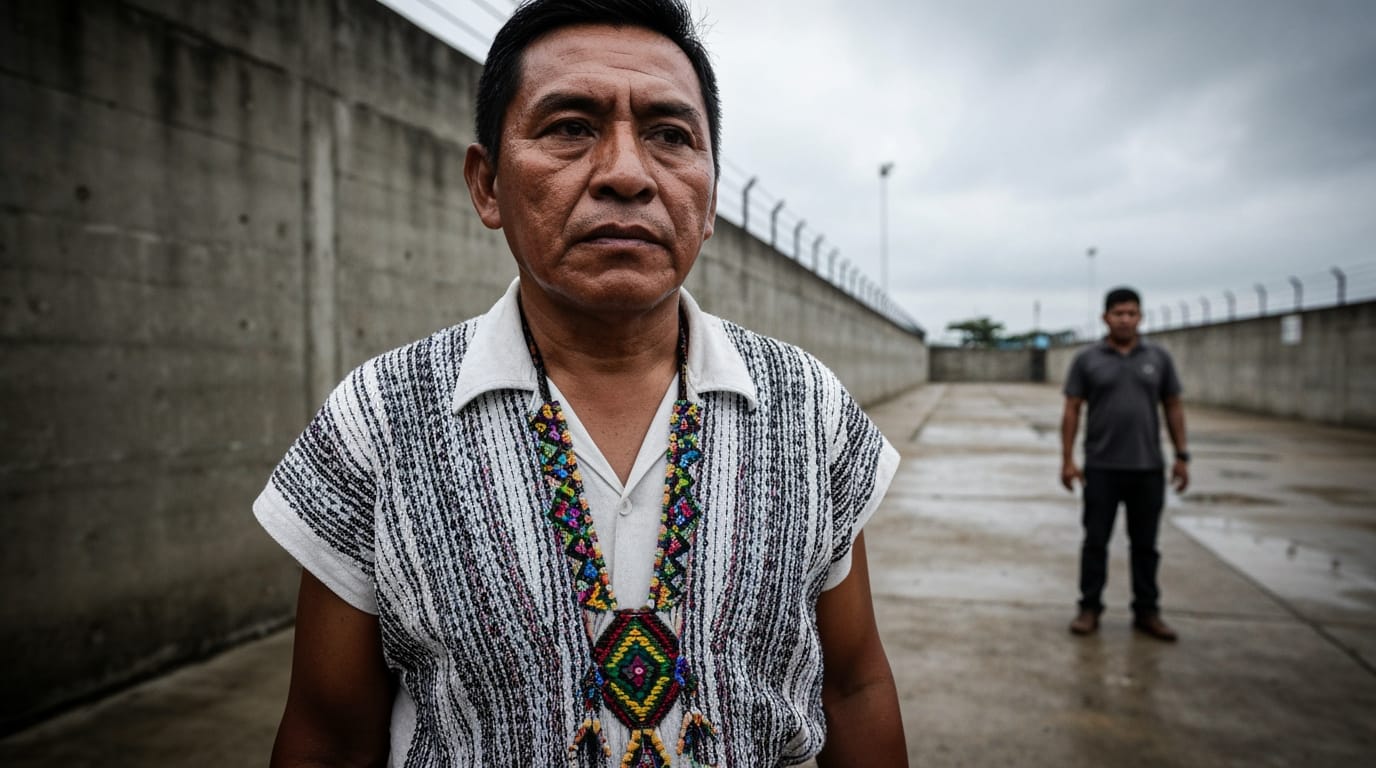
MANAGUA, Nicaragua – Brooklyn Rivera, a revered Indigenous leader from Nicaragua who dedicated over five decades to advocating for the rights of his Miskito community, has died at 73 while in state custody. His death, confirmed by the Nicaraguan government on Sunday, May 31, 2026, has ignited a firestorm of international condemnation and renewed scrutiny of the country's human rights record, particularly concerning its treatment of political prisoners and Indigenous activists.
Rivera's passing follows nearly three years of incommunicado detention, during which his family and international human rights organizations were denied contact and information regarding his well-being. Critics are challenging the official explanation of death due to a bacterial infection linked to COVID-19, asserting that his prolonged "enforced disappearance" and lack of independent medical care were the true causes.
A Life Dedicated to Indigenous Rights
Born Brooklyn Rivera Bryan on September 24, 1952, in the Miskito community of Li Dakwra, Rivera emerged as a pivotal figure in the struggle for Indigenous rights and autonomy in Nicaragua. His activism began in the 1960s, culminating in his leadership of Misurasata, an Indigenous organization formed to represent communities on the Atlantic Coast. During the 1970s and 1980s, he was a key figure in the Miskito resistance against the Sandinista government, a conflict that ultimately led to peace negotiations and the signing of the 1987 Sapoá Agreement, which granted limited autonomy to the Caribbean Coast regions.
Rivera was instrumental in founding YATAMA (Yapti Tasba Masraka Nanih Aslatakanka), an Indigenous political party that played a crucial role in securing regional autonomy and defending territorial rights. He served multiple terms as a lawmaker, even after being illegally stripped of his legislative seat in 2015, consistently advocating for the recognition of ancestral lands and cultural identity. His work often placed him in direct opposition to the ruling Sandinista government, led by President Daniel Ortega and Vice President Rosario Murillo, especially as the resource-rich Caribbean Coast became a key area for foreign investment.
The Road to Detention and Disappearance
Rivera's final period of freedom ended in September 2023, when he was arrested at his home in Bilwi, capital of Nicaragua's North Caribbean Region. This arrest came months after he had traveled to Geneva in April 2023 to participate in a U.N. forum on Indigenous peoples, where he openly criticized the Nicaraguan government. Following his remarks, Ortega and Murillo banned him from returning to the country, but Rivera reportedly re-entered clandestinely and lived in hiding until his capture. He was subsequently accused of terrorism, a charge widely viewed by human rights groups as politically motivated.
For nearly three years following his arrest, Rivera was held without contact with his family or legal representation, effectively rendering him a "disappeared person" in the eyes of international observers. Calls for information about his fate from his family, the U.S. government, and U.N. experts went unanswered.
Critical Condition and International Outcry
The first official acknowledgment of Rivera's status came just days before his death. On Wednesday, May 27, 2026, the Nicaraguan government released photographs showing him in a hospital bed, emaciated, intubated, and connected to a respirator. The Ministry of the Interior described his condition as "delicate," citing "multiple organ failure, a cirrhotic liver, and an active lung infection." These images sparked immediate alarm and renewed calls for his unconditional release from the international community, including the United States.
Human rights groups expressed deep concern, noting that the government's statement arrived only after sustained pressure to ascertain Rivera's welfare. A coalition of Nicaraguan Indigenous groups criticized the government for arbitrarily imprisoning Rivera and attempting to "distort the narrative" by claiming he was already in poor health at the time of his arrest.
A Death Met with Skepticism and Calls for Justice
Rivera's death was first reported by exiled Nicaraguan news outlets 100% Noticias and Confidencial, citing sources close to his family and the hospital. Hours later, the Nicaraguan Ministry of Health issued a statement confirming his passing and attributing it to a bacterial infection that developed after a case of COVID-19, leading to physical and neurological deterioration.
However, this explanation has been met with widespread skepticism. Reed Brody, an American human rights lawyer and member of the U.N. Group of Human Rights Experts on Nicaragua, stated unequivocally that "if he is dead, it cannot be said that the cause was illness." Brody asserted that the true cause was his detention under conditions of "enforced disappearance" for over two years, denied independent medical oversight. Manuel Orozco, director of the migration, remittances, and development program at the Inter-American Dialogue, echoed these sentiments, calling Rivera's death "complete neglect" and a "magnitude of repression."
The Organization of American States (OAS) Secretary General, Albert R. Ramdin, voiced deep concern and called for an "immediate, independent, and transparent investigation" into Rivera's death. The Argentina-based Inter-American Center for Legal Assistance in Human Rights demanded that those responsible for the Indigenous lawmaker's death be held "criminally accountable."
Broader Context of Repression
Rivera's death is viewed by human rights organizations as a tragic illustration of the broader crackdown on political dissent and Indigenous communities under the Ortega-Murillo government. The U.N. Group of Human Rights Experts on Nicaragua has documented 124 cases of arbitrary detention of Indigenous people in Nicaragua since 2018, along with 46 deaths following violent incidents. At least six political prisoners have died in custody since 2019, two of them in August 2025.
Indigenous leaders in Nicaragua frequently face defamation campaigns, harassment, arbitrary detention, and politically motivated prosecutions. The government has also stripped nationality from hundreds of political prisoners and critics, forcing many into exile. These actions contribute to a climate of fear and repression that human rights watchdogs say has become systemic.
Brooklyn Rivera's legacy as a fierce advocate for his people will undoubtedly continue to resonate, but his death in state custody serves as a stark reminder of the ongoing human rights challenges in Nicaragua and the perilous conditions faced by those who dare to oppose the government. His passing intensifies calls from the international community for accountability and for the protection of fundamental human rights within the Central American nation.


