Nationwide Rail Paralysis: Deutsche Bahn Halts All Trains Amid Critical Radio System Failure
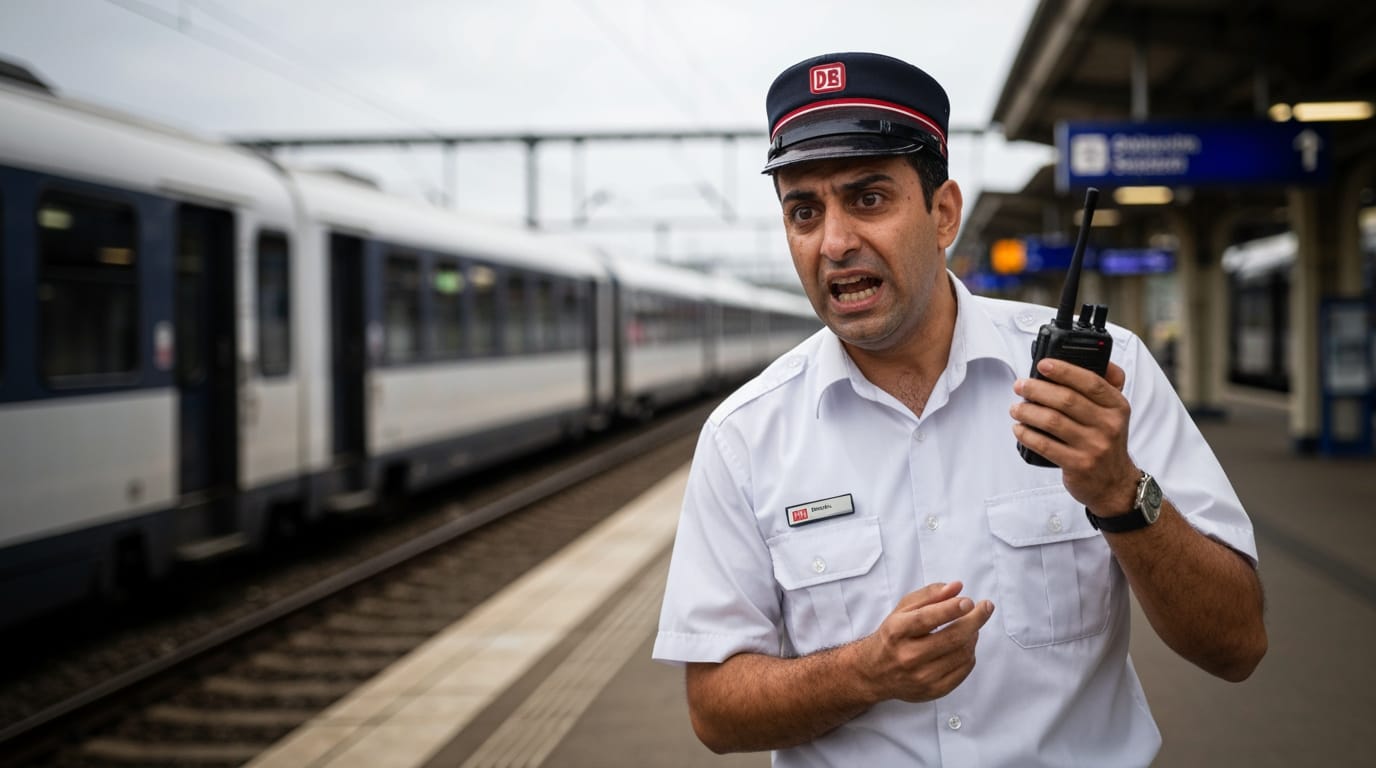
FRANKFURT, Germany – Germany's vast and usually punctual railway network ground to an unprecedented halt late Tuesday, June 23, 2026, as a nationwide malfunction of its digital radio communication system forced Deutsche Bahn, the national operator, to stop all trains. The abrupt and widespread disruption left countless passengers stranded and underscored the critical reliance of modern rail operations on robust, up-to-date technological infrastructure.
The decision to cease all rail traffic across the country, affecting both long-distance InterCity Express (ICE) services and regional lines including S-Bahn, RE, and RB, was a direct consequence of an outage impacting the Global System for Mobile Communication for Railways (GSM-R). This vital digital radio system is the backbone of operational safety and communication for Germany's extensive railway network. As technicians worked urgently to address the problem, the lack of an estimated timeline for resolution cast a shadow of uncertainty over millions of travel plans.
Germany's Railways Grind to a Halt
The disruption began on Tuesday evening, with Deutsche Bahn announcing in a statement that "all trains are currently being held at stations" due to a "nationwide malfunction of the digital railway radio system." The order meant that trains already in motion were directed to the nearest suitable stations, where they remained, unable to proceed safely. The sheer scale of the incident quickly became apparent, impacting every corner of Germany and touching every class of train service. While the immediate cause of the malfunction remained undisclosed, the consequences were immediate and severe for travelers, with reports of passengers stranded at major hubs like Berlin's Westkreuz S-Bahn station.
The nationwide shutdown served as a stark reminder of the intricate digital web that underpins contemporary transportation systems. For Germany, a country heavily reliant on its rail network for both passenger and freight transport, an outage of this magnitude represents a significant operational challenge and a major inconvenience for the public. Deutsche Bahn advised passengers to consult its DB Navigator app or website for updates before attempting to travel, anticipating continued delays and cancellations even after service restoration as trains and crews would require time to return to their scheduled positions.
The Critical Role of GSM-R in Rail Safety
At the heart of the disruption is the GSM-R system, a specialized international wireless communications standard for railway applications. This system is indispensable for ensuring the safe and efficient movement of trains, primarily by facilitating critical communication between train drivers and signallers. GSM-R is also integral to the Railway Emergency Call (REC) function, which can alert all nearby trains and instruct them to stop in urgent situations.
Without a functional GSM-R system, the ability to transmit vital operational data and safety-critical instructions is compromised, making it unsafe for trains to operate. The system, built on older 2G mobile communication foundations, has served European railways for decades, yet its aging infrastructure has increasingly become a point of discussion. Experts have noted that broader mobile ecosystems have largely moved beyond 2G, leading to concerns about hardware issues, dwindling vendor support, and growing cybersecurity risks for railways still relying on GSM-R. While generally reliable, previous incidents and analyses have highlighted the significant impact that GSM-R failures can have, potentially leading to substantial operational challenges and safety risks if not managed by robust fallback protocols, or, as seen in this instance, a full service cessation.
Passenger Stranding and Broader Implications
The sudden halting of all train traffic caused widespread chaos and frustration across Germany. Commuters relying on regional services, long-distance travelers, and international passengers found themselves unexpectedly stranded, their journeys interrupted indefinitely. While specific figures on affected passengers were not immediately available, the nationwide scope suggested millions of individuals were impacted, underscoring the vital role rail plays in daily life and economic activity.
Beyond the immediate inconvenience to travelers, such extensive disruptions carry significant economic implications. Businesses relying on timely freight transport faced delays, potentially impacting supply chains and production schedules. The incident also highlighted the vulnerability of a highly integrated modern society to failures in critical infrastructure. The German public, accustomed to a generally efficient rail system, was left to grapple with the uncertainty, underscoring the human element in large-scale technological failures.
Technical Response and Future Modernization Efforts
Deutsche Bahn confirmed that its technicians were "working flat out to resolve the issue" but offered no specific timeline for the restoration of services. The immediate priority remained diagnosing the specific nature of the nationwide malfunction and implementing a fix to restore the essential communication capabilities. The incident, however, also casts a spotlight on Germany's ongoing efforts to modernize its rail infrastructure.
Deutsche Bahn has been actively pursuing ambitious digitalization projects, including the "Digital Rail Germany" (Digitale Schiene Deutschland) initiative. This program aims to enhance the capacity and performance of the existing rail system through technological innovations such as the European Train Control System (ETCS) and digital signal boxes. A key component of this modernization is the planned migration from GSM-R to the Future Railway Mobile Communication System (FRMCS), which is based on 5G technology. FRMCS is designed to provide advanced connectivity for future digital technologies, supporting both existing voice applications and new data services like ETCS and automated train operation. Deutsche Bahn has also announced initiatives to integrate artificial intelligence (AI) and 5G to optimize operations and improve system resilience. These forward-looking projects underscore the recognition within the industry that current communication systems, while foundational, require significant upgrades to meet future demands and enhance robustness against such widespread failures.
A Call for Resilient Infrastructure
The nationwide halt of Germany's railway system due to a malfunctioning radio system serves as a powerful illustration of the delicate balance between technological advancement and operational vulnerability. While the immediate focus remains on restoring full services and investigating the precise cause of the GSM-R outage, the broader implications point to an urgent need for increasingly resilient and modern communication infrastructure.
As Germany and other European nations look towards a future of digital, automated, and high-capacity rail, events like this underscore that the transition requires not only cutting-edge technology but also robust fallback systems and a commitment to continuous investment. The incident on Tuesday, June 23, 2026, will likely serve as a significant case study in the ongoing global dialogue about ensuring the reliability and safety of critical national infrastructure in an increasingly interconnected world.


