Indonesian Earthquake Devastation Mounts: Death Toll Rises to 54 as Thousands Await Crucial Aid
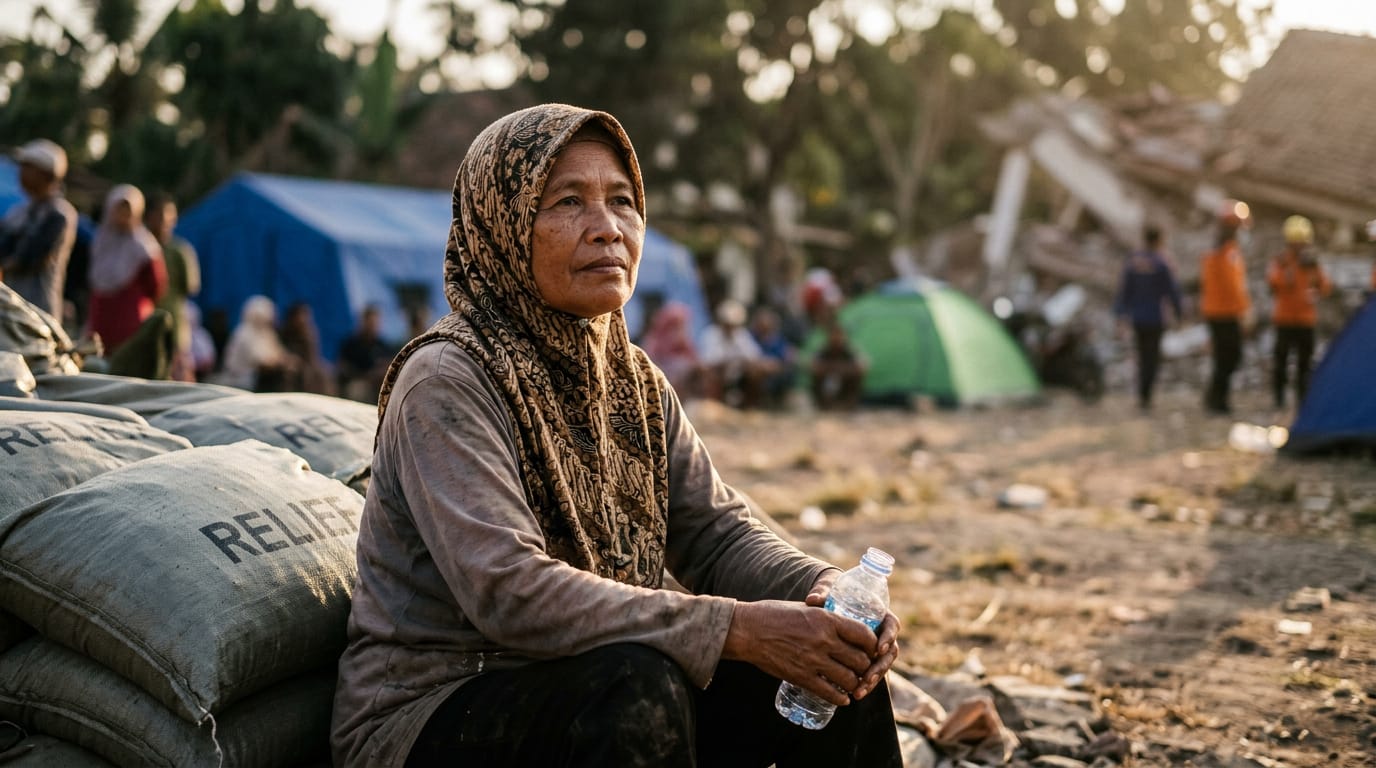
FLORES, Indonesia – A powerful 7.7-magnitude earthquake that struck Indonesia's East Nusa Tenggara province on Saturday has left a trail of widespread destruction, with the death toll climbing to 54 and thousands displaced, struggling to access essential aid. The seismic event, which triggered a brief tsunami warning and nearly a thousand aftershocks, ravaged the Flores region, collapsing homes, severing communication lines, and isolating communities. As rescue teams grapple with challenging terrain and widespread damage, a massive humanitarian operation is underway to provide relief to the burgeoning number of victims, many of whom are now living in temporary shelters, their lives irrevocably altered by the disaster.
The Quake's Fury and Immediate Aftermath
The catastrophic earthquake struck at 5:58 a.m. local time on Saturday, August 15, 2026, its epicenter located approximately 42 miles north-northwest of Ende, a city in the East Nusa Tenggara province. The shallow tremor, originating at a depth of just 10 to 15 kilometers, unleashed immense energy, causing immediate and widespread devastation across Flores Island and its surrounding regencies, including Sikka, Manggarai, East Manggarai, Nagekeo, and Ende. Residents were jolted awake by violent shaking, fleeing their homes in a panic as buildings crumbled around them.
The initial quake was quickly followed by a flurry of aftershocks, numbering nearly 1,000, with 46 of these strong enough to be felt by the traumatized population. One significant aftershock, recorded at magnitude 5.7 to 5.8 on Monday, tragically claimed two additional lives in Ngada Regency, underscoring the ongoing danger. Immediately after the primary earthquake, authorities issued a tsunami warning, prompting coastal communities to seek higher ground. While the alert was later lifted after monitoring indicated no widespread threat, some localized tsunami waves reportedly reached heights of up to 1.61 meters (approximately 5.3 feet) in certain coastal areas, adding to the destruction. The sheer force of the initial quake and subsequent seismic activity has left a lasting imprint of fear, with many residents opting to spend nights outdoors, reluctant to return to potentially unstable structures.
A Growing Humanitarian Crisis Unfolds
The human toll of the earthquake continues to mount, with the death toll rising steadily since Saturday. As of Monday, August 17, 2026, at least 54 fatalities have been confirmed, and more than 135 individuals have sustained injuries. The National Disaster Management Agency (BNPB) initially reported 47 deaths on Saturday, with rescue teams recovering additional bodies in the subsequent days as they accessed more remote areas. The casualties include victims from Manggarai, East Manggarai, Sikka, Ende, Ngada, and other affected districts.
Beyond the immediate loss of life, the earthquake has triggered a severe humanitarian crisis. More than 900 homes have been completely destroyed, and an additional 450 suffered significant damage in East Nusa Tenggara province alone, forcing thousands to abandon their residences. Public infrastructure has also been severely impacted, with over 100 facilities, including schools, health centers, and places of worship, rendered unusable. Critical transportation arteries, such as the Trans-Flores highway, have been cut off by landslides, isolating numerous villages. Power outages and disruptions to communication networks have further hampered efforts to assess the full extent of the damage and coordinate rescue operations.
The number of displaced individuals is significant, with approximately 5,000 residents currently sheltering in temporary accommodations, while the overall number of people rendered homeless exceeds 12,000. These displaced families are in urgent need of basic necessities: food, clean water, medical supplies, and adequate shelter. The psychological trauma endured by survivors, many of whom lost loved ones or witnessed their homes collapse, presents an additional, long-term challenge.
Mobilizing a Nation: Response and Recovery Efforts
In response to the escalating crisis, the East Nusa Tenggara provincial government has declared a 14-day emergency response status, effective until August 28. This declaration aims to streamline disaster response, facilitate evacuation procedures, accelerate aid distribution, and kickstart initial recovery efforts in the hardest-hit areas. The Indonesian government has rapidly mobilized resources, deploying over 3,500 military and police personnel to the disaster zones to assist with search and rescue operations, clear debris, and distribute aid.
The National Disaster Management Agency (BNPB) is coordinating a massive relief effort, with President Prabowo Subianto instructing officials to directly assess conditions on the ground and ensure a swift and targeted response. Logistics hubs have been established in key locations like Labuan Bajo and Maumere to facilitate the delivery of critical supplies. Over 275 tons of humanitarian aid, including 50,000 aid packages, have been dispatched, comprising ready-to-eat meals, children's food, family kits, tents, mattresses, hygiene kits, and medical supplies. To overcome the logistical challenges posed by damaged infrastructure and difficult terrain, land, sea, and air transportation, including helicopters and ferries, are being utilized for distribution.
International and local aid organizations are also playing a crucial role. Caritas Indonesia, for example, has activated its humanitarian network across affected dioceses, providing emergency health services, establishing temporary shelters, and distributing essential items. Teams are focused on supporting vulnerable groups, including children, the elderly, pregnant women, and individuals with disabilities. Despite these concerted efforts, the sheer scale of the devastation and the ongoing logistical hurdles mean that thousands still await adequate assistance, a situation compounded by power outages and communication breakdowns that continue to impede rescue and relief work.
Living on the Ring of Fire: A Constant Threat
Indonesia, an archipelago nation comprising over 17,000 islands, is situated on the seismically active "Ring of Fire," a horseshoe-shaped belt of volcanoes and fault lines encircling the Pacific Ocean. This geological reality makes the country one of the most earthquake-prone regions globally, experiencing thousands of tremors annually. While a 7.7-magnitude earthquake is significant, Indonesia has a long and tragic history of even more powerful seismic events and their devastating consequences.
Notably, a powerful earthquake in 1992 also struck the Flores region, triggering a tsunami that claimed approximately 2,500 lives. In 2004, a colossal 9.1-magnitude earthquake off Sumatra unleashed a monstrous tsunami that killed an estimated 230,000 people across a dozen countries in the Indian Ocean. More recently, a 7.5-magnitude quake in 2018 generated a localized tsunami that devastated coastal areas, resulting in over 4,400 deaths. These historical events serve as a stark reminder of the constant threat faced by Indonesian communities and underscore the importance of robust disaster preparedness and rapid response mechanisms. The recurrent nature of these disasters also highlights the resilience of the Indonesian people, who are frequently forced to rebuild their lives in the face of immense natural forces.
A Long Road to Recovery
The recent earthquake in East Nusa Tenggara represents yet another profound tragedy for Indonesia. With the death toll at 54 and rising, and thousands displaced and in dire need of assistance, the immediate focus remains on search and rescue operations, providing emergency relief, and restoring essential services. The declaration of an emergency response period signals a concentrated national effort, supported by international partners, to alleviate suffering and begin the monumental task of reconstruction.
However, the path to full recovery will be arduous and protracted. Rebuilding homes, schools, and infrastructure will require significant resources and sustained commitment. Beyond the physical rebuilding, communities will also need long-term support to address the psychological trauma and socio-economic disruptions caused by this devastating event. The resilient spirit of the Indonesian people, accustomed to living amidst the powerful forces of nature, will undoubtedly be a crucial factor in their ability to overcome this latest challenge, but the scale of their needs demands continued national and international solidarity.