Indonesian Volcano Erupts, Forcing Mass Evacuations and Flight Cancellations
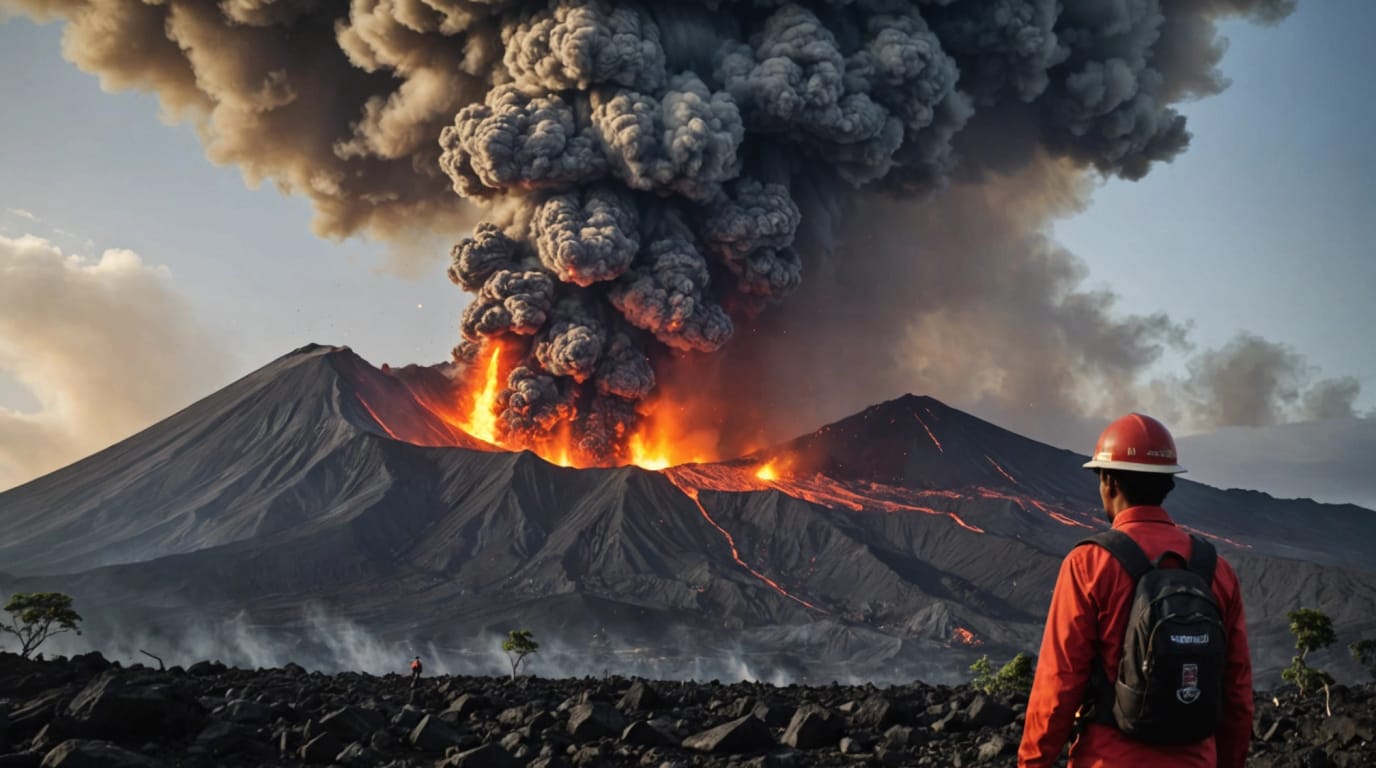
Mount Lewotobi Laki-Laki, a volcano on Flores Island in eastern Indonesia, erupted late Thursday, spewing ash and smoke thousands of feet into the sky and prompting the evacuation of thousands of residents. The eruption has disrupted air travel, leading to the cancellation of international flights to and from Bali, a popular tourist destination. Authorities have raised the volcano's alert level to the highest, urging people to remain in safe locations and follow directives from the regional government.
Eruption Details and Immediate Impact
The eruption of the 1,703-meter (5,587-foot) twin-peaked volcano began around 11:00 p.m. local time Thursday and lasted for 11 minutes and nine seconds. The Indonesian volcanology agency reported that the ash column was observed to be grey to black with thick intensity. Volcanic ash has blanketed several nearby villages. At least two people were injured, including one man whose roof collapsed under the weight of volcanic debris. The agency has also warned of potential volcanic mudflows due to heavy rainfall in the area.
As of Friday morning, more than 4,700 residents had been evacuated from the surrounding areas. Abdul Muhari, a spokesman for the country's disaster agency (BNPB), emphasized the need for residents to remain in safe locations and adhere to instructions from local authorities. The local government has declared a 14-day emergency and established a command post to coordinate response efforts.
Air Travel Disruption
The eruption has significantly impacted air travel, particularly to and from Bali's Ngurah Rai International Airport. As of Friday, seven international flights had been canceled, including six Jetstar flights bound for Australia and one Air Asia flight to Kuala Lumpur. Several other domestic and international flights, including those to Thailand, Singapore, and Australia, have been delayed. The local airport in Maumere, on Flores Island, which is closest to the volcano, has not been affected by the ash, according to the transportation ministry.
Historical Context and Concerns
Mount Lewotobi Laki-Laki, whose name means "man" in Indonesian, is twinned with a calmer volcano named after the Indonesian word for "woman." The volcano has a history of eruptions, including multiple eruptions in November 2024 that resulted in nine fatalities, the cancellation of numerous international flights to Bali, and the evacuation of thousands of people.
Indonesia, an archipelago of over 17,000 islands, sits on the Pacific "Ring of Fire," a region known for its frequent seismic and volcanic activity. The country has 127 active volcanoes, which are closely monitored by geological agencies. In 2018, the eruption of Mount Anak Krakatau caused a portion of the volcano's crater to collapse into the ocean, triggering a tsunami that killed more than 400 people. Authorities are mindful of this past event and are taking precautions to mitigate potential risks.
Evacuation Efforts and Support
Authorities are working to provide assistance to those who have been displaced by the eruption. Evacuees are being housed in temporary shelters, where they are receiving mats, blankets, and masks. Concerns have been raised about the urgent needs of vulnerable groups, including women, the elderly, and children. There have been calls for the government to prioritize essential supplies for evacuees as needs grow increasingly critical.
Housing Minister Maruarar Sirait visited an evacuation site in Kobasoma Village, East Flores, and urged residents to relocate to safer areas. Proposed relocation sites include areas in Wulanggitang District, 20 kilometers north of Mount Lewotobi, and Kramak in Titihena District, 30 kilometers northeast of the volcano.
Ongoing Monitoring and Future Outlook
The geological agency is closely monitoring Mount Lewotobi Laki-Laki for any further signs of increased activity. The exclusion zone around the volcano remains in effect, and residents are urged to stay vigilant and follow the guidance of local authorities. The situation remains dynamic, and further eruptions are possible. The potential for volcanic mudflows also remains a concern, particularly in areas with heavy rainfall. The long-term impact of the eruption on local communities and the environment is still being assessed.


