Indonesia's Military Role Expands, Sparking Democratic Concerns
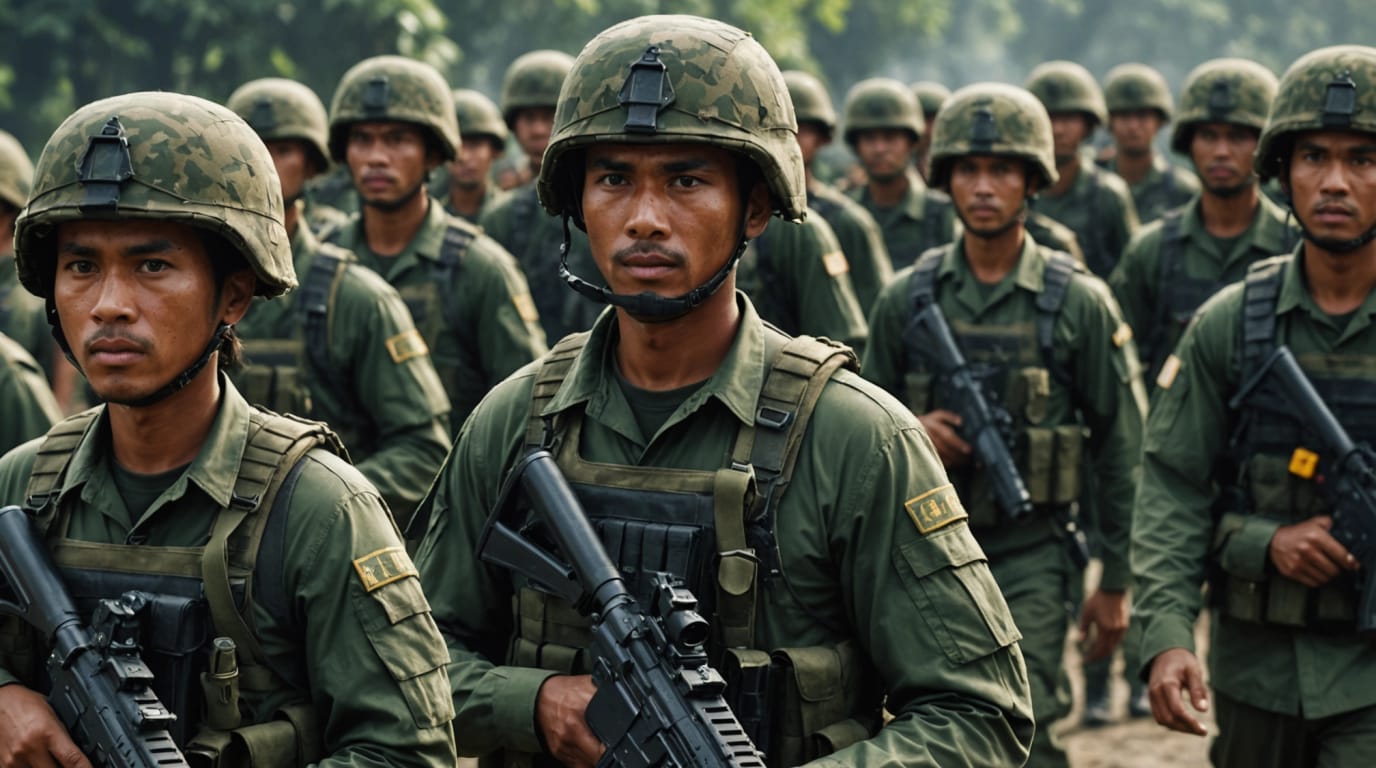
Indonesia's military is experiencing a resurgence in influence, raising concerns among human rights groups and democracy advocates about a potential return to authoritarian practices reminiscent of the Suharto era. Recent legislative changes, coupled with increased defense spending and the appointment of military personnel to civilian positions, have fueled anxieties about the erosion of civilian governance and the potential for human rights abuses.
Controversial Law Expands Military's Reach
On March 20, 2025, the Indonesian Parliament passed controversial amendments to the 2004 Indonesian National Armed Forces (TNI) Law. These revisions significantly expand the government's ability to appoint active-duty military officers to civilian positions, a move critics say undermines democratic principles. Previously, military personnel could only serve in 10 government institutions, primarily those related to security and defense. The new law increases this number to 14, including the Attorney General's Office, the National Disaster Mitigation Agency, the National Counterterrorism Agency, the Indonesian Maritime Security Agency, and the National Agency for Border Management.
This expansion has sparked widespread criticism from civil society organizations, students, and former politicians, who fear a revival of the "dwifungsi" doctrine that characterized the Suharto regime. Dwifungsi, meaning "dual function," allowed the military to exert significant influence over civilian political and social affairs, a practice abolished after the 1998 reforms. Protesters have taken to the streets in Jakarta and other cities, carrying banners with slogans such as "TNI law will make us die" and "Reject TNI law, send TNI back to the barracks."
Echoes of the Past
The expansion of the military's role has revived memories of the New Order regime under President Suharto, where military officers held key government positions, allowing them to control governance and suppress opposition. This practice was dismantled following the 1998 reforms, but critics fear the new law could reverse these gains.
Former President Susilo Bambang Yudhoyono has weighed in on the issue, stating that active military officers who join the government or politics must leave the military, emphasizing this as a key doctrine introduced in the 1998 reforms. A coalition of 186 civil society organizations has also petitioned against the law, highlighting the widespread concern over the blurring lines between civil and military institutions.
Increased Defense Spending and Modernization
Adding to these concerns is the Indonesian government's plan to increase defense spending. The Ministry of Defense aims to gradually increase the defense budget from 0.8 percent to 1.5 percent of the country's gross domestic product (GDP). This increase is intended to enhance defense capabilities through the procurement of weapons and equipment, the development of defense infrastructure, and the improvement of human resources.
President Prabowo Subianto has expressed his commitment to bolstering Indonesia's military strength, arguing that a country's prosperity is closely linked to its security. The proposed state budget for 2025 reflects this commitment, with defense spending slated to rise by 22 percent, from 135 trillion rupiah (AUD$13 billion) in 2024 to 165.2 trillion rupiah (AUD$16 billion). The increased budget is expected to be directed towards enhancing naval and aerial capabilities.
Human Rights Concerns
Human rights organizations have voiced strong opposition to the growing military influence, warning that it could lead to abuses of power, human rights violations, and legal immunity for army officials. They point to Indonesia's history of military impunity, particularly in regions like Papua, where security forces have been accused of unlawful killings, torture, and other ill-treatment.
Under Indonesia's 1997 Law on Military Tribunals, any military personnel, including those in civilian functions, implicated in criminal activity are investigated by military authorities and tried before a military court, rather than a court of general jurisdiction. This raises concerns about the lack of accountability for military personnel who commit abuses while serving in civilian roles.
Military Business Interests
The Indonesian military's involvement in economic activities also raises concerns about potential conflicts of interest and corruption. Historically, the military has operated businesses through foundations and cooperatives, a practice that dates back to the Indonesian war for independence. While a 2004 law mandated that the military end its involvement in business, critics argue that these businesses continue to operate with little regard for accountability.
An academic study in 2019 found that the Indonesian Army still operates its cooperatives businesses for profit, with politicians entering into a "transactional dialogue" with the military, leaving a cultural legacy of entrepreneurship among military leaders. Revelations of illicit online gambling rings and a graft case involving a TNI-run pension fund have further fueled concerns about the potential for corruption and abuse of power.
A Balancing Act
The Indonesian government defends the expansion of the military's role by citing global military advancements and shifting geopolitical dynamics, arguing that restructuring the armed forces is necessary to address both traditional and unconventional threats. Defense Minister Sjafrie Sjamsoeddin has stated that active-duty military personnel selected for civilian posts would "retire early" and undergo skills testing.
However, critics remain skeptical, pointing to the potential for abuse and the erosion of democratic principles. They argue that strengthening civilian institutions and ensuring accountability are essential for maintaining a healthy democracy.
Conclusion
Indonesia stands at a crossroads. The expansion of the military's role in governance, coupled with increased defense spending and historical concerns about human rights abuses and military business interests, has created a climate of uncertainty. Whether Indonesia can balance its security needs with its commitment to democracy and human rights remains to be seen. The coming years will be crucial in determining whether the country continues on its path of democratic reform or risks a return to the authoritarian practices of the past.


