International Aid Cuts Exacerbate Ebola Crisis in Democratic Republic of Congo
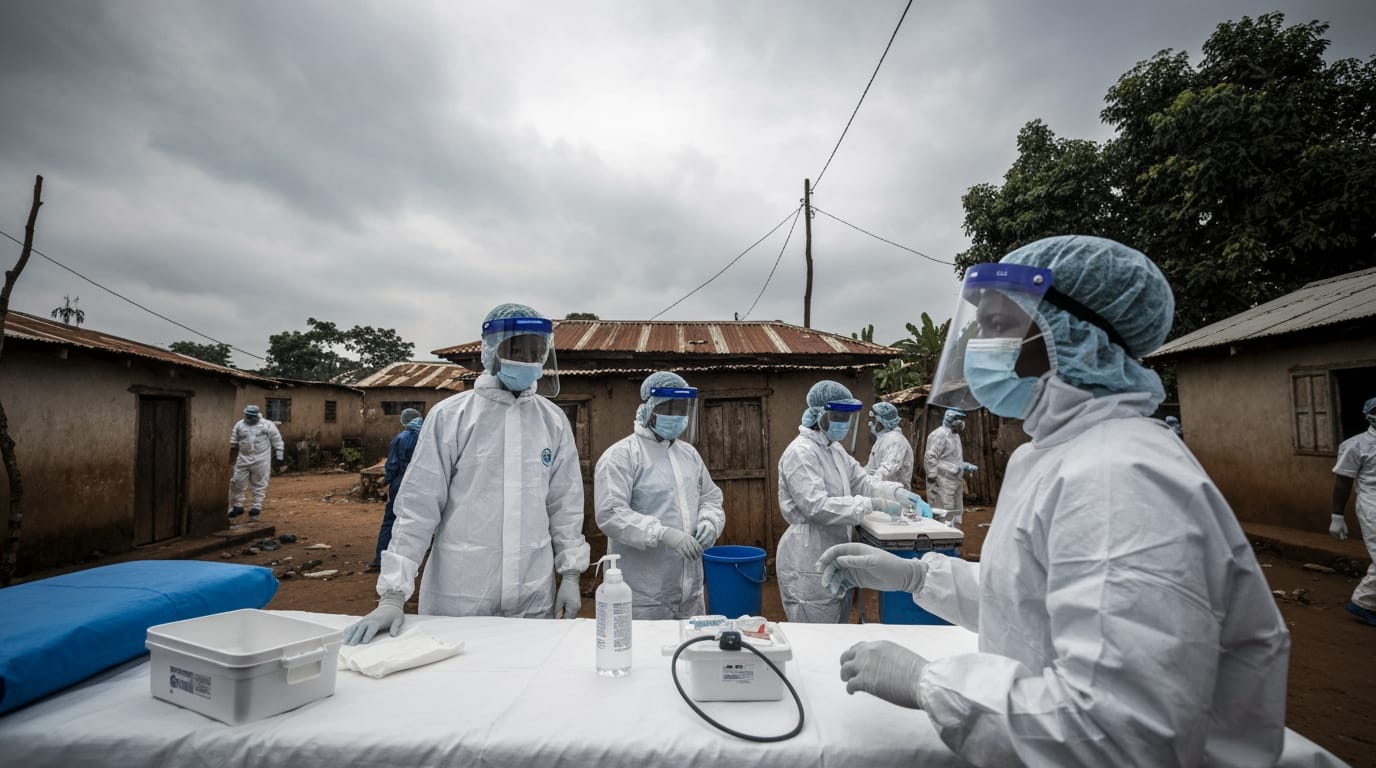
Bunia, Democratic Republic of Congo – The Democratic Republic of Congo (DRC) finds itself grappling with its 17th Ebola outbreak, a deadly resurgence of the Bundibugyo strain that is rapidly spreading across its eastern provinces and into neighboring Uganda. This latest public health emergency unfolds amidst a critical backdrop of significantly reduced international aid, which health experts and humanitarian organizations contend has severely hampered the nation's capacity to detect, contain, and treat the highly contagious disease. The withdrawal of crucial funding has left an already fragile health system dangerously exposed, jeopardizing response efforts and potentially prolonging a crisis with dire human costs.
A Resurgent Threat Amidst Dwindling Support
The current Ebola outbreak, declared a public health emergency of international concern by the World Health Organization, is centered primarily in the DRC's Ituri, North Kivu, and South Kivu provinces, with cases also reported in Uganda. As of late May 2026, the situation has rapidly escalated, with hundreds of suspected cases and dozens of confirmed fatalities. This particular strain, Bundibugyo, presents a unique challenge as there is currently no approved vaccine or targeted treatment, intensifying the reliance on robust public health interventions such as surveillance, contact tracing, and isolation. The DRC has a long history of confronting Ebola, having experienced 16 previous outbreaks since 1976. However, medical personnel and aid workers on the ground warn that this time, their capacity is critically diminished.
The primary factor undermining the response is a series of sweeping aid cuts implemented by the United States and other Western nations, including the United Kingdom and Germany, which took effect largely in 2025. Historically, the U.S. has been the largest provider of humanitarian and health assistance to the DRC, funding over 70 percent of humanitarian action in 2024 through mechanisms like USAID. Reports indicate that the U.S. Agency for International Development (USAID) effectively ceased operations in July 2025, leading to the termination of roughly 80% of its global health awards and the pulling of $12.7 billion in committed funding. These abrupt reductions were not accompanied by adequate transition plans, leaving a void in critical health services.
Frontline Fails: How Funding Gaps Undermine Response
The consequences of these funding withdrawals are acutely felt on the front lines of the Ebola fight. Aid organizations, such as Oxfam and Physicians for Human Rights, state that the cuts left the DRC "effectively blind" to the emerging threat, weakening crucial surveillance systems that could have detected the outbreak much earlier. The virus likely spread undetected for weeks, costing valuable time in a race against a highly aggressive pathogen.
Beyond delayed detection, the immediate response capabilities have been severely compromised. Frontline health agencies now operate with dangerously limited resources, lacking sufficient staff, essential emergency supplies like personal protective equipment (PPE), and adequate testing kits. Many health facilities have been forced to reduce services or close entirely due to the funding vacuum. The International Rescue Committee (IRC) noted that its programming in Ituri province, the epicenter of the current outbreak, was cut from five health areas to just two following the funding reductions in March 2025. This weakening of the rapid response infrastructure, built over decades, now hampers efforts to quickly isolate cases, trace contacts, and save lives, leading experts to fear this could become one of the worst outbreaks in over a decade.
Beyond Ebola: A Collapsing Health Infrastructure
The impact of the aid cuts extends far beyond the immediate Ebola response, threatening to unravel the broader public health fabric of the Democratic Republic of Congo. National health programs targeting pervasive diseases such as malaria, tuberculosis, and HIV, along with critical initiatives for maternal and child health, immunization, and malnutrition, have seen significant disruptions. Doctors Without Borders/Médecins Sans Frontières (MSF) reported that the withdrawal of World Bank funding alone affected over 500 health facilities in South Kivu, leading to widespread shortages of medicines, vaccines, and nutritional supplies. For instance, measles vaccines were unavailable for months in 2025 despite active outbreaks.
The country's healthcare infrastructure, already inadequate with many facilities in disrepair, is struggling to cope. Maternal health services have been particularly hard hit, with reports of increased uterine ruptures and maternal deaths as pregnant women are now required to pay for previously free services. The erosion of these foundational health services creates a perilous environment where preventable diseases can flourish and future outbreaks, of Ebola or other pathogens, become increasingly difficult to manage.
A Crucible of Crises: Conflict, Displacement, and Mistrust
Compounding the challenges posed by aid cuts are the layers of ongoing crises in eastern DRC. The region is a volatile conflict zone, plagued by persistent fighting between armed rebel groups, particularly in Ituri province. This insecurity profoundly complicates all aspects of the Ebola response, making it dangerous for health workers to access affected communities, hindering contact tracing efforts, and delaying the deployment of critical supplies. Humanitarian operations regularly face security threats, and several organizations have been forced to suspend activities due to violence.
Furthermore, the widespread conflict has led to the displacement of millions of people, many of whom reside in overcrowded camps. These congested living conditions are ideal for rapid disease transmission, further exacerbating the challenge of containing Ebola. Adding to this complex situation is a prevailing mistrust within some local communities, fueled by misinformation and rumors. This distrust can lead to resistance against essential public health measures, including safe burial practices and seeking care at treatment centers, and has regrettably resulted in attacks on health facilities and personnel.
The Perilous Path Ahead
The convergence of a deadly Ebola outbreak, drastic international aid reductions, and entrenched humanitarian crises has created a formidable challenge for the Democratic Republic of Congo. While the U.S. State Department has contended that its efforts are now "more aligned and effective" through alternative funding streams and has pledged $23 million in bilateral assistance, aid groups widely disagree, citing critical gaps in capacity and surveillance. The current situation underscores the interconnectedness of sustained international support, robust public health infrastructure, and regional stability. Without renewed and substantial commitment from the global community, the DRC faces a perilous path where this latest Ebola outbreak risks spiraling further, inflicting immeasurable suffering and destabilizing an already vulnerable region. The ongoing crisis serves as a stark reminder that neglecting global health security in one region can have far-reaching and devastating consequences worldwide.