International Cooperation Halts Belgian Wildfire at German Border, Monschau Evacuates Over Smoke Threat
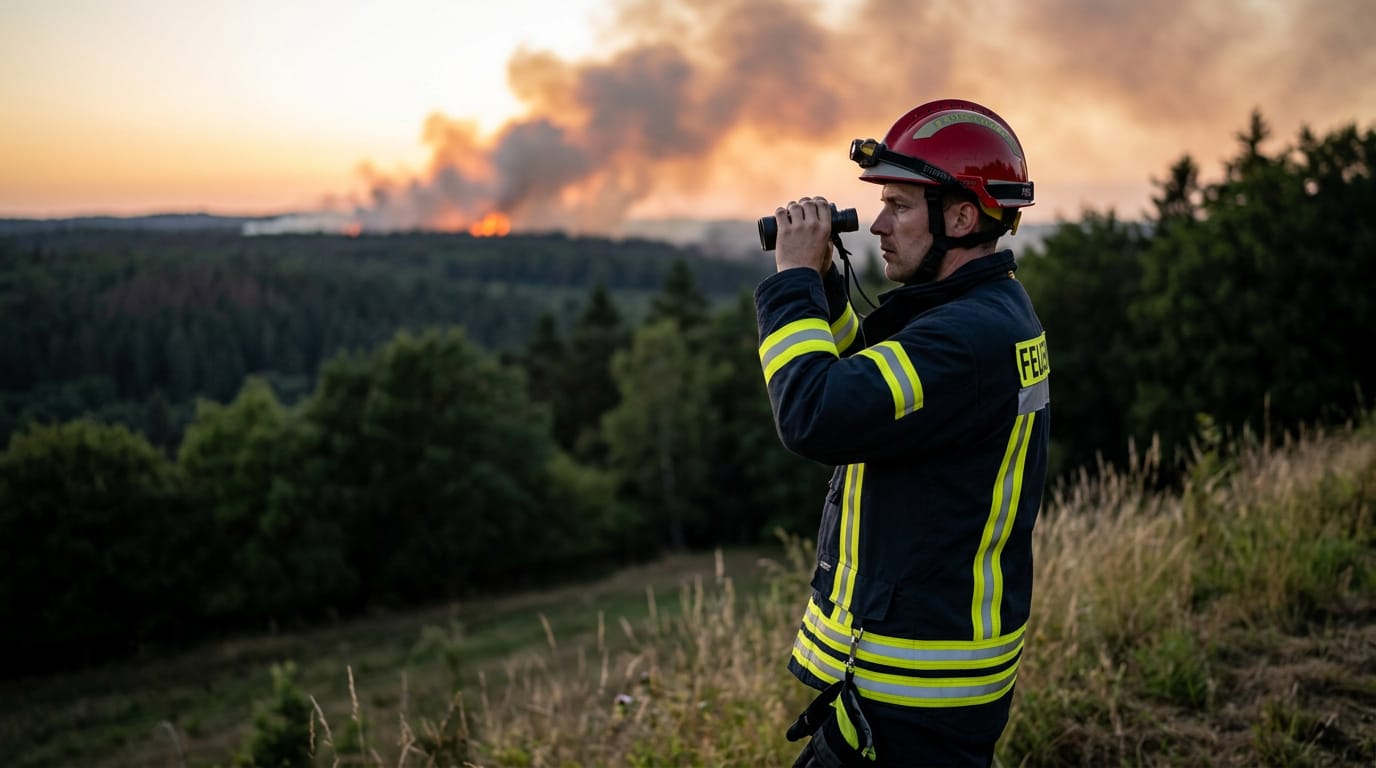
HAUTES FAGNES/MONSCHAU – An unprecedented wildfire, the largest in Belgium's modern history, has been successfully held back from crossing into German territory thanks to a formidable international response, though the inferno continues to rage and has prompted evacuations and severe smoke warnings in border communities. The blaze, which ignited in Belgium's High Fens nature reserve last Friday, August 14, 2026, has already consumed over 3,000 hectares (approximately 7,500 acres) of fragile peatlands and pine forests, driven by persistent heatwaves and drought conditions gripping Europe. While the direct spread of flames into Germany has been averted for now, the German town of Monschau has seen parts of its population advised to evacuate due to heavy smoke, underscoring the cross-border impact of such environmental disasters.
A Record-Breaking Inferno in the High Fens
The High Fens, a unique and ecologically vital nature reserve in Belgium's Liege province, became the epicenter of what quickly escalated into the nation's most extensive wildfire on record. Breaking out on Friday, the fire spread rapidly eastward, fueled by exceptionally dry conditions and temperatures that touched nearly 37 degrees Celsius (98.6 degrees Fahrenheit) earlier in the week. This event surpasses Belgium's previous record, a 2011 fire that scorched 1,400 hectares in the same reserve, highlighting the increasing intensity of such incidents. The delicate ecosystem of boggy peatlands and dense pine forests, while popular with hikers, presents significant challenges for ground-based firefighting efforts, with heavy vehicles risking entanglement in the soft terrain.
Germany on High Alert as Blaze Nears Border
The proximity of the raging inferno to the German frontier posed a serious threat, with the fire front coming as close as 1.5 to 3 kilometers from the border. The German town of Monschau, home to 12,000 residents and situated directly across from the High Fens, found itself directly in the path of the smoke plume. On Sunday, local authorities in Monschau took the precautionary step of advising residents in three of its districts to temporarily leave their homes, while residents of two specific streets were ordered to evacuate due to the combined threat of fire and dense smoke. This action followed earlier recommendations for those closest to the border to evacuate. Although officials did not anticipate the flames themselves would cross into Germany, the risk of "severe air pollution due to smoke" necessitated these swift measures. On the Belgian side, approximately 600 people in the border municipalities of Waimes and Butgenbach were also told to evacuate their homes on Saturday as shifting winds spread smoke, with some finding refuge in local sports halls.
A United European Response
The containment of the wildfire and the protection of the German border have been a testament to robust cross-border cooperation and a significant deployment of resources. Over 250 emergency services personnel have been mobilized, drawing firefighters not only from Belgium but also from Germany, Luxembourg, and the Netherlands. Ground crews worked tirelessly to establish defensive lines and control the advancing fire front. Crucially, aerial support played a pivotal role in battling the blaze. Belgium activated the European Union's Civil Protection Mechanism, leading to the deployment of water-bombing aircraft from Sweden and helicopters from the Netherlands and Czechia. These aircraft were observed repeatedly scooping water from nearby lakes to douse the flames. Adding to the collective effort, local farmers in the region demonstrated remarkable solidarity, utilizing their tractors to transport water tankers to the fire zone, assisting professional firefighters. This multi-national and multi-sector approach has been instrumental in limiting the fire's reach. As of Monday, August 17, 2026, while the fire was not yet fully under control, authorities stated that the defensive lines protecting evacuated villages were holding firm.
Climate Change and the European Wildfire Crisis
The wildfire in the High Fens serves as a stark reminder of Europe's escalating vulnerability to extreme weather events. The blaze ignited during Belgium's fifth heatwave of the summer, a season characterized by repeated heatwaves and prolonged drought across the continent. Scientists increasingly link such hot and dry conditions, which fuel more rapid and longer-burning wildfires, to human-caused climate change. Similar large-scale forest fires have plagued other European countries this summer, including Croatia, France, Germany, Greece, and Spain, forcing thousands of evacuations. The High Fens itself has a history of significant fires, with the current event being the largest since a similar period of heat and drought in 1911. The challenging terrain, composed of heath and peat bogs, further complicates firefighting efforts, as peat fires can smolder underground for extended periods, making full extinguishment difficult.
Looking Ahead
While the immediate threat of the Belgian wildfire spreading into Germany has been contained through diligent international collaboration, the ongoing battle against the flames in the High Fens underscores persistent environmental challenges. The deployment of a diverse array of resources, from ground crews and specialized vehicles to international aerial support and local volunteers, has proven critical in preventing an even greater disaster. However, the sheer scale and intensity of this record-breaking blaze highlight the growing impact of climate change, suggesting that such cross-border emergencies may become more frequent. The experience gained from this unified response will undoubtedly inform future strategies as Europe grapples with a future where intense wildfires are an increasingly common reality.