International Criminal Court Condemns US Sanctions as 'Flagrant Attack' on Global Justice
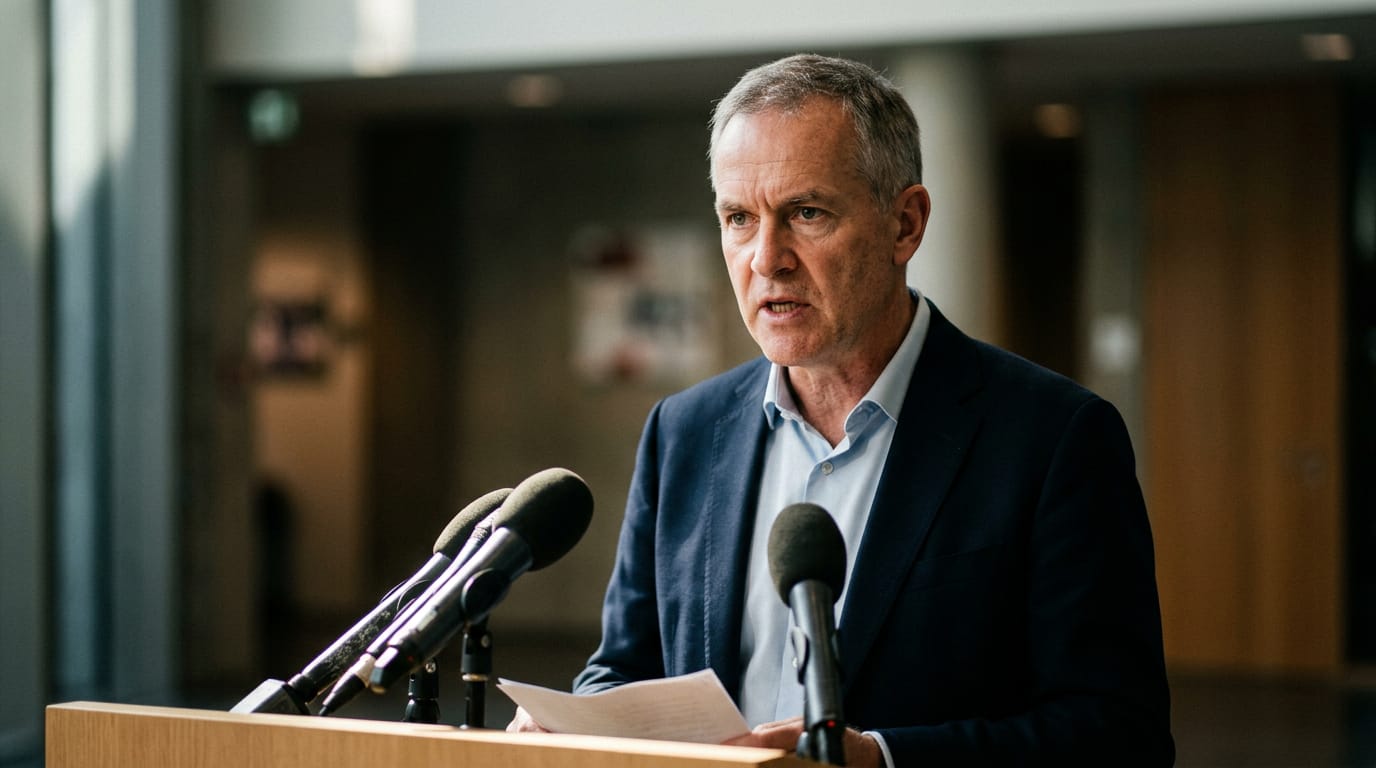
The Hague, Netherlands – The International Criminal Court (ICC) has strongly denounced recent sanctions imposed by the United States on its president and a senior prosecutor, labeling the move a "flagrant attack" against the court's independence and impartiality. The escalating tensions stem from the ICC's pursuit of investigations into alleged war crimes involving American and Israeli personnel, prompting swift and severe punitive measures from Washington that have drawn widespread international condemnation and ignited a fierce debate over the future of global accountability for atrocities.
US Expands Sanctions Amidst Contentious Investigations
The latest round of US sanctions, announced by Secretary of State Marco Rubio, targets ICC President Tomoko Akane of Japan and Senior Trial Lawyer Abdoulaye Seye of Senegal. The State Department justified the actions by accusing Akane and Seye of "directly engaged in efforts by the ICC to investigate, arrest, detain, or prosecute officials whose government has not consented to ICC jurisdiction." These measures, which include freezing assets within US jurisdictions and prohibiting entry into the United States, were implemented under Executive Order 14203, issued by President Donald Trump in February 2025. The order specifically targets ICC officials involved in investigating US or Israeli nationals.
This marks a significant expansion of a campaign that has seen the US sanction several ICC officials previously, including former Chief Prosecutor Fatou Bensouda. With this latest action, the court reports that nine of its eighteen judges, both deputy prosecutors, and other staff are now under American sanctions. Secretary Rubio characterized the Hague-based court as a "corrupt and fatally politicized supranational court that has maliciously abused its authority and exceeded its mandate," asserting that the US "will not tolerate its assault on state sovereignty."
The sanctions are primarily a response to two high-profile ICC investigations. One involves alleged war crimes by US military and intelligence personnel in Afghanistan, particularly concerning the treatment of detainees. The ICC authorized this investigation in March 2020, despite strong US opposition, after an initial request from Chief Prosecutor Fatou Bensouda in 2017. The other key flashpoint is the ICC's recent issuance of arrest warrants in November 2024 for Israeli Prime Minister Benjamin Netanyahu and former Defense Minister Yoav Gallant. These warrants allege war crimes and crimes against humanity, including "starvation of civilians as a method of warfare," related to the ongoing Israel-Hamas War. Abdoulaye Seye, the newly sanctioned senior trial lawyer, has reportedly played a role in the investigation into Israeli funding for illegal settlements in the West Bank and alleged weapons distribution to settlers. The US and Israel are not signatories to the Rome Statute, the treaty that established the ICC, and therefore do not recognize the court's jurisdiction over their citizens.
ICC Vows Continued Independence, Underscores Threat to Rule of Law
In response to the sanctions, the International Criminal Court released a statement deploring the US actions as "a flagrant attack against the independence of an impartial judicial institution which operates pursuant to the mandate conferred by its States Parties from across regions." The court emphasized that such coercive measures not only threaten its institutional integrity but also "impact the ability of victims to seek justice, as they turn to the court when all other avenues have been exhausted."
The ICC reiterated its commitment to carrying out its mandate "with independence and impartiality," asserting that "when judicial actors are threatened for applying the law, it is the international legal order itself that is placed at risk." The court highlighted its role in prosecuting individuals for genocide, war crimes, crimes against humanity, and the crime of aggression, acting as a last resort when national systems fail. President Akane had previously warned in December that US sanctions could "rapidly undermine the court's operations in all situations and cases, and jeopardize its very existence."
Widespread International Condemnation and Calls for Support
The US sanctions have drawn immediate and strong condemnation from numerous international actors, highlighting a growing rift in the global approach to international justice. United Nations Secretary-General António Guterres expressed "serious concern" over the sanctions, underscoring the UN's view of the ICC as "a key pillar of international criminal justice." Volker Turk, the UN human rights chief, went further, calling the fresh US sanctions "unacceptable" and urging countries to protect court officials from such "reprisals."
The European Union has also voiced its "deep regret" over the US decision, reaffirming its "unwavering support" for the ICC. European Commission President Ursula von der Leyen and European Council President Antonio Costa jointly stated that the ICC "helps deliver justice to the victims of some of the world's most horrific crimes" and that its judges and officials "must be able to act independently and without external pressure." EU foreign policy chief Kaja Kallas stressed that the court's independence, impartiality, and ability to fulfill its mandate must be free from "pressure, intimidation or interference." Discussions are reportedly underway within the EU to explore mechanisms, such as amending the Blocking Statute, to protect European operators from the extraterritorial effects of US sanctions against the ICC.
Japan, the home country of ICC President Tomoko Akane, expressed its disappointment, with its foreign ministry calling the measures "very unfortunate" and reiterating Japan's consistent support for the court's mission to uphold the rule of law. Human rights organizations and civil society groups worldwide have also condemned the sanctions, viewing them as an attempt to undermine accountability for grave international crimes and protect perpetrators from justice.
A Challenging Precedent for Global Accountability
The long-standing tension between the United States and the International Criminal Court underscores a fundamental disagreement over national sovereignty versus international jurisdiction. The US has consistently maintained that it cannot be subjected to the authority of a court it has not joined, particularly when it concerns its military personnel or close allies. Conversely, proponents of the ICC argue that its mandate to prosecute the gravest international crimes serves as a crucial safeguard when national legal systems are unwilling or unable to act.
The recent US sanctions intensify the pressure on the ICC, potentially impacting its operations, funding, and the willingness of individuals to cooperate with its investigations. Reports suggest that sanctions can prevent ICC officials from accessing basic financial services, as experienced by one sanctioned judge. This "chilling effect" extends beyond direct targets, affecting civil society organizations, investigators, lawyers, and victims who must now weigh their interactions with the ICC against the threat of penalties.
The current confrontation raises critical questions about the future effectiveness of international judicial institutions and the broader international legal order. While the ICC maintains its resolve to continue its work, the US's determined effort to "dismantle" what it perceives as a threat to its sovereignty creates a challenging precedent for global cooperation on justice and accountability. The international community's response will likely shape the trajectory of the ICC and the principles of universal justice for years to come.