International Waters Become Flashpoint as Israel Intercepts Gaza-Bound Aid Flotilla
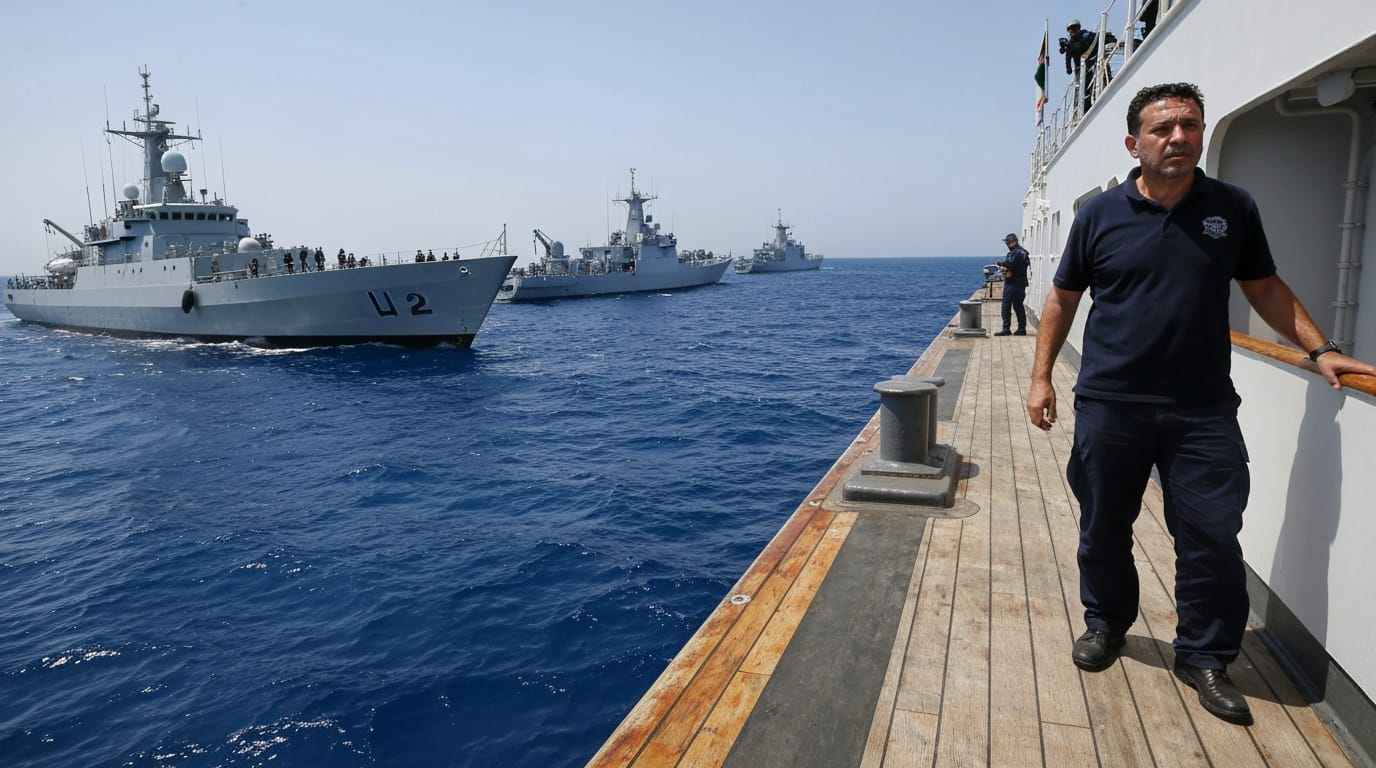
NEAR CRETE, Greece – In a move drawing immediate international condemnation, Israeli naval forces have once again intercepted an international aid flotilla en route to the besieged Gaza Strip, sparking renewed debate over maritime law, humanitarian access, and the ongoing blockade. The incident, occurring in international waters hundreds of nautical miles from Gaza, saw vessels from the Global Sumud Flotilla (GSF) boarded and reportedly disabled, with organizers alleging a "violent raid" and the "abduction" of humanitarian workers. Israel, however, maintains its actions were necessary to enforce a legitimate security blockade, dismissing the activists as "attention-seeking agitators."
The confrontation on Wednesday, April 30, 2026, marks the latest chapter in a long-running series of maritime challenges to Israel's control over Gaza's coast. The flotilla, comprising dozens of vessels, aimed to deliver life-saving aid directly to the Palestinian enclave, which humanitarian organizations describe as experiencing a catastrophic crisis. The incident underscores the intractable nature of the conflict, pitting urgent humanitarian needs against entrenched security concerns and complex interpretations of international law.
The Interception: Claims of Force and Abduction
Organizers of the Global Sumud Flotilla reported that the Israeli Navy initiated its operation near the Greek island of Crete, a significant distance from Israel's territorial waters. According to the GSF, 15 of their 58 vessels were intercepted, with "people at sea remain unaccounted for." The group further claimed that during the interdiction, naval forces engaged in a "violent raid," systematically disabling boats by smashing engines and destroying navigation arrays, leaving "hundreds of civilians stranded on powerless, broken vessels directly in the path of a massive approaching storm." Additionally, communications with multiple vessels were reportedly jammed, severing their ability to coordinate or signal for help.
Among those allegedly onboard the flotilla were international activists, including some Australians. The national racial justice organization Democracy in Colour released a statement condemning what it termed "Israel's abduction of 12 Australian humanitarian workers," identifying one as board member and activist Ethan Floyd. The organization has called on the Australian government to intervene and demand their immediate and safe release.
In response, Israel's UN envoy, Danny Danon, asserted via social media that the flotilla was stopped "before reaching our area" and characterized the participants as "delusional attention-seeking agitators." The Israeli Navy reportedly warned the vessels to turn back, or to deliver their aid to Ashdod Port for inspection before entering Gaza, stating that continued progress would lead to their interception.
Gaza's Dire Humanitarian Reality Fuels Aid Efforts
The flotilla's mission was explicitly humanitarian, seeking to deliver critical supplies to the two million Palestinians in Gaza facing what the GSF describes as a state of siege. This undertaking comes amidst overwhelming evidence from numerous international bodies and aid organizations detailing a severe humanitarian crisis in the Strip. Gaza is grappling with an ongoing famine, a collapsing healthcare system, and acute shortages of essential supplies including fuel, food, medication, and water.
The humanitarian situation has been exacerbated by conflict and a tightened blockade. Reports indicate that as of August 2025, 100% of Gaza's population faced "high levels of acute food insecurity," with projections indicating that 32% could reach "catastrophic levels" by September 2025. Current assessments project that over 100,000 children and 37,000 pregnant and breastfeeding women will suffer acute malnutrition through April 2026. Nearly all of Gaza's 2.1 million residents have been displaced, lacking adequate shelter, food, medical services, and clean water. While a ceasefire agreement in October 2025 allowed for some increase in aid, the situation remains "highly fragile," with calls for sustained, unhindered humanitarian access. The United Nations Security Council, through Resolution 2803 (2025), has endorsed a comprehensive plan aimed at consolidating peace and addressing the profound needs in Gaza.
Legal Battleground: Blockade, Sovereignty, and International Waters
The interception of aid flotillas in international waters consistently ignites a fierce legal debate, with both sides citing international law to support their positions. Flotilla organizers and human rights groups contend that Israel's actions constitute a blatant violation of international law. They argue that the Israeli military lacks jurisdiction in international waters and that intercepting humanitarian missions defies International Court of Justice rulings calling for unhindered humanitarian access to Gaza. Furthermore, many human rights organizations maintain that the Gaza blockade itself is an unlawful form of collective punishment against the civilian population. Experts, like Israeli international law scholar Omer Shatz, argue that even if the blockade were deemed lawful, international law mandates a "humanitarian road from the high seas to Gaza."
Conversely, Israel asserts the legality of its naval blockade and its right to interdict vessels attempting to breach it, even in international waters. According to Robbie Sabel, a former legal adviser to the Israeli foreign ministry, states can lawfully seize ships in international waters during armed conflict. Israel maintains it is in an ongoing armed conflict with Hamas and that the blockade is a legitimate security measure designed to prevent weapons smuggling and terrorist activities. The Israeli Foreign Ministry has stated that the blockade was publicly declared and ships were notified, arguing that international law permits enforcement in international waters as long as neutral states' access is not impeded. A UN investigative committee, following the 2010 Mavi Marmara incident, concluded that Israel's blockade was legal as a security measure and that it was "justified in stopping vessels even outside its territorial waters," though it found the force used to be "excessive."
A Recurring Pattern of Confrontation
This latest incident is not isolated but rather part of a persistent pattern of attempts to challenge the Gaza blockade by sea. Over the past decade and a half, numerous "freedom flotillas" have set sail for Gaza, almost invariably leading to confrontations with the Israeli Navy.
One of the most high-profile and tragic incidents occurred in May 2010 when Israeli commandos raided the Mavi Marmara, resulting in the deaths of 10 activists and dozens more wounded. This event triggered widespread international outrage and severely strained diplomatic relations between Israel and Turkey. Other notable interdictions include the seizure of the "Marianne of Gothenburg" in 2015, the "Al Awda" and "Freedom" in 2018, and multiple vessels in 2025, including the "Madleen," which carried prominent climate activist Greta Thunberg and a Franco-Palestinian Member of European Parliament. Each of these confrontations has seen activists detained, aid confiscated, and calls for investigations into the legality of Israel's actions and the use of force.
Unresolved Tensions and Future Prospects
The interception of the Global Sumud Flotilla in international waters highlights the deep-seated and unresolved tensions surrounding the Gaza Strip. Despite a ceasefire and ongoing diplomatic efforts, the fundamental issues of humanitarian access, Israel's security concerns, and the legality of the blockade remain contentious. As Gaza continues to face a profound humanitarian crisis, international activists are likely to persist in their efforts to deliver aid by sea, ensuring that these high-stakes confrontations remain a recurring feature of the regional landscape. Without a comprehensive political resolution addressing both security and humanitarian needs, the waters off Gaza will likely continue to be a flashpoint where international law is tested and human lives hang in the balance.


