Naval Blockade Divides Powers: Iran Declares U.S. Pressure "Doomed to Fail" as CENTCOM Cites "High Effectiveness"
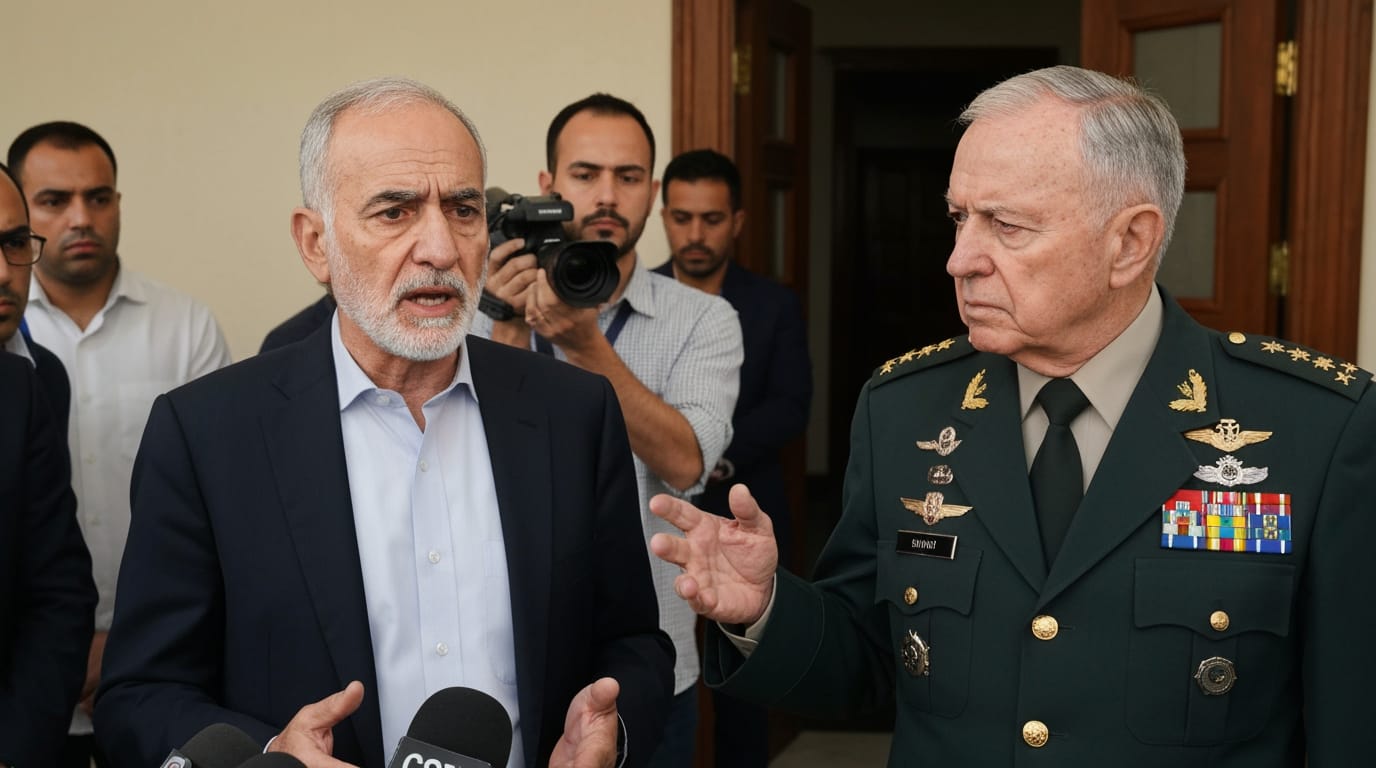
In a sharp escalation of geopolitical tensions, Iranian President Masoud Pezeshkian emphatically stated on Thursday that a U.S. naval blockade targeting Iranian ports was "doomed to fail," warning such measures would exacerbate instability in the Persian Gulf. His pronouncement came as Admiral Brad Cooper, Commander of U.S. Central Command (CENTCOM), touted the blockade's "high effectiveness," citing dozens of intercepted vessels and billions in lost Iranian oil revenue. This stark divergence in assessment underscores the intensifying standoff between Tehran and Washington, a situation with profound implications for global energy markets and regional security.
President Pezeshkian, speaking on National Persian Gulf Day, unequivocally condemned the U.S. naval operation, which commenced on April 13, 2026, following a fragile ceasefire in the broader conflict with Iran. He asserted that any attempt to impose maritime restrictions constitutes a violation of international law and serves only to deepen regional disruptions, rather than enhance security. Pezeshkian's remarks reinforced Iran's long-held stance that it would not yield to external coercion, emphasizing that "no kind of negotiation can take place in an atmosphere of pressure, threats, and siege." He explicitly demanded the removal of such "operational obstacles" as a prerequisite for any renewed diplomatic engagement. The President's comments echoed earlier warnings from Iranian military figures, including Supreme Leader's military adviser Mohsen Rezaei, who cautioned that Iran would "not tolerate" the blockade and would "respond" if it persisted. Iran's Parliament Speaker, Mohammad Bagher Ghalibaf, similarly dismissed the U.S. pressure campaign as ineffectual, labeling related advice to the U.S. administration as "junk".
Tehran's defiance is rooted in decades of experience navigating international sanctions, fostering what it terms a "resistance economy." This strategic approach has involved systematically stockpiling essential goods, diversifying industries, and establishing alternative trade routes to circumvent international pressure. Iran’s economic framework, hardened by persistent sanctions, includes an extensive network of supply chains designed with multiple layers of redundancy. This allows Iranian firms to maintain larger inventories of parts and materials, enabling them to shift to alternative routes if one pathway is disrupted. Despite the current naval restrictions, Iran maintains significant land borders with neighboring countries like Iraq, Turkey, and Afghanistan, offering viable avenues for trade. Experts suggest that Iran’s leadership believes its economy can endure prolonged pressure more effectively than the global economy can absorb the fallout from disrupted energy supplies.
In stark contrast to Tehran's dismissals, Admiral Brad Cooper presented a detailed account of the blockade's alleged success. Speaking on Wednesday, April 30, 2026, the CENTCOM commander reported that U.S. forces had successfully redirected 42 commercial vessels attempting to enter or depart Iranian ports. More significantly, Cooper highlighted that 41 oil tankers, collectively carrying an estimated 69 million barrels of crude oil, remained idle, unable to reach markets. This translates to an estimated loss of over $6 billion in potential revenue for the Iranian regime, a sum Cooper asserted Iran's leadership "cannot financially benefit" from. CENTCOM's enforcement efforts have extended beyond the Persian Gulf, with U.S. forces actively intercepting or seizing tankers suspected of carrying Iranian crude in the Indian Ocean and Arabian Sea. U.S. officials characterize the operation not as a hermetic seal but as an "economic squeeze," aimed at substantially curtailing Iran's revenues. President Donald Trump reinforced this perspective, suggesting the blockade could endure for months and deeming it more effective than military action in compelling Iran to concede on its nuclear program. These naval actions are part of a broader U.S. strategy that, according to earlier CENTCOM statements in March 2026, has already significantly degraded Iran's military capabilities, including the destruction of two-thirds of its arms manufacturing facilities and 92% of its largest naval vessels, alongside a 90% reduction in missile and drone attacks.
While U.S. officials champion the blockade's impact, the situation on the ground presents a complex and multifaceted economic reality. Reports indicate the blockade has indeed begun to disrupt Iran's oil flows, leading to a sharp reduction in oil loadings and rapidly filling storage facilities, which could soon necessitate production cuts. The immediate financial pinch on Iran's revenue might be delayed by two to four months due to existing payment structures and oil-on-water, but a significant long-term squeeze is anticipated. For the average Iranian citizen, the combined effects of the blockade and existing sanctions are manifesting as severe economic hardship, marked by job losses and escalating inflation. The Iranian rial has plummeted to record lows against the U.S. dollar, further eroding purchasing power and making imported goods prohibitively expensive. However, Iran's strategies for sanctions evasion are also well-documented, with some vessels managing to bypass the blockade and continue trade through informal networks and alternative channels. The global energy market is feeling the repercussions directly, as the blockade, coupled with Iran's earlier closure of the strategic Strait of Hormuz—a vital conduit for a fifth of the world's oil—has sent crude prices soaring to four-year highs. This volatile situation is fueling concerns about global energy security and economic stability.
The ongoing naval blockade has severely hampered diplomatic efforts to de-escalate tensions. President Pezeshkian has made it clear that Iran views the blockade as an unacceptable precondition for dialogue, refusing to negotiate "under coercion". This creates a diplomatic deadlock, as the U.S. appears committed to leveraging the economic pressure to bring Tehran to the negotiating table on its own terms. The stalemate raises the specter of a prolonged standoff, with potentially grave implications for regional stability. Analysts are closely watching how the global community responds, particularly given the ripple effects on oil prices and international trade. The situation underscores the delicate balance of power in the Persian Gulf, where economic pressure, military posturing, and diplomatic intransigence converge to create an environment of profound uncertainty.
The clashing narratives from Tehran and Washington paint a clear picture of a high-stakes confrontation. While President Pezeshkian steadfastly asserts Iran's resilience and condemns the blockade as an illegal and ultimately futile endeavor, CENTCOM maintains that the pressure is yielding tangible economic results. The ongoing naval blockade represents a significant chapter in the long-standing geopolitical struggle, with its ultimate efficacy and long-term consequences yet to be fully realized. As global oil markets remain volatile and diplomatic pathways appear increasingly constrained, the international community watches closely, aware that the trajectory of this standoff will profoundly shape not only the future of Iran and the United States but also the broader landscape of Middle Eastern and global security.


