Iran and U.S. Dance on Brink of Dialogue Amid Escalating Tensions
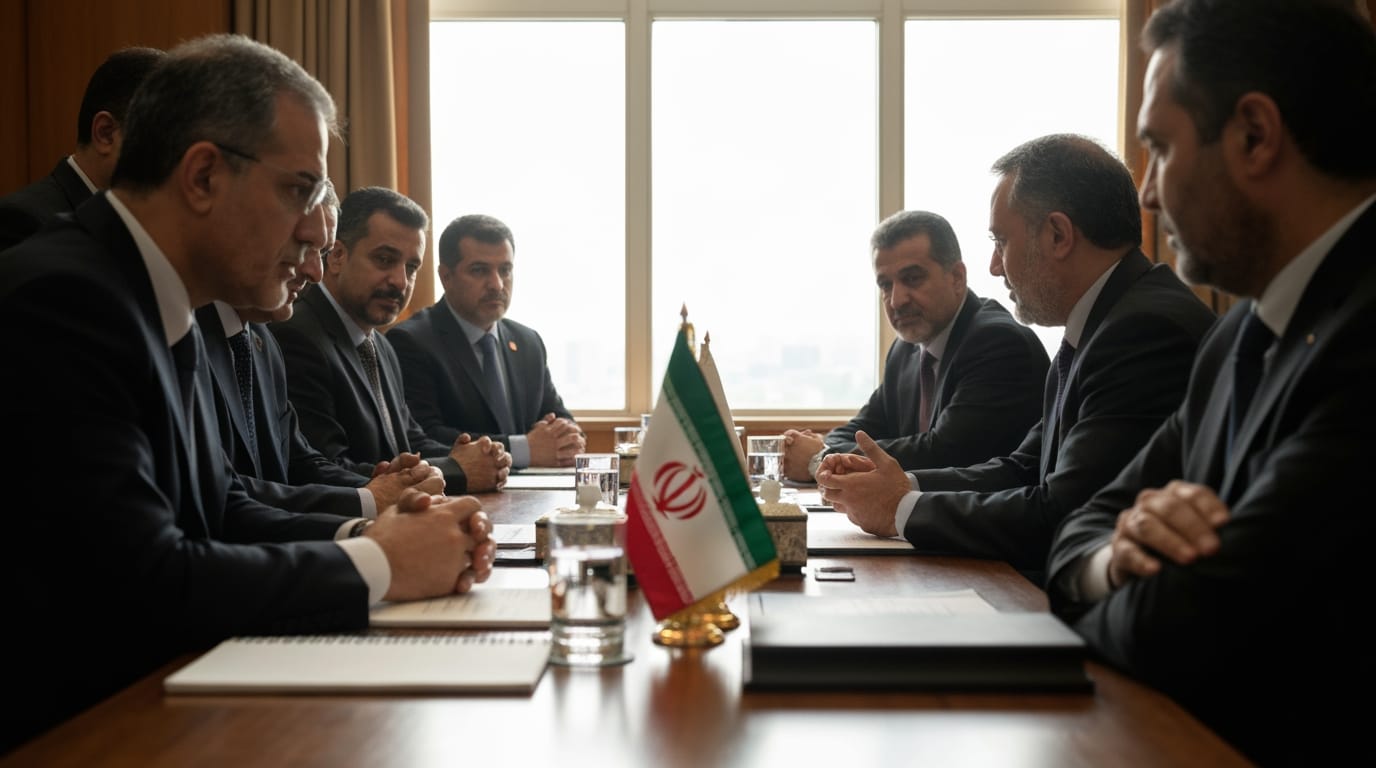
In a period marked by both sabre-rattling and subtle overtures, Iran and the United States appear to be engaged in a delicate diplomatic maneuver, with Tehran hinting at progressing negotiations even as Washington maintains a formidable military presence in the Persian Gulf. Recent statements from high-ranking Iranian officials suggest a willingness to advance discussions, despite simultaneous warnings against military aggression and continued U.S. demands. This complex interplay of diplomacy and deterrence underscores a fraught landscape where the prospect of dialogue coexists precariously with the risk of further escalation, keeping regional and international observers on edge.
Behind the Veil of Public Posturing: Hints of Progress Emerge
The most notable indication of potential movement came from Ali Larijani, head of Iran's Supreme National Security Council, who stated that "structural arrangements for negotiations are progressing" with the United States. This declaration on Saturday, January 31, followed his talks in Moscow with Russian President Vladimir Putin, signaling a potential shift in Iran's diplomatic stance. Concurrently, Iranian President Masoud Pezeshkian underscored the severe repercussions of conflict, asserting that war would be detrimental to both Iran and the United States, as well as the broader region.
From the American side, President Donald Trump confirmed these nascent interactions, telling Fox News, "(Iran is) talking to us, and we'll see if we can do something, otherwise we'll see what happens." He further added, "They are negotiating." However, Trump's acknowledgments were coupled with a clear display of military might, including the deployment of the USS Abraham Lincoln aircraft carrier strike group to the region. The U.S. president also reiterated the threat of military intervention in the wake of Tehran's recent crackdown on anti-government protests, urging Iran to "make a deal to avoid possible military action." This dual approach highlights a strategy where diplomatic engagement is pursued under the explicit shadow of military readiness.
Regional actors have also sought to bridge the divide. Qatar's Foreign Ministry confirmed that its premier, Sheikh Mohammed bin Abdulrahman Al Thani, held talks in Tehran with Ali Larijani to de-escalate tensions. Similarly, Turkish President Recep Tayyip Erdogan has offered Ankara's services as a "facilitator" between Iran and the United States, engaging in discussions with Iranian Foreign Minister Abbas Araghchi in Istanbul. Araghchi, while expressing Iran's openness to "fair and equitable" negotiations, maintained that talks could not proceed under an atmosphere of threats and that Iran's defensive capabilities and missile program remained non-negotiable.
A History of Confrontation: The Path to the Current Impasse
The current precarious situation is rooted in a history of profound mistrust and escalating friction, particularly following the 2018 withdrawal of the United States from the Joint Comprehensive Plan of Action (JCPOA) by the Trump administration. This move led to the reimposition of stringent sanctions and a "maximum pressure" campaign against Tehran.
The tensions reached a critical peak in June 2025, when a "12-day war" saw direct military confrontations. During this period, Israeli and U.S. forces conducted joint bombing operations that severely damaged key Iranian nuclear facilities at Natanz, Isfahan, and Fordow. Satellite imagery from January 30, 2026, indicates ongoing efforts by Iran to conceal repairs at these sites and to rebuild its ballistic missile infrastructure at the Parchin complex. The International Atomic Energy Agency (IAEA) declared Iran in non-compliance with its nuclear obligations in June 2025, further exacerbating international concerns.
In September 2025, UN sanctions were reimposed, and just days before the latest hints of negotiation, the European Union followed the U.S. in designating Iran's Revolutionary Guard Corps (IRGC) as a terrorist organization on January 29, 2026. Domestically, Iran has faced widespread anti-government protests since late December 2025, fueled by economic hardship and high inflation, which have been met with violent crackdowns. These internal pressures add another layer of complexity to Tehran's calculations regarding negotiations.
Enduring Obstacles: The Sticking Points in Any Potential Deal
Despite the recent signals of diplomatic engagement, numerous fundamental disagreements continue to pose significant hurdles to any comprehensive resolution. A central point of contention remains Iran's uranium enrichment program. The U.S. has consistently demanded a complete halt to enrichment, a position Iran vehemently rejects, insisting on its right to domestic enrichment for peaceful civilian purposes under the Nuclear Non-Proliferation Treaty (NPT).
Similarly, Iran's ballistic missile program is a major sticking point. While the U.S. seeks to impose restrictions, Iran views its missile capabilities as a vital component of its national defense and a non-negotiable deterrent. Furthermore, U.S. demands extend to ending Iran's support for regional proxy groups, a network that has reportedly been weakened by recent events, including the fall of the Assad regime in Syria and damage to Hamas and Hezbollah.
From Iran's perspective, any agreement must deliver tangible economic benefits through the verifiable lifting of sanctions, including guarantees of restored banking and trade ties. The deep-seated mistrust between the two nations also means Iran seeks assurances against future U.S. withdrawals from any negotiated agreement. The ongoing military threats from the U.S., which Iran states prevent "fair" negotiations, further complicate the environment for productive dialogue.
Regional Implications and the Road Ahead
The prospect of U.S.-Iran negotiations carries profound implications for regional stability. Israel remains vehemently opposed to any deal that would allow Iran to maintain enrichment capabilities, viewing Tehran's nuclear program as an existential threat and having engaged in direct military action. European powers, while seeking de-escalation, have also expressed concerns about Iran's nuclear activities. Conversely, Russia and China continue to engage with Iran, with Russia pledging support for Iran's nuclear reactor construction.
The current moment represents a critical juncture where the signals of diplomatic progress must contend with ingrained geopolitical complexities and heightened military tensions. While both sides have, in different capacities, indicated a potential openness to talks, the chasm of demands and distrust remains wide. The coming weeks will be crucial in determining whether the subtle hints of negotiation can evolve into substantive dialogue, paving a path toward de-escalation, or if the region will be drawn into yet another cycle of confrontation. The world watches, recognizing that the outcome will profoundly shape the future of the Middle East and global security.


