Iran at a Critical Juncture: Domestic Unrest and Geopolitical Shifts Converge
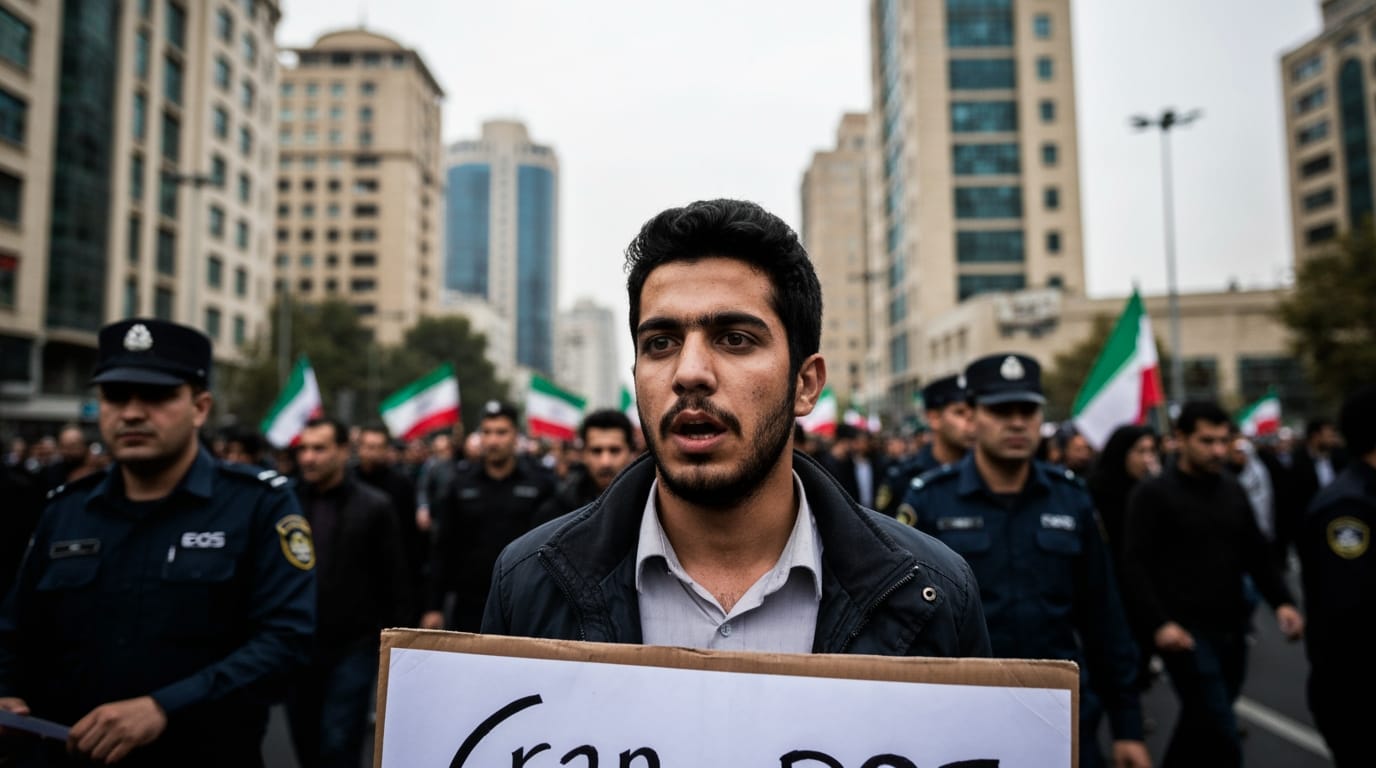
Iran is navigating a period of profound instability, marked by widespread internal protests fueled by a deepening economic crisis and significant shifts in its regional standing. The confluence of domestic discontent and international pressures has placed the Islamic Republic at a critical geopolitical crossroads, challenging the regime's legitimacy and long-term trajectory. Observers suggest the nation is experiencing one of its most turbulent periods since the 1979 revolution, as a diverse array of citizens demand fundamental change amidst a harsh government crackdown.
Escalating Domestic Unrest Rattles Regime
A new wave of nationwide protests erupted in Iran on December 28, 2025, rapidly spreading across all 31 provinces and marking the most extensive demonstrations since the "Woman, Life, Freedom" movement of 2022. What began as expressions of economic grievance, particularly among merchants in Tehran's Grand Bazaar, quickly escalated into broader calls for political reform and even regime change. The protests, driven by widespread frustration over inflation, currency devaluation, and declining living standards, have drawn a diverse cross-section of Iranian society, including industrial workers, teachers, pensioners, students, professionals, women, and ethnic minorities. Unlike previous movements, this current wave is notable for its broad participation, transcending specific socio-economic classes and highlighting a perceived collapse of the social contract between the populace and the state.
The government's response has been characterized by severe repression. Iranian security forces, including the Islamic Revolutionary Guard Corps (IRGC) and its Basij militia, have reportedly used lethal force against demonstrators, resulting in dozens of deaths and thousands of arrests. Internet and telephone services have been cut in an effort to stifle organization and information dissemination among protestors. Despite the crackdown, the persistence and broad geographic scope of the demonstrations indicate a deep-seated and structural crisis that the regime is struggling to contain, even as it attempts to portray dissent as externally manufactured.
Economic Hardship Fuels Popular Outcry
The primary catalyst for the current unrest is Iran's deteriorating economy, a condition exacerbated by years of Western sanctions, internal corruption, and financial mismanagement. The Iranian rial has undergone a drastic devaluation, losing nearly 90 percent of its value since the U.S. reimposed sanctions in 2018, with further significant drops after the June 2025 conflict with Israel. This currency collapse has fueled soaring inflation, pushing basic goods out of reach for many Iranians, with some estimates placing inflation rates over 50 percent. Poverty rates have also surged dramatically, illustrating the profound impact on ordinary citizens.
Analysts suggest that the Iranian leadership lacks both the financial capacity and the political will to effectively stabilize the economy in the near term. Public resentment has been amplified by widespread criticism of the government's allocation of resources to regional proxies while domestic conditions worsen. Chants such as "Neither Gaza nor Lebanon, my life for Iran" underscore public frustration with foreign policy priorities at the expense of national welfare. The economic strain has led to a significant erosion of public trust, with many believing the state's ideology and foreign policy agenda are prioritized over the economic development and well-being of its own people.
Nuclear Program and Renewed International Scrutiny
Iran's nuclear ambitions remain a central point of international tension, further complicating its geopolitical standing. The 2015 Joint Comprehensive Plan of Action (JCPOA), commonly known as the Iran nuclear deal, expired on October 18, 2025. This followed a "snapback" procedure initiated by European nations due to alleged non-compliance by Tehran, which had gradually violated the deal's terms after the United States unilaterally withdrew in 2018. Iran had increased its enrichment of uranium to levels far exceeding JCPOA limits and expanded its centrifuge operations.
Adding to the volatility, Israel, reportedly with U.S. involvement, launched strikes on Iranian nuclear facilities and military targets in June 2025, sparking fears of a wider regional conflict. The strikes were a direct response to a breakdown in nuclear negotiations between Iran and the United States. In the aftermath, Iran halted cooperation with the International Atomic Energy Agency (IAEA), though an agreement to resume some form of cooperation was reached in September 2025 without specifying details. Despite the complexities, Iran's Foreign Minister, Abbas Araghchi, has expressed openness to negotiations with the United States on its nuclear program, signaling a potential shift in strategy, possibly to alleviate international pressure and seek sanctions relief.
Shifting Regional Dynamics and Proxy Networks
For decades, Iran has projected its influence across the Middle East through a network of proxy groups and strategic alliances, often referred to as the "axis of resistance." However, this regional strategy appears to be facing significant challenges. The search results indicate a weakening of Iran's proxy network, with groups like Hezbollah experiencing leadership losses and facing increased pressure to disarm. The Assad regime in Syria, a long-time Iranian ally, reportedly fell in December 2024, representing a substantial blow to Tehran's regional leverage. The Houthis in Yemen have also faced airstrikes from the U.S. and Israel, further disrupting Iran's sphere of influence.
This perceived contraction of Iran's regional footprint coincides with heightened domestic criticism of the resources allocated to these external ventures. As its regional influence appears to wane, Iran's traditional method of indirect warfare and power projection is becoming increasingly scrutinized both internally and by international actors.
A Precarious Future for the Islamic Republic
The convergence of escalating domestic protests, a crippling economic crisis, renewed international pressure over its nuclear program, and a weakening regional proxy network presents Iran with a deeply precarious future. The current crisis is widely viewed as structural, challenging the very foundations of the clerical state. While the immediate collapse of the regime is not deemed probable by some analysts, the sustained unrest signals that a return to pre-protest conditions will be challenging.
The regime faces difficult choices: it could attempt to consolidate authoritarian rule through continued repression, risking further international isolation. Alternatively, it might offer limited economic or social concessions, though this would likely fall short of addressing the underlying systemic issues. The growing internal and external pressures, coupled with the fragility of any potential negotiations over its nuclear program, underscore the profound uncertainty surrounding Iran's path forward. The decisions made in Tehran in the coming months will undoubtedly shape not only the future of Iran but also the broader geopolitical landscape of the Middle East.


