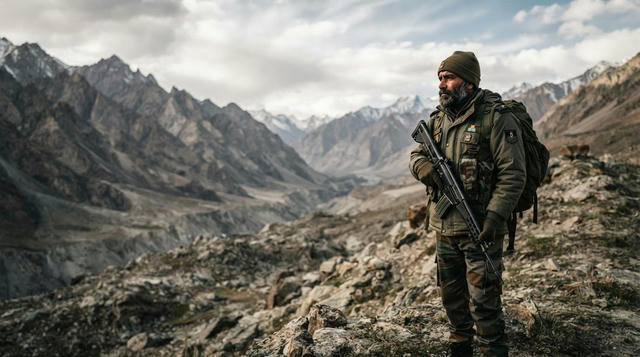
Iran Buries Slain Supreme Leader Amid Escalating Conflict with United States
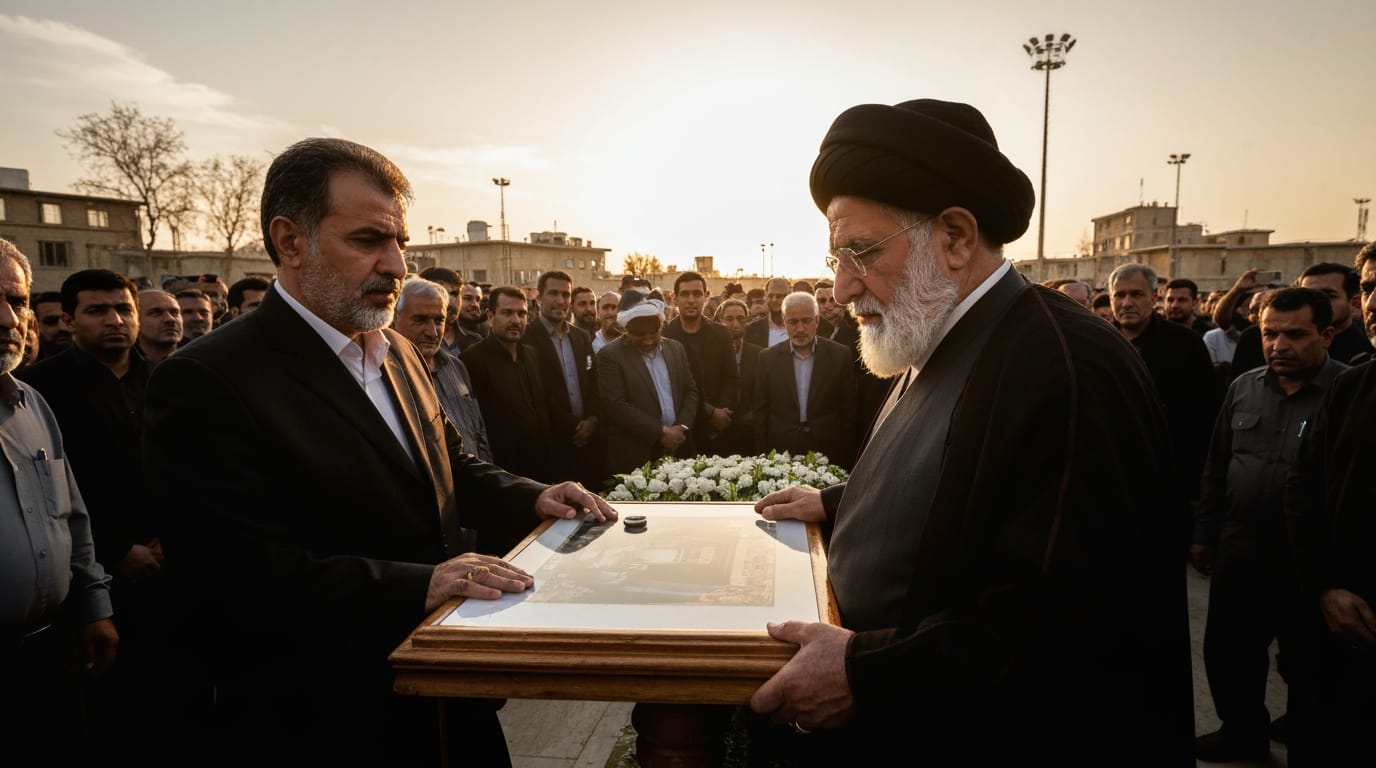
Mashhad, Iran – In a period marked by profound national mourning and dangerous international escalation, Iran laid to rest its former Supreme Leader, Ayatollah Ali Khamenei, on Thursday in his hometown of Mashhad. The somber burial ceremony, drawing immense crowds to the Imam Reza Shrine, coincided with a sharp increase in tit-for-tat military strikes between Iran and the United States, thrusting the region into heightened uncertainty and raising fears of an expanding conflict.
Ayatollah Khamenei, who led the Islamic Republic for 37 years, was killed in US-Israeli airstrikes in February 2026, marking the initial phase of what Iranian media has termed the "US-Israeli war on Iran." His death triggered a six-day national funeral procession that traversed several major cities, including an emotional journey through Iraq's holy sites of Najaf and Karbala, before concluding with his burial in Mashhad. The extensive ceremonies, portrayed by Iranian authorities as a powerful display of national resilience and unity, unfolded against a backdrop of renewed hostilities, adding a layer of defiance to the deep grief felt by millions.
A Nation Mourns Amidst Turmoil
The final burial rites for Ayatollah Khamenei saw a massive outpouring of public emotion. Thousands gathered in Mashhad, filling the courtyards of the Imam Reza Shrine, many carrying banners that not only mourned the deceased leader but also vehemently denounced the US president, with some explicitly threatening, "We Will Kill Trump." This blend of grief and fervent anti-American sentiment underscored the revolutionary resolve that authorities aimed to project during the funeral.
The funeral procession itself was a logistical challenge, reflecting the widespread participation of mourners. Khamenei’s body, along with those of several family members killed alongside him in the February airstrikes, was transported across significant distances. While his eldest son, Mostafa Khamenei, led the funeral prayers, the absence of his second son, Mojtaba Khamenei, was notable. Mojtaba, who was named the new Supreme Leader in March following his father's death, has not been seen publicly since before the war, reportedly recovering from injuries sustained in the same February strikes that claimed his father's life. His continued absence from such a pivotal public event highlights the ongoing impact of the conflict on Iran's leadership.
Renewed Hostilities in the Persian Gulf
The solemnity of Khamenei's burial was starkly contrasted by a dangerous escalation in military confrontations between Washington and Tehran. On Thursday, the US and Iran engaged in a second consecutive day of retaliatory strikes. This renewed aggression followed Iranian attacks earlier in the week on commercial vessels navigating the strategically vital Strait of Hormuz. In response to these actions, US President Donald Trump declared an existing, fragile ceasefire — formalized by a memorandum of understanding signed on June 17, 2026 — to be "over."
US Central Command reported hitting approximately 90 military targets across southern Iran, targeting coastal areas and positions near the Strait of Hormuz. The stated objective of these strikes was to degrade Iran's capacity to threaten international shipping and ensure the continued free flow of traffic through the strait. Iran swiftly retaliated, launching missiles at US-allied Kuwait and Qatar and accusing the US of striking near its nuclear power plant in Bushehr. Iranian officials claimed US airstrikes had resulted in 14 to 17 fatalities, while air raid sirens blared in Jordan as eight Iranian missiles were intercepted. Iran's Revolutionary Guards Navy underscored Tehran's firm stance, asserting that any further US intervention would be met with a "crushing response" and that the Strait of Hormuz would only reopen on Iranian terms.
Control over the Strait of Hormuz remains a central point of contention, with Iran viewing it as a critical strategic deterrent and a key leverage point in negotiations. Iranian officials have expressed increasing hostility toward Gulf states that oppose Iran's assertive efforts to control the waterway.
Internal Divisions and External Reactions
The escalating conflict has exposed and exacerbated internal divisions within Iran. While loyalists used Khamenei's funeral to rally against the United States and Israel, with chants demanding revenge for the slain leader, moderate voices within the country's media landscape cautioned against the potentially severe costs of confrontation for ordinary citizens. Reports indicated instances of radical elements at the funeral targeting government moderates, with social media videos showing Foreign Minister Abbas Araghchi being pelted with stones and facing chants of "Death to the traitor" and "Shameless." This public censure highlights a growing internal struggle over the country's diplomatic direction and approach to the ongoing hostilities.
Internationally, the renewed clashes have prompted urgent diplomatic efforts to de-escalate tensions. Mediators, including Qatar and Pakistan, are actively working to salvage negotiations and prevent a full-scale war, despite President Trump's declaration of the ceasefire's termination. President Trump also engaged in discussions with Israeli Prime Minister Benjamin Netanyahu, reportedly covering "American moves in the Gulf" and ongoing coordination between the two nations. This indicates a concerted effort among allies to manage the crisis, even as the military exchanges intensify.
Economic Fallout and the Path Forward
The renewed fighting has had an immediate and detrimental impact on the global economy. Crude oil prices have surged, and stock markets have experienced declines, reflecting widespread anxieties about supply chain disruptions and inflationary pressures. Within Iran, the national currency, the rial, has significantly weakened, and point-to-point inflation has reportedly reached nearly 83 percent, adding severe economic strain to a population already grappling with protracted conflict.
The current trajectory suggests a precarious future for US-Iran relations and regional stability. Hardline factions in Iran interpret the escalation as a mandate for defiance, advocating for a shift to an "unrestricted defensive doctrine" and threatening to close the Strait of Hormuz if Iran's oil exports are hindered. Conversely, the US maintains its focus on ensuring the freedom of navigation through the strait while attempting to prevent a broader conflict. The intertwined events of Khamenei's burial and the ongoing military escalation underscore a critical juncture, where the weight of historical legacy and the immediate pressures of conflict converge, leaving the future of the Middle East hanging in a delicate balance.
The passing of a pivotal figure like Ayatollah Ali Khamenei naturally ushers in a new political era for Iran. However, the circumstances of his death and the concurrent intensification of hostilities with the United States mean that this transition is occurring amidst unprecedented external pressure and internal contestation. The coming weeks and months will reveal whether diplomatic efforts can avert a wider confrontation or if the region is destined for further, potentially more devastating, escalation.