Iran Demonstrates Unity Amidst Tumultuous Succession and War
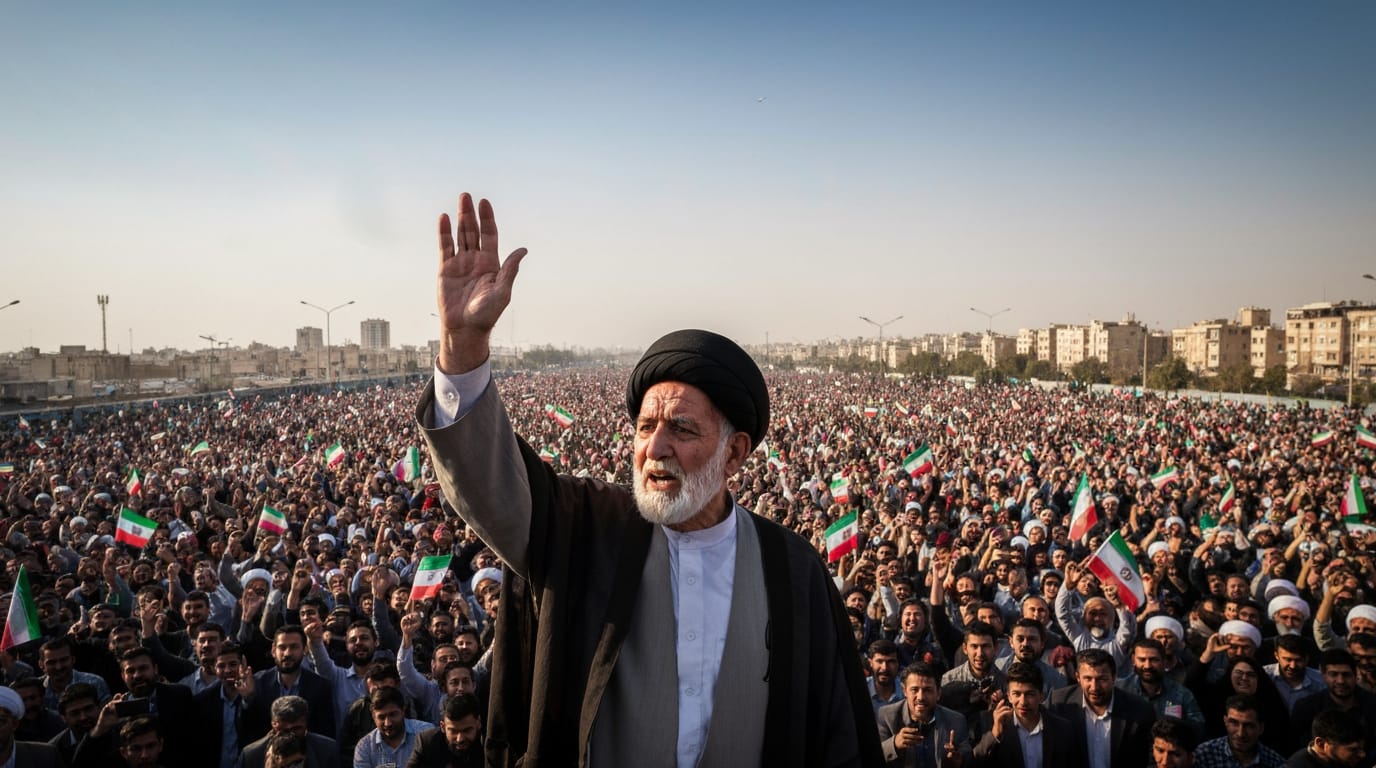
TEHRAN – Mass rallies have swept across Iran, with thousands taking to the streets to publicly affirm their allegiance to the newly appointed Supreme Leader, Mojtaba Khamenei. This fervent display of national unity follows a period of unprecedented upheaval for the Islamic Republic, marked by the assassination of long-serving Supreme Leader Ayatollah Ali Khamenei and escalating conflict with the United States and Israel. The swift anointing of his son, a hardline cleric, signals a determined continuation of the country's established trajectory amidst profound domestic and international challenges.
The Unforeseen Transition: A Wartime Succession
The unexpected death of Ayatollah Ali Khamenei on February 28, 2026, in a US-Israeli airstrike, triggered a rapid and critical succession process for Iran's highest office. Ali Khamenei, who had guided the nation for almost 37 years, was a pivotal figure in the Islamic Republic, wielding ultimate religious and political authority over all state affairs. His demise necessitated immediate action, leading to the formation of a temporary three-person Interim Leadership Council, as stipulated by Article 111 of the Iranian Constitution. This council, comprising Iran's sitting President Masoud Pezeshkian, Chief Justice Gholamhossein Mohseni Ejei, and senior conservative cleric Alireza Arafi, assumed leadership duties until a permanent successor could be chosen.
Within days, the 88-member Assembly of Experts, the clerical body constitutionally tasked with appointing and supervising the Supreme Leader, convened to select Ali Khamenei's successor. On March 8, 2026, the Assembly announced its decision: Mojtaba Khamenei, the 56-year-old son of the late leader, would ascend to the position. This selection, made amid conflicting reports and a wartime environment, marks only the second transfer of power in the Supreme Leader's office since the 1979 Islamic Revolution. Reports indicated that Mojtaba Khamenei secured approximately 85% of the votes cast by the members present, fulfilling the two-thirds quorum requirement for such a critical decision. The rapid appointment has been widely interpreted as an attempt to project stability and continuity during a period of intense external pressure and internal uncertainty.
Nationwide Rallies: A Resounding Pledge of Allegiance
Following the announcement of Mojtaba Khamenei's selection, the Islamic Propagation Coordination Council called for nationwide gatherings to affirm public support. On March 9, 2026, thousands of Iranians responded, filling major public spaces in cities across the country, including Tehran's iconic Enghelab Square. State media showcased scenes of fervent loyalty, with crowds waving Iranian national flags and carrying portraits of both the late Ayatollah Ali Khamenei and the newly appointed Mojtaba Khamenei.
The rallies served as a powerful declaration of allegiance and defiance. Chants of "Death to America," "Death to Israel," and "God is Great" reverberated through the streets, highlighting the anti-Western sentiment that has long been a cornerstone of the Islamic Republic's ideology. Slogans such as "Either death or Khamenei, our blood leads to paradise" underscored a commitment to the new leadership and the revolutionary principles. These demonstrations, heavily attended by hardline elements and under the watchful eye of security forces, projected an image of a nation united behind its new spiritual and political guide, despite the ongoing regional conflict and the recent trauma of the former leader's death. The swift organized rallies served as a clear message that the state's fundamental structures remained intact and resolute in the face of adversity.
Mojtaba Khamenei: A Profile in Defiance
Mojtaba Khamenei's ascension to Supreme Leader brings a figure known for his hardline stance and deep connections within the nation's security apparatus to Iran's paramount position. While he has largely operated behind the scenes throughout his career, he is understood to have wielded significant influence, particularly within the Islamic Revolutionary Guard Corps (IRGC), the ideological arm of Iran's military. His selection is seen by some analysts as a provocative act, reflecting a clear commitment to a confrontational path rather than a conciliatory one, especially given the current geopolitical climate.
The choice of Mojtaba Khamenei is particularly noteworthy because it introduces an element of hereditary succession, a concept ostensibly rejected by the Islamic Republic, which was founded on a revolution against monarchical rule in 1979. However, the current state of war with the United States and Israel, which saw his father killed, likely overshadowed these traditional ideological reservations. Observers suggest that the crisis demanded a strong, decisive leader with a proven track record of loyalty and control over key institutions, rather than a prolonged or potentially contentious selection process. His appointment is perceived as a defiant message to external adversaries, signaling that Iran will meet pressure with steadfast resistance.
Internal Dynamics and External Ramifications
The selection of Mojtaba Khamenei and the subsequent rallies unfold against a backdrop of complex internal dynamics and heightened international tensions. While state media portrayed widespread enthusiasm, the circumstances of the selection were not without internal dissent. Reports from some members of the Assembly of Experts indicated that not all clerics were fully informed or able to attend the crucial meeting in Qom where the new leader was chosen, raising questions about the transparency of the process. Furthermore, despite the public displays of unity, social media activity suggested pockets of dissent, with some expressing concerns over what they perceived as a move towards dynastic rule and chanting slogans against the new leader.
Globally, Mojtaba Khamenei's rise has been met with alarm. International markets reacted sharply to the news, with oil prices surging amidst fears that his leadership would prolong the conflict in the Middle East. United States President Donald Trump notably dismissed the appointment as an "unacceptable choice," underscoring the deep chasm in relations. His leadership is anticipated to reinforce his father's legacy of distrust towards the U.S. and Israel, potentially intensifying the regional proxy conflicts and global energy disruptions. The new leader also faces the immense task of governing a populace already fatigued by years of sanctions and recurrent confrontations.
Conclusion: Navigating a New Era of Hardline Leadership
The mass rallies across Iran symbolize a concerted effort by the Islamic Republic to project an image of unwavering support for its new Supreme Leader, Mojtaba Khamenei, during a period of immense national crisis. His rapid appointment, following the assassination of his father, Ayatollah Ali Khamenei, in a US-Israeli strike, underscores the leadership's determination to ensure continuity and stability through a hardline stance. While these public demonstrations convey a strong message of defiance to both domestic and international audiences, the challenges facing Mojtaba Khamenei are substantial. He inherits a nation embroiled in conflict, facing deep economic pressures, and navigating complex internal political currents. His leadership is poised to cement a more hardline direction for Iran, profoundly impacting its trajectory in an increasingly volatile Middle East.


