Iran Gripped by Unrest as Economic Protests Escalate, Students Join Calls for Change
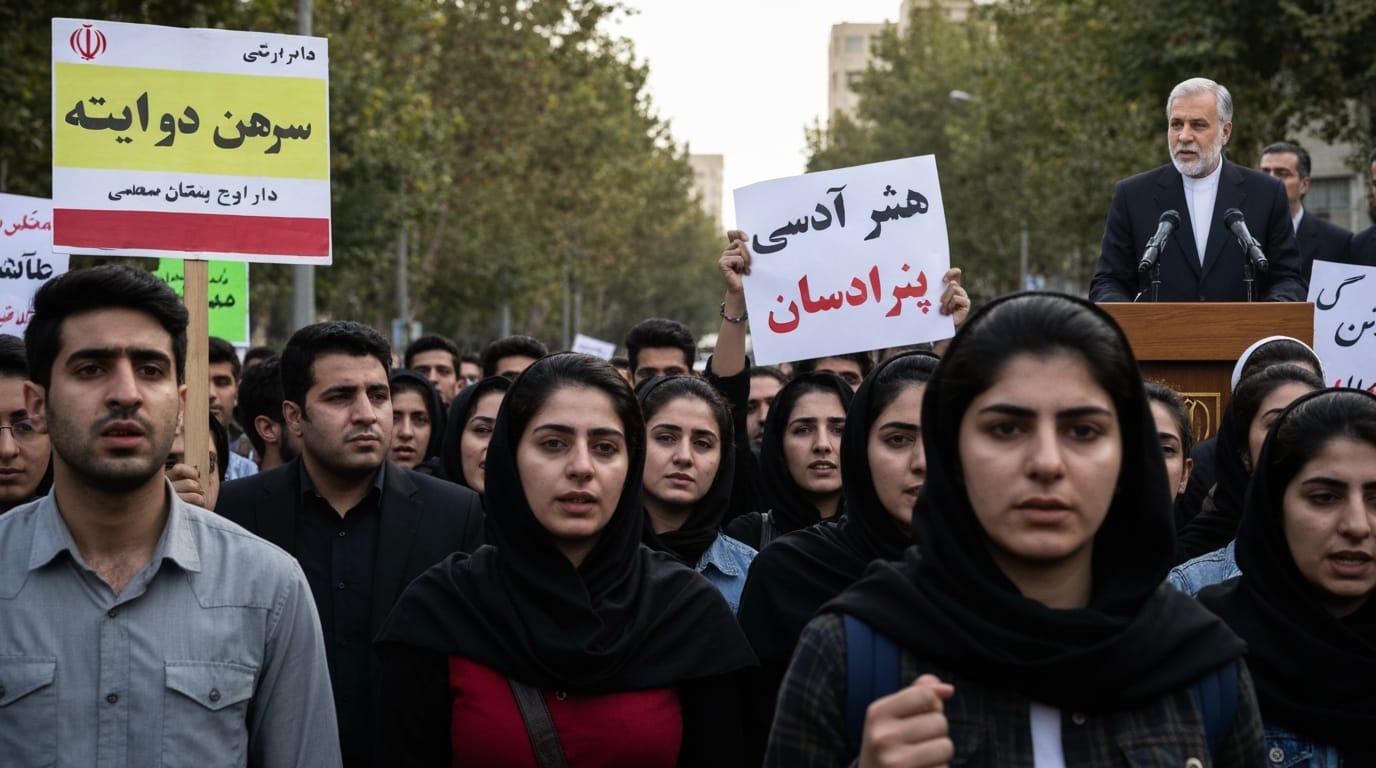
Iran is experiencing a deepening internal crisis as widespread economic protests, initially sparked by a collapsing national currency and soaring inflation, have rapidly escalated, drawing in university students and transitioning into explicit political dissent across major cities. President Masoud Pezeshkian has responded by ordering dialogue with demonstrators, emphasizing the government's commitment to addressing "legitimate demands" and improving livelihoods, even as security forces have been deployed to quell unrest. The turmoil underscores profound challenges to the Islamic Republic's stability, driven by years of economic hardship exacerbated by international sanctions and internal policy failures.
Economic Distress Ignites Widespread Discontent
The current wave of protests ignited around December 28-29, 2025, primarily fueled by the dramatic depreciation of the Iranian rial and runaway inflation. The national currency has lost an estimated 60% of its value against the U.S. dollar since a 12-day conflict with Israel in June, with the dollar trading at approximately 1.42 million rials on the unofficial market by Sunday, compared to 820,000 rials just a year prior. This sharp decline has pushed inflation to 42.5% in December, severely eroding the purchasing power of ordinary Iranians and paralyzing the sales of imported goods.
The initial impetus for the demonstrations came from the traditional merchant class, particularly in Tehran's historic Grand Bazaar, who began closing their businesses in protest. This shutdown by bazaar merchants, historically a significant base of support for the clerical establishment, signals a critical loss of confidence in the government's economic management. Shopkeepers expressed the impossibility of conducting business under such volatile conditions, with many preferring to suspend activities to avoid further losses. These actions quickly expanded beyond Tehran's commercial hub, with reports of similar closures and demonstrations emerging from other cities as the economic crisis deepened.
From Market Stalls to University Halls: Students Join the Fray
What began as a localized expression of economic grievance swiftly broadened into a more organized movement, significantly amplified by the involvement of university students. By Tuesday, December 30, protests had spread to several universities across Tehran and other provincial cities, including prestigious institutions like Tehran University, Amir Kabir (Polytechnic), Sharif University of Technology, Khajeh Nasir, Beheshti University, as well as universities in Isfahan, Yazd, and Zanjan.
Students joined the bazaar merchants, transforming the economic frustration into explicit political demands. Chants of "death to the dictator" and slogans targeting Supreme Leader Ali Khamenei became common, marking a clear shift towards broader anti-establishment sentiment. In some instances, students at Beheshti University were filmed tearing down signs representing the "Supreme Leader's Representation," a direct symbolic challenge to the cleric's authority. These gatherings at universities, often focal points during previous periods of unrest, saw students attempting to link campus protests with wider street demonstrations, despite security forces encircling some areas to limit movement. The convergence of traditional merchant grievances with the youthful energy and political fervor of university students created a potent, unified front, signaling a "new phase of turmoil" for the country.
Tehran's Response: Dialogue Amidst Crackdown
In response to the escalating unrest, President Masoud Pezeshkian issued his first official statement, instructing Interior Minister Ahmad Vahidi to engage in dialogue with protesters and "listen to the legitimate demands." Pezeshkian asserted that improving people's livelihoods and implementing reforms to the banking and monetary system remain his "daily concern." Government spokesperson Fatemeh Mohajerani further indicated that a dialogue mechanism would be established to include protest leaders, stating that the government "officially recognize[s] the protests" and understands they stem from "natural pressure arising from the pressure on people's livelihoods." Adding to the official response, the head of Iran's central bank resigned amid the turmoil, with former chief Abdolnaser Hemmati being appointed to the position, a move perceived as an attempt to stabilize markets.
However, the government's approach has been dual-faceted, combining overtures of dialogue with a firm security response. Security forces, including anti-riot units, have been widely deployed, particularly in areas around the Grand Bazaar and universities. Reports indicate the use of tear gas and kinetic impact methods to disperse crowds, with minor physical clashes occurring between protesters and security personnel. In a move seen by critics as an attempt to curb the burgeoning unrest, authorities in Tehran province announced a full lockdown, officially citing extreme cold weather conditions. This blend of conciliation and suppression highlights the precarious balance the Iranian leadership is attempting to strike in managing the crisis.
A Nation on Edge: Implications and Historical Context
The current widespread protests represent a significant challenge to the Iranian government, converging economic hardship with growing political dissatisfaction. Analysts describe the situation as a "critical threshold," with localized economic grievances coalescing into broader political defiance. The protests, spanning beyond market corridors into streets, squares, and university campuses across several provinces, indicate a deep-seated public anger that transcends specific economic policies.
This wave of unrest is not unprecedented in Iran's recent history. The country has witnessed several significant protest movements in recent years, including the nationwide demonstrations in 2022 following the death of Mahsa Amini, which also saw extensive student involvement and political slogans. Earlier, in 2019, protests erupted over fuel price hikes, which were met with a brutal crackdown. Youth, who constitute a large segment of Iran's population, have consistently played a critical role in these movements, driven by high unemployment rates and a sense of hopelessness about the future.
The economic foundation of the current unrest is deeply rooted in years of international isolation and sanctions, particularly the reimposition of U.S. sanctions in 2018 and the "snapback" of United Nations sanctions in September. These measures have contributed to near-stagnant GDP growth, capital flight, and the severe devaluation of the national currency, creating an environment ripe for public discontent. The shift in protest rhetoric, from purely economic complaints to calls for systemic change and the targeting of top leadership, suggests a significant erosion of state legitimacy among various segments of society, including those traditionally seen as conservative.
Conclusion
As Iran grapples with an escalating wave of economic protests that have morphed into broader calls for political change, the path forward remains fraught with uncertainty. President Pezeshkian's call for dialogue signals an awareness of the widespread discontent, yet the simultaneous deployment of security forces underscores the government's determination to maintain control. The convergence of the traditional merchant class and university students in unified opposition poses a formidable challenge to the ruling establishment. With a history of economic grievances fueling political unrest, and against a backdrop of persistent international sanctions and internal resource shortages, the current crisis threatens to further destabilize the nation. The ability of the government to genuinely address the "legitimate demands" of its citizens, rather than simply containing the dissent, will be critical in determining whether this "new phase of turmoil" leads to reform or further confrontation.


