Iran Summons EU Envoys Amid Escalating Tensions Over IRGC Terror Designation
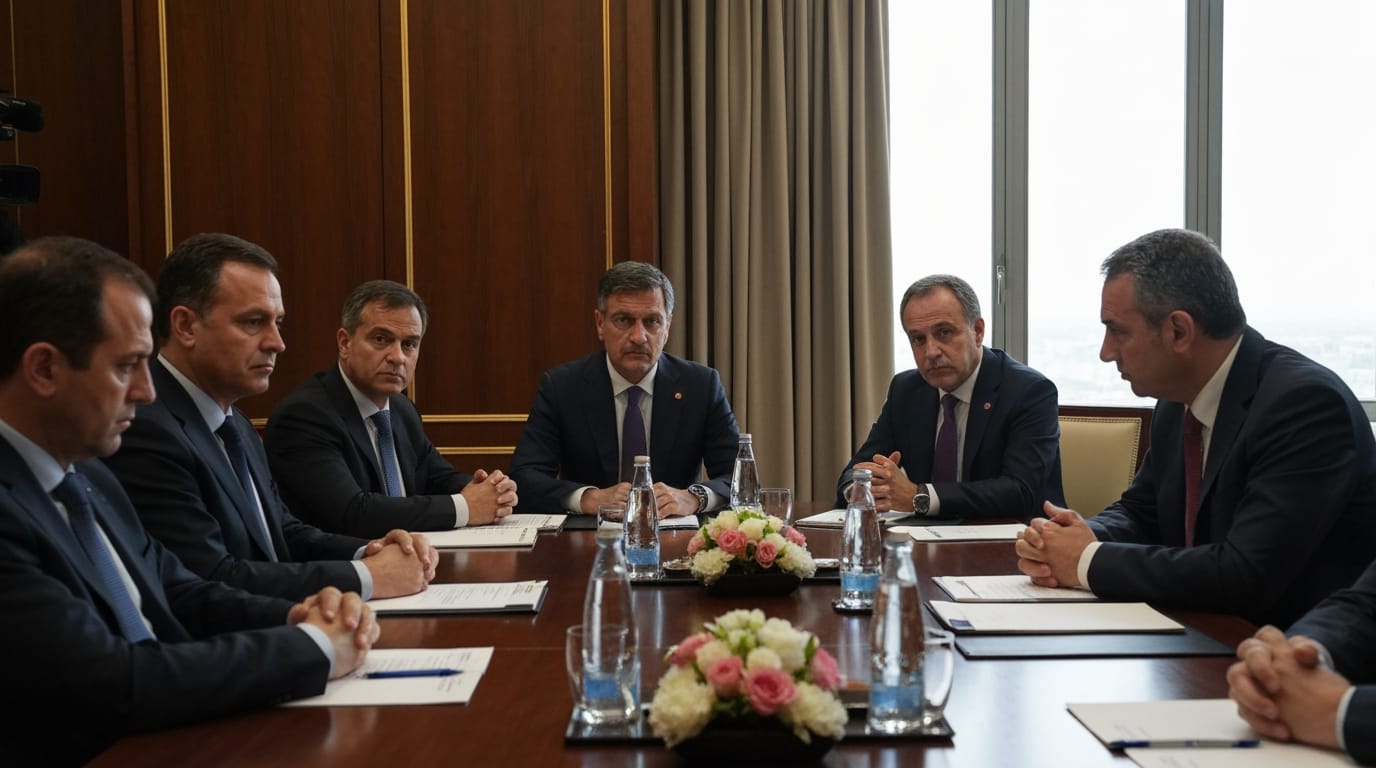
TEHRAN — Iran has summoned the ambassadors of all European Union member states with diplomatic presence in Tehran, protesting the bloc's recent decision to designate the Islamic Revolutionary Guard Corps (IRGC) as a terrorist organization. The diplomatic affront signals a significant escalation in already strained relations between Tehran and the EU, raising concerns about potential reciprocal actions and further destabilization in the region. The move comes in response to the EU foreign ministers' political agreement on January 29, 2026, to officially label the IRGC as a terrorist entity, a decision that carries substantial legal and financial ramifications.
Diplomatic Fissures Deepen
The summoning of EU envoys, which began on Sunday and continued into Monday, was described by Iranian Foreign Ministry spokesman Esmail Baghaei as a "minimum step" in response to what Tehran views as an "illegal, unjustified, and wrong" move by the European Union. Baghaei asserted that Iran is actively considering further countermeasures, with various options prepared and forwarded to decision-making bodies. This diplomatic backlash follows a period of mounting pressure from the European Parliament and some EU member states to take a tougher stance against the IRGC, particularly in light of the Iranian government's crackdown on widespread protests and its alleged involvement in regional destabilization.
The EU's Unanimous Stance
The decision by the Council of the European Union to designate the IRGC as a terrorist organization marks the culmination of a gradual process and a notable shift in the bloc's policy towards Tehran. While the European Parliament had overwhelmingly voted in January 2023 for a resolution calling for the IRGC's proscription, the Council's recent political agreement provides the legal basis for concrete action. EU foreign policy chief Kaja Kallas emphasized that "repression cannot go unanswered," confirming the decision on X (formerly Twitter) on January 29, 2026.
The designation carries several tangible legal consequences across the EU. These include the freezing of IRGC assets within the bloc and criminalizing any financial or material support provided to the organization. Hannah Neumann, chair of the European Parliament's delegation for relations with Iran, highlighted that the listing is "not merely symbolic" and represents a "long-overdue political signal" against violence and transnational repression. Alongside the terror designation, the EU also imposed new human rights sanctions on 15 Iranian officials and six entities for their roles in what it described as "serious human rights violations" during the suppression of protests. These individuals include Iran's Interior Minister, Eskandar Momeni, and several IRGC commanders.
The EU's move follows years of the bloc imposing sanctions on the Iranian regime since 2011, expanding these measures in response to human rights violations, Tehran's nuclear program, its role in the Middle East, and its cooperation with Russia. Historically, some European governments, notably France, had resisted such a designation due to concerns it could jeopardize diplomatic resolutions and the fate of European citizens held hostage in Iran. However, Iran's violent suppression of domestic protests and deepening cooperation between Moscow and Tehran ultimately prompted a change in these positions.
Tehran's Vehement Rejection and Threat of Retaliation
Tehran has consistently and vehemently condemned any attempts to label the IRGC as a terrorist entity. Iranian officials view the IRGC as a legitimate and sovereign organization integral to the country's national security, playing a crucial role in maintaining stability in the Persian Gulf region and combating terrorism. Foreign Minister Hossein Amir-Abdollahian had previously warned the EU in January 2023 that such a designation would be akin to "shooting itself in the foot."
Following the EU's decision, Iran's parliament speaker, Mohammad Bagher Ghalibaf, criticized the move, calling the IRGC one of the "strongest and most effective anti-terrorism forces in the world." He suggested that those who deny the IRGC's record in fighting groups like ISIS were standing "on the side of the terrorists themselves."
In a direct response to the EU's actions, Iran's parliament announced on Sunday, January 29, 2026, its consideration of legislation to designate European armies as "terrorist organizations." This proposed reciprocal measure, approved by Iran's top security body, underscores the escalating nature of the dispute. Iranian Foreign Ministry spokesman Baghaei also suggested that the EU's action was aimed at "pleasing or currying favor with the US and the Zionist regime," pointing to Israel's welcome of the EU's consideration to add the IRGC to its terror list.
Broader Implications for Regional and International Relations
The EU's designation of the IRGC as a terrorist organization carries significant implications for the already precarious diplomatic landscape. Relations between Iran and the EU have significantly deteriorated, particularly following the activation of the snapback mechanism and the ongoing protests in Iran. This move is seen by Iran as further diminishing the chances of bridging gaps and a retreat from active dialogue on issues such as the nuclear deal.
While the United States designated the IRGC as a Foreign Terrorist Organization in April 2019, followed by Canada in 2024, and Australia in 2025, the EU's decision adds considerable weight to international pressure on Iran. Other nations, including Bahrain, Ecuador, Israel, Paraguay, Saudi Arabia, and Sweden, have also designated the IRGC or its components as terrorist organizations. The IRGC, formed after the 1979 Iranian Revolution, plays a multifaceted role in Iran, encompassing political, economic, social, and military influence, with control over significant sectors of the economy and the country's ballistic missile and nuclear programs.
The current tensions unfold against a backdrop of wider regional instability. Reports indicate that the U.S. military has moved naval assets into the Middle East, with Turkey reportedly attempting to mediate between the U.S. and Iran to de-escalate potential military action. However, the EU's foreign policy chief, Kaja Kallas, asserted that the EU's decision was influenced by the domestic situation in Iran and its deepening cooperation with Moscow, rather than events in the Middle East.
Conclusion: An Uncertain Path Forward
The summoning of EU ambassadors by Iran signifies a critical juncture in the increasingly fraught relationship between Tehran and the European Union. The EU's decisive step to designate the IRGC as a terrorist organization, driven by concerns over human rights abuses and international conduct, has been met with fierce condemnation and threats of retaliation from Iran. This diplomatic standoff not only risks further isolating Iran on the international stage but also casts a shadow over any future prospects for dialogue, particularly regarding the stalled nuclear deal. As both sides dig in, the immediate future of EU-Iran relations appears marked by heightened tensions and an uncertain path forward.


