Iran Warns Regional Neighbors: Hosting U.S. Forces Could Ignite Broader Conflict
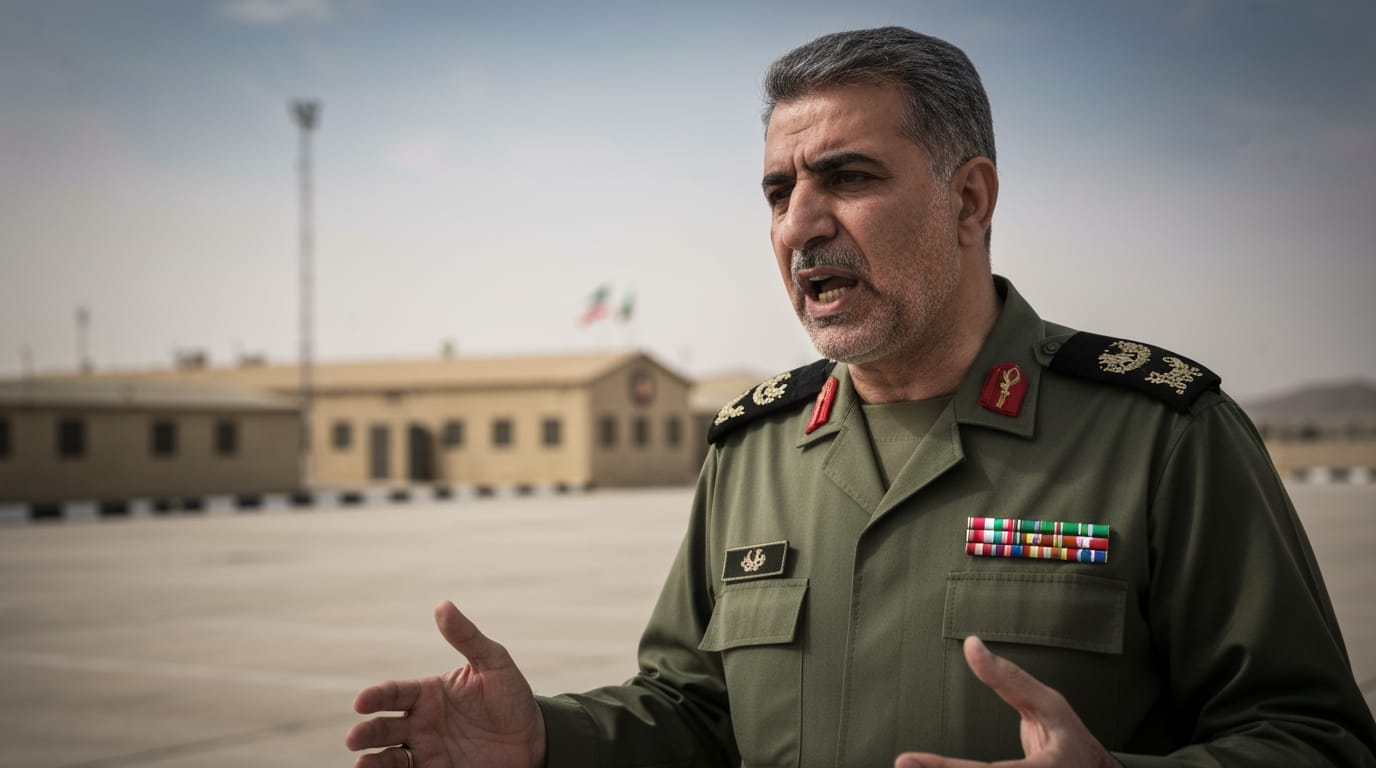
Tehran, Iran – August 1, 2026 – In a sharp escalation of rhetoric, Iran has issued a stern warning to its neighboring countries, cautioning that any nation providing a "defensive shield" for the United States could find itself engulfed in a wider regional war. The statement, delivered by a high-ranking Iranian military official, comes amidst rapidly intensifying tensions between Washington and Tehran, threatening to destabilize an already volatile Middle East. Regional states hosting American military assets have been urged to reconsider their alliances, as Iran signals that such partnerships directly contribute to Washington's military reach and heighten the risk of an all-consuming conflict.
The emphatic warning was articulated on Saturday by Major General Ali Abdollahi, commander of Iran's Khatam al-Anbiya Central Headquarters, who stated that countries positioning themselves as a "defensive shield" for the United States "will be consumed by the flames of war". This declaration coincides with renewed threats from U.S. President Donald Trump, who indicated that Washington would respond "very hard" if hostilities persist, and reports of the Trump administration weighing additional military operations, potentially including strikes on Iranian energy infrastructure. The Iranian Foreign Ministry has echoed these sentiments in recent months, explicitly warning regional countries against allowing their territory or facilities to be used for U.S. military operations against the Islamic Republic. Tehran views the U.S. military presence as a destabilizing force and a source of insecurity and division within the region.
The Peril of the "Defensive Shield"
Iran's definition of a "defensive shield" encompasses neighboring states that host American military bases, facilities, or grant permission for their airspace and territory to be utilized in U.S. military actions directed at Iran. General Abdollahi asserted that the United States is exploiting the wealth, capital, vital infrastructure, and strategic resources of regional nations as a protective barrier for its "exhausted military" and to bolster "Israel's war machine". This perspective underscores a deep-seated Iranian belief that U.S. military deployments are not a source of protection but rather an instigator of instability, increasing the vulnerability of host nations to the repercussions of confrontation.
Throughout 2026, Iran has consistently voiced its discontent over the alleged use of regional bases for U.S. and Israeli military strikes against its territory. The Iranian Foreign Ministry condemned a joint statement by the U.S. and the Gulf Cooperation Council in June, labeling it "interventionist, irresponsible and provocative" and arguing that the U.S. military presence in the region breeds insecurity. Furthermore, Tehran has previously warned that countries supporting hostile actions against Iran from their soil could be considered legitimate targets for retaliation. These warnings are not new; as far back as March 2026, Iran accused the U.S. of using military bases in Gulf countries to launch attacks, maintaining that its retaliatory actions were aimed at U.S. interests, not neighboring countries directly.
A Region Gripped by Recent Hostilities
The current cycle of warnings comes against a backdrop of ongoing and intensifying military exchanges in the Middle East. The year 2026 has witnessed significant hostilities, with both the U.S. and Iran engaging in strikes. In June, U.S. forces reportedly targeted Iranian radar installations in Sirik and on Qeshm Island, actions Tehran denounced as a "clear violation of the ceasefire" established in April 2026 and a "military aggression against Iran's territorial integrity". These U.S. strikes were, in turn, reported to be in response to Iranian missile launches towards Kuwait and Bahrain and the downing of Iranian drones near the Strait of Hormuz.
Iran, for its part, has been accused of directly targeting vital infrastructure in Arab Gulf states and U.S. bases in the region, particularly since the outbreak of what some analysts describe as a "U.S.-Israeli war on Iran". Reports from March 2026 indicated Iranian ballistic missile and drone attacks on the UAE, Saudi Arabia, and Oman, causing civilian casualties and damage to infrastructure. Even when Gulf governments explicitly refused to permit U.S. forces to launch attacks on Iran from their facilities, Iran still targeted them, extending its strikes to energy infrastructure, civilian airports, and desalination plants. These actions illustrate Iran's strategy of "horizontal escalation," designed to inflict pain and pressure the U.S. to end the conflict. The specter of a June 2025 attack on Al Udeid Air Base in Qatar, though without casualties, remains a "fresh and terrifying memory" for Gulf leaders, highlighting the immediate physical threat posed by Iranian missile and drone barrages.
Strategic Implications and a Shifting Balance of Power
The escalating rhetoric and military activity have profound strategic implications for regional security. Iran asserts that the recent conflict has fundamentally altered the balance of power in the region, claiming that the U.S. inability to achieve its aggressive strategies has forced American and Israeli forces to operate from behind the fortifications of Muslim countries. This strategic shift is partly fueled by Iran's consistent development of its missile and drone capabilities, including tactics to better evade air defenses. Tehran is increasingly employing its Kheibar Shekan ballistic missile in regional attacks, adapting its capabilities to overcome air defense systems. Experts note Iran's growing self-sufficiency in missile design and its clever use of cheaper, mobile, and domestically produced defensive systems designed to threaten drones and aircraft without relying on large, fixed radar sites.
Recent reports suggest Iran has adopted a new strategy focused on "blinding" U.S.-led air defense networks before launching large-scale missile and drone attacks. This involves using drone swarms to saturate radar systems and exhaust interceptor stocks, followed by ballistic missile strikes. This asymmetric approach, drawing inspiration from recent conflicts, challenges traditional airpower advantages and seeks to make advanced interceptors less effective by degrading early warning systems. For Gulf states, the presence of U.S. bases, once viewed as guarantees of Washington's security commitment and deterrents against aggression, are now increasingly seen by some as potential targets, drawing them into a conflict they neither initiated nor control. This fear is further compounded by the continuous Iranian attacks on sensor and air defense nodes across the region.
An Uncertain Future for Regional Security
Iran's recent warnings underscore a deepening crisis in the Middle East, where the lines between regional and international conflicts are increasingly blurred. The message to neighboring countries is clear: alignment with U.S. military objectives in the region carries inherent and substantial risks. As tensions mount between Tehran and Washington, the precarious position of Gulf states becomes more pronounced, caught between their security alliances and the threat of direct retaliation from Iran.
The imperative for foresight and a careful reassessment of security collaborations with Washington has been urged upon regional leaders by Iran. However, Iran's aggressive posture and attacks on Gulf state infrastructure have simultaneously pushed these countries towards greater dependence on U.S. security guarantees, eroding trust necessary for collective regional security. The current trajectory points to a complex and dangerous future where the stability of the Middle East hinges on the delicate balance of power, the restraint of all actors, and the elusive prospect of diplomatic de-escalation amidst an environment of escalating military threats and counter-threats.


