Iranian Women's Footballers Granted Asylum in Australia Amidst Geopolitical Tensions
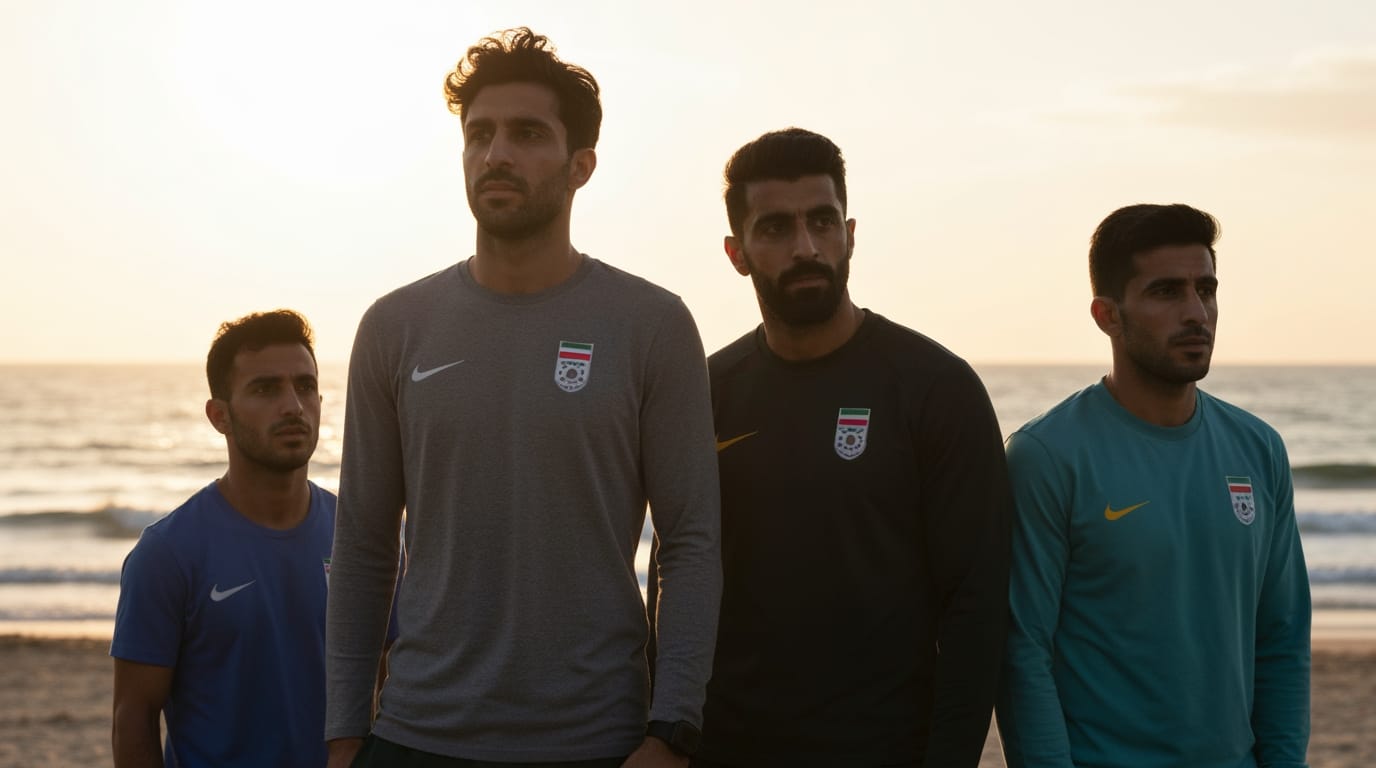
GOLD COAST, Australia – In a move with significant international implications, five members of the Iranian women's national football team have been granted humanitarian visas and asylum by the Australian government, following their refusal to sing the Iranian national anthem during a recent Asian Cup match. The decision, announced on March 9, 2026, by Australian Home Affairs Minister Tony Burke, provides refuge for the athletes who reportedly feared severe repercussions upon returning to their home country. This development has cast a spotlight on the intersection of sports, human rights, and geopolitical pressures, drawing attention from global leaders and human rights organizations.
The players, identified as captain Zahra Ghanbari, and teammates Fatemeh Pasandideh, Zahra Sarbali, Atefeh Ramezanizadeh, and Mona Hamoudi, sought protection after their silent protest on March 2 during their tournament opener against South Korea ignited a firestorm of criticism from hard-liners in Iran. Their actions were widely interpreted as a silent demonstration against the current political and social climate in Iran, placing them in a precarious position that prompted fears for their safety and freedom if they were to return home.
A Silent Protest, A Desperate Plea
The pivotal moment occurred ahead of their first match in the Asian Cup, hosted in Australia. As the Iranian national anthem played, the five footballers stood in resolute silence, an act of defiance that quickly resonated beyond the stadium. Reports indicate that this act led to accusations of "dishonor and betrayal" from Iranian state media figures and officials, labeling the athletes as "traitors." Such condemnations often carry dire consequences in Iran, where dissent can lead to severe punishment. The players' decision to seek asylum underscores the gravity of the threats they perceived.
Following their silent protest, the atmosphere around the team reportedly became tense. Sources suggest that Iranian minders intensified surveillance, with security officers allegedly attempting to confiscate passports and closely monitoring the players' movements at their Gold Coast hotel. This heightened scrutiny contributed to an environment of fear and uncertainty among the team members, particularly those who had participated in or supported the anthem protest. The perilous situation prompted the five players to make the difficult decision to leave their team's hotel and seek assistance from Australian authorities, who subsequently transported them to a safe location.
International Outcry and Diplomatic Engagement
The plight of the Iranian women footballers quickly garnered international attention and prompted swift action from various quarters. Human rights organizations and soccer unions began advocating for the players' protection. Notably, former U.S. President Donald Trump publicly urged Australian Prime Minister Anthony Albanese to grant asylum, stating that the players would "most likely be killed" if forced to return to Iran. Trump's intervention, including an early morning phone call to Prime Minister Albanese, highlighted the high-profile nature of the case and the intense diplomatic pressure involved.
Australian Home Affairs Minister Tony Burke confirmed that the asylum requests were processed rapidly, with humanitarian visas granted in the early hours of March 9. Prime Minister Albanese affirmed Australia's commitment to providing a safe haven, noting that the country had been "working on the situation for some time." He also indicated that assistance remained available for other members of the team should they choose to seek asylum. The Iranian opposition figure Reza Pahlavi, son of the last Shah of Iran, also played a role in amplifying the players' situation, publicly confirming their seeking refuge and advocating for Australian support.
Background of Repression and Resistance
The footballers' actions and subsequent flight are set against a backdrop of ongoing political unrest and human rights concerns in Iran. In the months leading up to this event, Iran had experienced widespread protests, fueled by a faltering economy and deep-seated societal grievances. Security forces had reportedly killed thousands of protesters, demonstrating the severe crackdown on dissent within the country. The vulnerability of athletes within this environment was tragically underscored by the death of 27-year-old Zahra Azadpour, a former player for the women's team, who was reportedly killed during protests in January.
For Iranian athletes, particularly women, participation in international sports often comes with significant scrutiny and pressure from authorities. Their public image is carefully managed, and any perceived deviation from official narratives can lead to severe consequences for themselves and their families. The refusal to sing the national anthem, therefore, was not merely a symbolic act but a direct challenge to the regime, carrying substantial personal risk. There have been reports of threats of asset confiscation against Iranians abroad who are deemed to "cooperate with the enemy," adding another layer of fear for those contemplating defection. Some players who did not seek asylum reportedly had concerns for their families and assets back in Iran, influencing their decision to return.
A New Chapter in Australia and Lingering Questions
The granting of asylum opens a new chapter for the five Iranian footballers in Australia. Home Affairs Minister Tony Burke noted the joy and relief expressed by the women upon receiving their visas, describing them as "excited about embarking on a life in Australia." In a gesture of solidarity and support from the Australian football community, the A-League Women club Brisbane Roar has already extended an open invitation for the players to train with their team. This offers not only a pathway to continue their sporting careers but also a sense of belonging and integration into their new home.
However, the situation also raises questions about the remaining members of the Iranian team. While the Australian government has extended the offer of asylum to all team members, not all may choose to accept it due to concerns for family members who remain in Iran. The incident also highlights the ongoing challenges faced by athletes from authoritarian regimes who use international sporting platforms to express dissent or seek freedom. The episode underscores the role sports can play as a venue for protest and the moral dilemmas faced by host nations and international sporting bodies when confronted with such humanitarian crises.
The decision by Australia to grant asylum to these five courageous athletes stands as a testament to the nation's commitment to human rights and an acknowledgment of the dire circumstances that can compel individuals to seek refuge. Their story now becomes part of a broader narrative of athletes using their platform to champion freedom, even at immense personal cost.


