Iran's Deepening Crises: Economic Hardship Fuels Widespread Discontent and Regime Instability
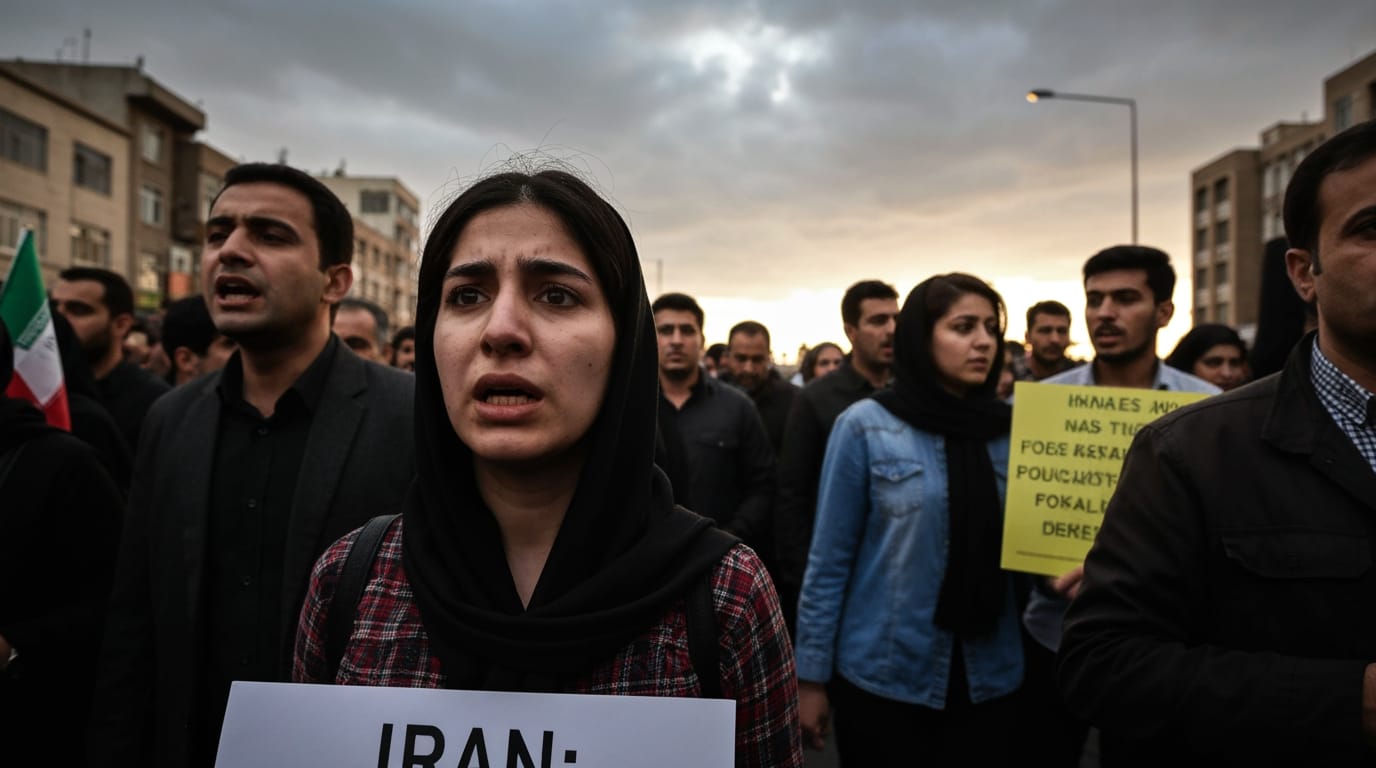
Iran is grappling with its most severe and protracted economic crisis in modern history, a predicament exacerbated by international sanctions, persistent mismanagement, and pervasive corruption. This deepening hardship has ignited widespread political discontent, leading to escalating protests across the country and presenting an unprecedented challenge to the stability of the ruling establishment. The confluence of these factors has created a volatile environment, marked by a shrinking middle class, soaring poverty rates, and a population increasingly vocal in its demands for change.
A Struggling Economy on the Brink
The Iranian economy is characterized by high inflation, a rapidly devaluing currency, and significant unemployment. Inflation rates fluctuated between 39% and 56% during the first nine months of 2023, with point-to-point inflation remaining above 31% in August 2024. Basic commodities, such as bread, have become prohibitively expensive for many households. The International Monetary Fund (IMF) had projected a drop in inflation to around 30% in 2024, but the reality on the ground indicates continued strain.
Unemployment remains a critical concern, with Supreme Leader Ayatollah Ali Khamenei acknowledging the high rates (around 22% in early 2023) as a national disgrace. While the national unemployment rate saw slight fluctuations, reaching 9.19% in 2024, an increase from 9.04% in 2023, the actual situation is starker, with reports from the Majlis indicating that up to 50% of males aged 25 to 40 are unemployed and not actively seeking work.
The economic strain has pushed a vast segment of the population into poverty. As of 2022, approximately 60% of Iranians were living at or below the poverty line. By December 2024, estimates placed between 27% and 50% of Iranians below this threshold, with some reports in March 2023 suggesting 80% of the population was nearing poverty. A grim statistic from 2024 revealed that 57% of Iranians were experiencing some level of malnourishment.
The national currency, the rial, has suffered a precipitous decline, repeatedly reaching record lows. It was declared the world's least valuable currency by December 2024 and further depreciated to an unprecedented 1,000,000 rials to the U.S. dollar by March 2025. This currency collapse significantly erodes purchasing power and fuels public frustration.
Sanctions, Mismanagement, and Corruption: A Vicious Cycle
International sanctions, particularly those reimposed by the United States, have severely constrained Iran's access to global markets and limited its oil exports, a primary source of government revenue. Iran's share of global trade has plummeted from 2.2% to a mere 0.02%, signaling its deep international isolation. The impact extends beyond direct trade, affecting foreign investment and technological upgrades vital for various industries, including the critical oil sector, which reportedly requires $200 billion annually just to maintain current production levels.
Compounding the impact of sanctions are internal factors: rampant corruption and chronic economic mismanagement. These domestic issues are widely acknowledged as significant contributors to the crisis, with many Iranians viewing them as more detrimental than sanctions alone. Supreme Leader Khamenei himself admitted in early 2023 that Iran's economy was "a decade behind."
A systemic energy crisis further exacerbates the situation. The country faces severe water shortages and infrastructural failures, leading to disruptions in electricity and other essential services. Power deficits are projected to reach between 20,000 and 24,000 megawatts, threatening industrial output and daily life. The government's reliance on fuel subsidies, while intended to appease the public, has led to increased waste and a reluctance to implement necessary reforms, fearing public backlash. The national budget deficit, estimated at 1,800 trillion tomans, and a 50% deficit in the Social Security Organization's budget underscore the severity of the financial woes.
The Eruption of Discontent
The economic despair has translated into escalating political discontent and a new wave of protests across Iranian society. While sporadic demonstrations occurred throughout 2023, a significant surge was observed in December 2025, initiated by shopkeepers in Tehran's Grand Bazaar protesting the collapse of the currency and spreading rapidly to include students, workers, and other segments of society. These protests were not isolated, following nationwide strikes in May 2025 by nurses, farmers, workers, and truckers against rising costs and poor working conditions. July 2024 alone saw 334 protest actions, primarily by oil industry workers and retirees, driven by low wages, lack of job security, and inadequate pensions.
A notable shift in these demonstrations is the transition from purely economic grievances to broader political defiance and explicitly anti-regime sentiments. Slogans like "Don't be afraid, we are all together" resonate across protest gatherings, and "Neither Gaza nor Lebanon, my life for Iran" reflects growing public frustration with the regime's foreign policy priorities over domestic welfare.
The regime's legitimacy has visibly eroded. The brutal crackdown on the "Woman, Life, Freedom" protests following Mahsa Amini's death in 2022, which saw hundreds killed and thousands arrested, deeply scarred public trust. Security forces have been accused of impunity, excessive force, torture, and sexual assault against protesters. Efforts to enforce compulsory hijab laws have also fueled anger, with human rights groups reporting a rise in executions, reaching 798 in 2024, including 144 in November alone. The record-low voter turnout of 39.9% in the first round of the 2024 presidential election starkly illustrates the widening chasm between the state and its populace.
Regional and International Pressures
Iran's economic and political crises are deeply intertwined with its complex regional and international relations. The continued enforcement of U.S. sanctions and the re-imposition of UN "snapback" sanctions in September 2025, which reinstated an arms embargo and broad financial restrictions, further tighten the economic squeeze. The failure to revive the 2015 nuclear deal between 2021 and 2023 also leaves the country under significant international pressure.
Regionally, Iran has faced several setbacks. The weakening of its proxy groups, such as Hamas and Hezbollah, following the October 2023 Israel-Hamas war, coupled with the fall of the Assad regime in Syria in December 2024, represents a significant blow to its foreign policy strategy. Many Iranians view the government's extensive support for these external ideological aims as coming at the expense of their domestic well-being, further fueling internal dissent. While Iran has sought to pivot towards Russia and China, this strategy has yet to deliver substantial investment or foster significant economic growth.
The Regime's Precarious Path Forward
The Iranian regime faces the formidable challenge of maintaining political stability amidst widespread economic distress and escalating public anger. Its primary strategy has been to avoid further flashpoints, although the security apparatus is simultaneously preparing for prolonged internal strife. The government has shown a reluctance to implement drastic economic reforms, such as cutting fuel subsidies, fearing a repeat of past violent protests. Calls from the Supreme Leader for reduced consumption highlight the severity of the crisis, urging citizens to tighten their belts in the face of scarcity.
The government's response to protests has been a mix of limited conciliatory gestures from the executive branch and harsh suppression by security forces. Increased urban policing by groups like the Islamic Revolutionary Guard Corps (IRGC) and Basij carries the risk of more casualties, potentially triggering further waves of unrest during periods of public mourning. Deepening elite fractures, with reformists and hardliners clashing over policy issues like the hijab law, further complicate the regime's ability to present a united front.
The current trajectory suggests that Iran is at a critical juncture. The combination of its deepest economic crisis, pervasive political discontent, and significant regional setbacks presents a formidable challenge to the ruling system. The ongoing protests, driven by a desperate populace and marked by increasingly political demands, underscore a society demanding fundamental change. The regime's ability to navigate these converging crises, balance internal stability with external pressures, and address the profound grievances of its citizens will determine the future course of the Islamic Republic.


