Iran's Economy Reels as Sanctions and Strikes Pummel Vital Steel Sector
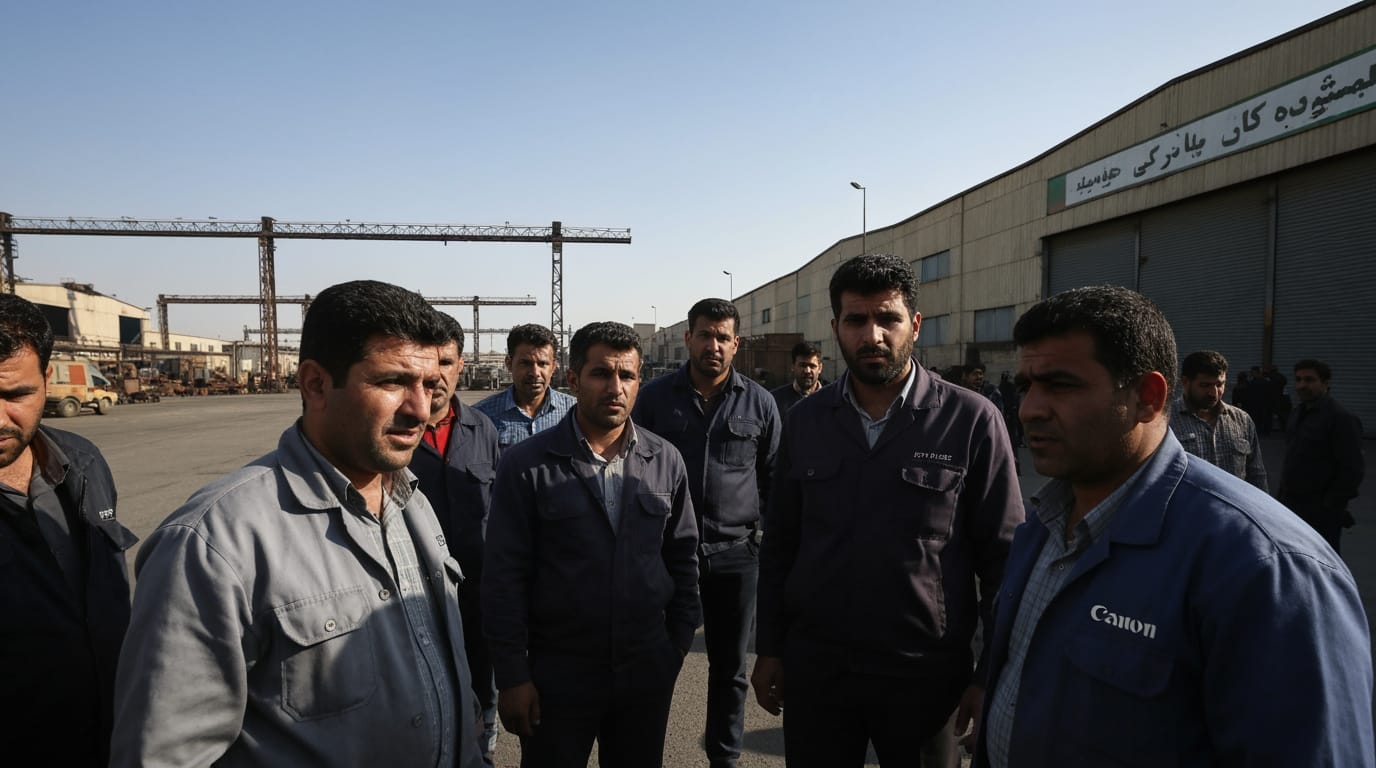
TEHRAN — Iran's critical steel industry, a cornerstone of its non-oil economy, is facing unprecedented challenges following a confluence of intensified international sanctions and recent military strikes. These escalating pressures threaten to deliver a painful blow to the nation's economic stability, exacerbating existing internal vulnerabilities and tightening the financial squeeze on the Iranian populace. The coordinated actions, aimed at curbing Iran's regional influence and nuclear ambitions, are having profound repercussions, hindering production, slashing export revenues, and contributing to a deteriorating domestic economic landscape.
Targeted Strikes and a Web of Sanctions
The latest chapter in Iran's economic struggle unfolded dramatically on March 27, 2026, when major steel production facilities, including the Khouzestan Steel Company in Ahvaz and Mobarakeh Steel in Isfahan, were reportedly targeted by airstrikes attributed to the U.S. and Israel. These attacks inflicted damage on crucial infrastructure, such as storage silos, power generation units, and alloy steel production lines, with the Foolad Atieh plant also reportedly hit. These military actions compound years of sustained economic warfare waged through international sanctions.
The United States has long targeted Iran's metals sector. In May 2019, Executive Order 13871 specifically imposed sanctions on Iran's iron, steel, aluminum, and copper industries, identifying them as "the regime's largest non-petroleum-related sources of export revenue." These measures were part of a broader "maximum pressure" campaign initiated in 2018 following the U.S. withdrawal from the Joint Comprehensive Plan of Action (JCPOA), also known as the Iran nuclear deal. The European Union further tightened the noose on September 30, 2025, by reinstating comprehensive sanctions that ban the trade of steel and other metals with Iran. These EU restrictions encompass exports to and imports from Iran, alongside prohibitions on related financing, insurance, and technical assistance, with existing contracts allowed only a short transition period until January 1, 2026. Such sanctions are designed to restrict Iran's access to global credit, technology, and product markets, aiming to compel a shift in its policies.
Steel Industry Caught in the Crosshairs
The Iranian steel sector, a vital pillar of the nation's industrial economy, accounts for approximately 3-4% of non-oil exports and significantly contributes to employment. With annual production capacity exceeding 25 million tons and a target of 55 million tons by 2025, Iran has historically been a significant regional and global producer. However, this crucial industry is increasingly under duress.
Despite a reported 5.1% rise in total steel output to 26.4 million tons and an 8.3% increase in domestic demand during the first four months of 2025, Iran's steel exports witnessed a sharp 20.9% decline, totaling 9.8 million tons. This reduction is directly attributed to the impact of sanctions, heightened geopolitical tensions, and risks of war. The situation was further complicated in 2022 when Russia, facing Western sanctions, began to "dump" discounted steel products into Asian markets, historically key for Iran. This led to a significant drop in Iranian crude steel production, with declines of 17.6% in May and 20.7% in April of that year, as traditional buyers in China, Afghanistan, Thailand, and South Korea shifted their orders.
Beyond external pressures, internal issues plague the industry. Persistent energy shortages, particularly in electricity and gas, are a major impediment to consistent production. The Secretary of the Iran Steel Producers Association, Rasoul Khalifeh Soltani, revealed that the sector could only operate without electricity and gas outages for a single month out of twelve, leading to an average loss of over 110 production days annually. This energy deficit not only curtails output but also drives up production costs, further eroding competitiveness. Damage from the recent military strikes is expected to further reduce the production of semi-finished products like billets and slabs, impacting Iran's export capacity.
Ripple Effects Across the Economy
The struggles of the steel industry are indicative of broader economic distress throughout Iran. The cumulative effect of international sanctions and internal mismanagement has led to a significant decline in the nation's economic health. The Iranian Rial has experienced substantial depreciation, falling to a near-record low of 1.2 million to the U.S. dollar in late 2025. Inflation has soared, climbing above 40% in 2025, drastically eroding purchasing power for average Iranians.
The World Bank projects Iran's economy to shrink by 2.8% in 2026 if current pressures persist. Gross Domestic Product (GDP) per capita has already dropped significantly, from $8,000 to $5,000 between 2012 and 2024. Sanctions have choked off foreign investment and restricted access to global credit and advanced technologies, which are crucial for modernization and efficiency. While sanctions have fostered a degree of self-reliance, they have also created logistical and market hurdles for raw material procurement and critical parts, sometimes necessitating imports through third countries. The unreliability of supply has also led to a loss of credibility with foreign buyers, causing them to seek alternative sources.
The impact on the labor market is equally dire. While manufacturing initially saw "job creation without growth" after 2012, indicating a struggle for productivity, the current climate is marked by growing labor unrest, layoffs, wage arrears, and unsafe working conditions, particularly in steel-producing provinces. The steel industry's decline has profound social consequences, including shrinking incomes, business closures, and the outmigration of skilled labor, further destabilizing local economies and exacerbating regional inequalities. Moreover, issues of corruption and mismanagement within state-controlled industries, including the monopolization of the steel sector by entities like the Revolutionary Guards (IRGC), have diverted resources and undermined efficiency, contributing to the industry's woes.
Geopolitical Tensions and Future Uncertainties
The ongoing "Iran war" refers not just to economic sanctions but also to the broader geopolitical conflict and recent military actions that have further destabilized the region. The potential closure of the Strait of Hormuz, a critical chokepoint for global energy trade, has already led to concerns about energy price volatility and increased shipping costs, impacting global supply chains. Iran's economy, already weakened, now faces the additional financial burden of rebuilding damaged infrastructure.
Amidst these escalating challenges, voices within Iran, such as former Economy Minister Seyyed Ehsan Khandozi, have publicly acknowledged the severe economic threat. His comments suggest a growing internal debate about the need for "economic statecraft," including sanctions relief negotiations, regional trade normalization, and foreign investment, as potential pathways to stabilize the regime. The Iranian government is also reportedly prioritizing the mining sector to diversify its revenue sources and reduce dependence on oil, aiming to boost production and export of metals like iron ore, copper, and zinc.
However, the outlook remains precarious. The combination of prolonged sanctions, recent military strikes, and internal economic challenges presents a multi-faceted and severe blow to Iran's economy. The steel industry, once a symbol of industrial strength and a key generator of non-oil revenue, now stands as a stark indicator of the immense pressures bearing down on the nation. The long-term implications for Iran's economic recovery, its ability to attract investment and technology, and the daily lives of its citizens are profoundly uncertain as the country navigates an increasingly hostile geopolitical and economic environment.


