Iran's Enduring Capacity for Conflict: A Test of Resilience Amid Escalation
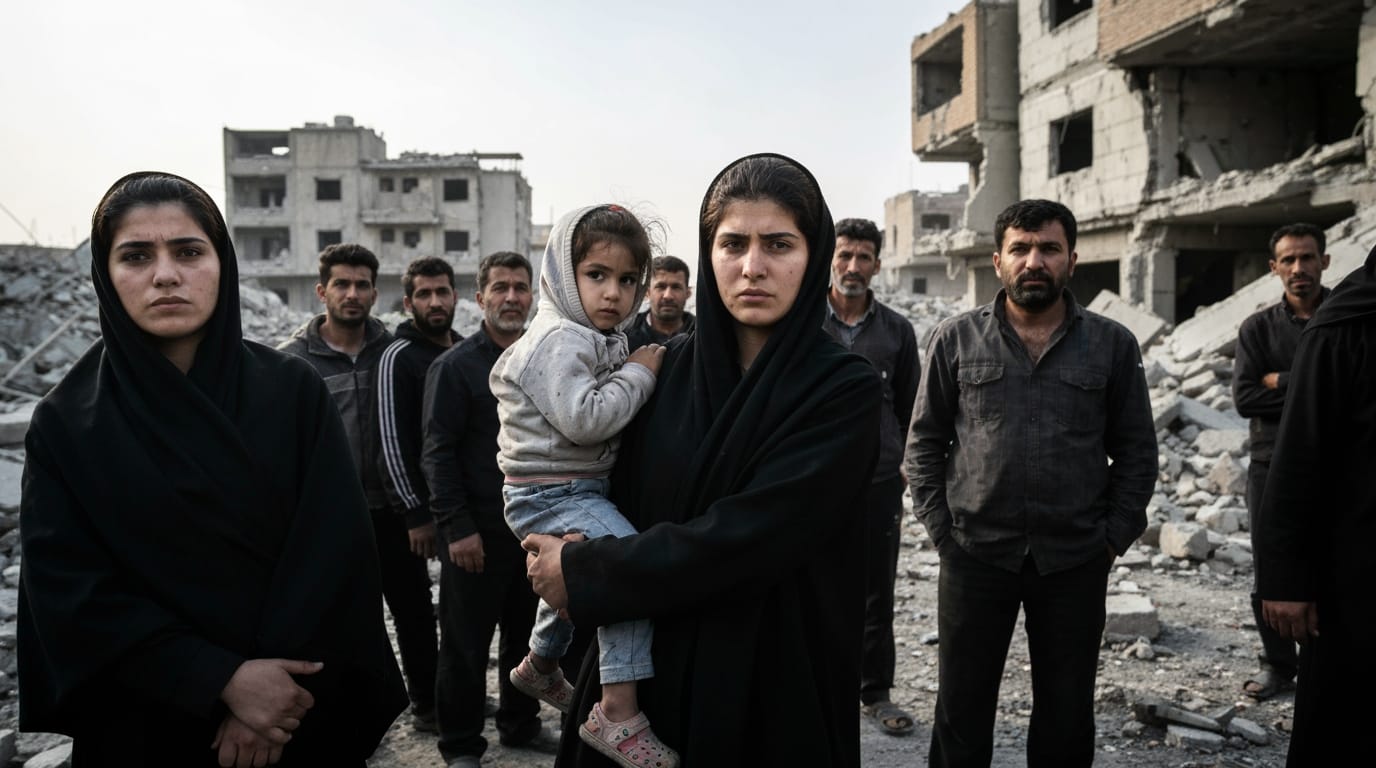
The Middle East remains on edge as the ongoing conflict intensifies, placing a critical spotlight on Iran's capacity to sustain prolonged warfare against a coalition of adversaries. With decades of experience navigating international sanctions and regional hostilities, Tehran has developed a complex strategy combining economic resilience, asymmetric military tactics, and a formidable network of proxies. While recent direct military engagements have undoubtedly strained its resources, analysts suggest Iran possesses a deeply ingrained endurance, signaling a potential for protracted confrontation rather than swift capitulation.
The question of how long Iran can continue its war efforts is not merely a military assessment but a multifaceted inquiry into its economic fortitude, domestic stability, and strategic depth. Tehran's leadership has often framed endurance as a strategic success, even when it masks underlying erosion. The current conflict, characterized by coordinated strikes against Iranian military and nuclear infrastructure, coupled with Iran's retaliatory missile and drone attacks across the region, represents a significant test of this long-held posture.
Economic Lifelines Under Sanctions' Strain
Iran's economy, heavily reliant on oil revenues, has long operated under the burden of international sanctions. These restrictions, imposed by the United States and other international bodies, notably from 2012 to 2015 and reinstated and expanded in 2018 and 2019, have targeted its oil, gas, petrochemical, banking, and shipping sectors, significantly impacting its foreign currency earnings. Despite these pressures, oil revenues remain central to Iran's budget, with proposed increases in reliance on them for the next fiscal year. For instance, nearly one-third of the anticipated oil revenues for the upcoming year are allocated to the military sector, a substantial increase from previous allocations.
For several years, a portion of Iran's oil exports has been channeled directly to military forces, particularly the Islamic Revolutionary Guard Corps (IRGC), under a "Strengthening National Defense" program. The budget for military infrastructure development is projected to see a significant rise, indicating a clear prioritization of defense spending even amidst economic challenges. Experts suggest Iran spends an estimated $10-18 billion annually on its military, with a substantial portion allocated to the IRGC, including funds for its external operations and proxy groups. While sanctions have demonstrably reduced military spending in the past, forcing a decline in per capita military expenditure, Iran has adapted by increasing domestic production of industrial equipment for its oil industry and developing strategies to circumvent export restrictions, often through discounted sales.
A critical economic vulnerability, however, lies in Iran's ability to disrupt vital shipping lanes. Its capacity to launch drone attacks could disrupt the Strait of Hormuz for months, a choke point through which a significant portion of the world's crude oil and liquefied natural gas passes. Such disruptions could lead to spikes in global energy prices, potentially fueling inflation and challenging international markets, an outcome Tehran likely views as a means to increase diplomatic pressure on its adversaries.
Military Doctrine: Asymmetry and Proxy Power
Facing technologically superior adversaries, Iran has honed an asymmetric warfare strategy, leveraging its missile and drone capabilities and extensive network of proxy forces to project power and deter direct confrontation. While Iran boasts one of the largest armed forces in the region, with over a million active and reserve personnel, its conventional military capabilities are often considered underequipped compared to advanced opponents. This disparity has driven its focus on developing missile and drone arsenals, which constitute the core of its military power.
However, recent conflicts have taken a toll. A 12-day war with Israel in June 2025 reportedly destroyed a significant portion of Iran's missile launchers and depleted its long-range missile stocks. The ongoing US-Israeli campaign has further degraded Iran's launch capacity, with estimates suggesting around 75 percent of its launcher force has been destroyed. This has forced Iran to shift from large-scale missile barrages to more limited strikes, indicating a constraint on its immediate offensive capabilities. Despite these losses, Iran's industrial base is reportedly capable of producing several hundred missiles per month, and its underground "missile cities" enable it to replenish stockpiles, suggesting a long-term rebuild capacity. Iran is also a major drone manufacturer, with the industrial capacity to produce approximately 10,000 drones per month, offering a cost-effective means to sustain persistent threats.
Central to Iran's strategic depth is its network of allied militias and political movements, collectively known as the "Axis of Resistance." This network includes Hezbollah in Lebanon, the Houthis in Yemen, and various Iraqi militias, as well as Hamas in Palestine. These proxy groups serve as instruments of influence, allowing Iran to project power across borders, exert military pressure, and engage in multi-front, low-cost wars without direct military engagement. This strategy provides a degree of plausible deniability while enabling Iran to challenge adversaries and complicate regional stability. Recent escalations have seen increased hostile activity from these proxies, targeting Israel and US forces in the region, demonstrating their integral role in Iran's enduring conflict strategy.
Internal Dynamics and Political Will
The Iranian regime's ability to sustain a prolonged conflict is also tied to its internal political will and the stability of its domestic front. While mass protests driven by economic conditions and social grievances have eroded political cohesion and challenged the regime's legitimacy, the system has demonstrated institutional resilience. The Islamic Republic's governing structure, with the IRGC at its core, has maintained command and control structures even amidst significant external pressure and the loss of senior figures. Analysts suggest that power in Iran is decentralized, dispersed across military, political, and security institutions, allowing operations to continue despite leadership losses.
Some analyses even suggest that the regime views confrontation not as a catastrophe, but potentially as a turning point that could strengthen internal cohesion and reinforce legitimacy, comparing it to historical instances where external conflict rallied domestic support. However, this perspective is balanced by concerns that prolonged economic exhaustion and a loss of public confidence could make 2026 a particularly challenging year for the Islamic Republic, potentially leading to increased instability or fragmentation. The regime has responded to internal vulnerabilities by tightening its security apparatus and deploying military capacity to border regions. The current war is widely seen as a "contest of endurance," where both sides aim to wear down the other, with Iran fully aware it cannot win a conventional war against the US and Israel and thus opting for a war of attrition.
Conclusion
Iran's capacity to sustain a war is a complex interplay of its economic adaptability under sanctions, its well-developed asymmetric military capabilities, and the enduring strength of its proxy networks, all underpinned by a resilient, albeit sometimes challenged, domestic political system. While recent military engagements have significantly impacted its missile arsenal, Iran's ability to replenish these stocks, coupled with its robust drone production and deep reliance on proxies, allows it to maintain a persistent threat. The strategic objective for Tehran appears to be a war of attrition, aiming to raise the costs for its adversaries and achieve its strategic goals through prolonged engagement rather than decisive military victory. The international community watches closely as this test of endurance unfolds, with significant implications for regional and global stability.


