Iran's Expanding Arsenal: A Deep Dive into its Military Might and Missile Resilience
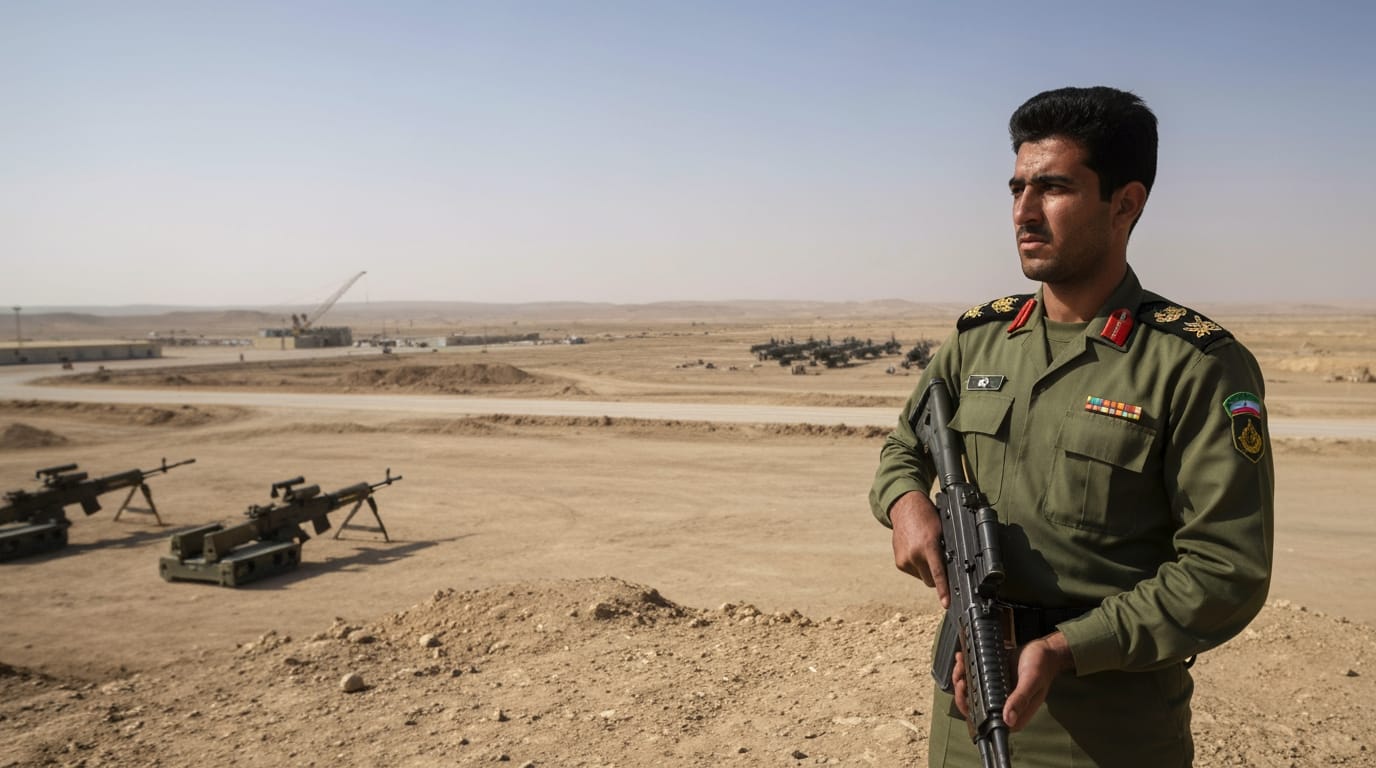
Iran maintains one of the largest and most sophisticated military forces in the Middle East, characterized by a robust missile program and a growing drone capability. Despite international sanctions and intermittent conflicts, the Islamic Republic has consistently demonstrated a capacity to not only sustain but also replenish its diverse arsenal, posing significant strategic challenges to regional and global powers. The bedrock of its defense doctrine lies in deterrence and asymmetric warfare, leveraging its missile and drone technologies to project influence and respond to perceived threats across a wide geographical span.
Iran's Formidable Military Stance
With one of the biggest standing armed forces in the Middle East, Iran's military structure is extensive, encompassing both a regular army and the highly influential Islamic Revolutionary Guard Corps (IRGC). Estimates suggest Iran ranks among the world's top 20 militaries in terms of personnel, equipment, and logistical capacity. Beyond its active personnel, the nation commands an estimated 350,000 reservists, composed of army veterans and volunteer forces, further bolstering its manpower. This substantial force is guided by a strategic vision that emphasizes self-reliance and the ability to conduct long-range strikes, particularly through its advanced missile and unmanned aerial vehicle programs.
The Backbone of Deterrence: Iran's Missile Arsenal
At the core of Iran's military strategy is its extensive missile arsenal, recognized as the largest and most diverse in the Middle East. This formidable collection includes various short-range ballistic missiles (SRBMs), medium-range ballistic missiles (MRBMs), land-attack cruise missiles, and unmanned aerial vehicles (UAVs). Key systems such as the Khorramshahr-4, with a reported range of 2,000 kilometers (over 1,220 miles), and the Shahab-3, Sejjil, Emad, and Qiam-1, demonstrate Iran's capability for precision strikes over significant distances. Some of these systems are theoretically capable of reaching targets as far as Israel and parts of southeastern Europe, making them a point of concern for regional and international security.
Prior to recent conflicts, Iran's ballistic missile inventory was estimated to be between 2,500 and 3,000 missiles. While this number reportedly saw a reduction, possibly by half, during the 2025 conflict with Israel, reports indicate a swift rebuilding effort. Post-conflict assessments suggest Iran has replenished its stockpile to approximately 2,000-2,500 missiles, demonstrating a resilient capacity to recover from significant losses. While Iran asserts its missile program is for defensive purposes and has publicly stated it deliberately limits the range of its missiles to 2,000 kilometers, some analyses suggest that certain medium-range ballistic missiles, like the Sejjil and Emad, could be adapted to carry nuclear warheads due to their design characteristics.
Indigenous Production and Replenishment Capabilities
A critical aspect of Iran's military strength is its robust domestic defense industry and its proven ability to replenish its missile stocks. The nation has developed an industrial base capable of producing hundreds of missiles monthly. This capability is supported by an extensive network of underground depots that serve as production centers, storage facilities, and even launch sites, making them difficult targets for external strikes. The Self-Sufficiency Jihad Organization (SSJO) is specifically tasked with advancing these ballistic missile capabilities.
Despite an emphasis on self-reliance, evidence suggests Iran still relies on external sources for some critical components. For instance, reports indicate Iran purchased sodium perchlorate from China to replenish missile stocks, a chemical crucial for solid propellant production. This reliance underscores the ongoing challenges posed by international sanctions, even as the country strives for greater autonomy in its defense manufacturing. However, the rapid replenishment of its arsenal following significant depletion during the 2025 Iran-Israel war highlights the effectiveness of its production infrastructure and procurement networks. In addition to missiles, Iran has also become a significant player in drone technology. Unmanned devices like the Shahed series, capable of carrying powerful explosives up to 2,000 kilometers, are comparatively cheaper and easier to manufacture, contributing significantly to Iran's asymmetric warfare capabilities.
Regional Impact and Strategic Doctrines
Iran's substantial military capabilities, particularly its missile and drone programs, form the cornerstone of its national security doctrine, which prioritizes deterrence and asymmetric warfare. This approach is partly a response to its relatively weaker conventional air force, with missiles and drones providing a means to project power and retaliate against adversaries. The deployment of these armaments has been observed in various regional contexts, including retaliatory strikes against U.S. installations and Israeli targets, as well as against other nations in the Gulf region. Such actions underscore Iran's willingness and capacity to engage militarily beyond its borders.
The strategic deployment of its diverse arsenal has significant implications for regional stability. The ability to launch long-range strikes with precision weapons allows Iran to exert influence and respond to perceived aggressions, shaping the geopolitical landscape of the Middle East. While external powers, particularly the U.S. and Israel, have undertaken efforts to dismantle Iran's missile architecture, the inherent difficulty in neutralizing mobile launchers and dispersed underground sites means that Iran retains a formidable retaliatory capacity. This ongoing dynamic contributes to a complex security environment where military deterrence and the potential for escalation remain ever-present concerns.
In conclusion, Iran possesses a well-armed military, distinguished by its vast and continuously expanding missile and drone capabilities. Its robust domestic production capacity, augmented by strategic procurement, allows it to effectively replenish its arsenal even in the face of international pressures and military engagements. This resilience, coupled with a doctrine of deterrence and asymmetric warfare, solidifies Iran's position as a significant military actor in the Middle East, with profound implications for regional and international security.


