Iran's Guard Demands U.S. Acceptance of Terms for Hormuz Reopening Amid Escalating Tensions
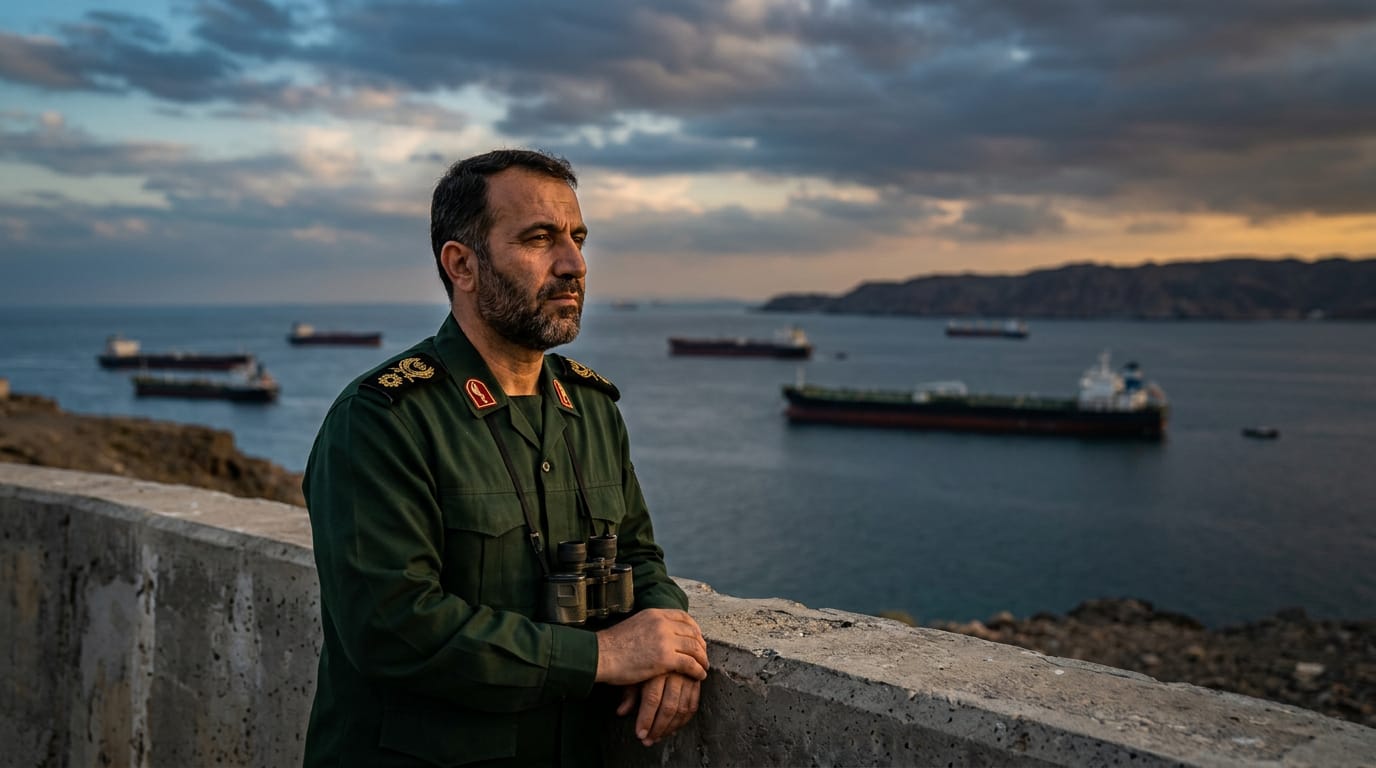
TEHRAN, Iran – Iran's Islamic Revolutionary Guard Corps (IRGC) has issued a definitive statement: the crucial Strait of Hormuz will not be fully reopened unless the United States acquiesces to Tehran's specific conditions. This declaration arrives amidst a period of heightened friction in the Persian Gulf, underscoring the volatile geopolitical landscape surrounding one of the world's most vital maritime choke points. The IRGC's stance signals a complex diplomatic challenge, with global energy markets and international shipping hanging in the balance.
The recent pronouncement by the IRGC, articulated by spokesperson Hossein Mohebbi, emphasizes that the reopening of the strategic waterway is "subject to the specific mechanisms and conditions of the Islamic Republic of Iran" and is distinct from ongoing negotiations between Tehran and Muscat. This clarification emerged as US officials had expressed optimism about a potential agreement facilitated by Oman that could soon restore commercial shipping through the Strait. However, the IRGC's assertion makes it clear that any limited arrangements do not equate to a full normalization of passage without broader US concessions. The current climate follows reported incidents on July 30 and 31, 2026, where the IRGC claimed its forces struck two oil tankers attempting to transit through unauthorized routes in the Strait of Hormuz, compelling other vessels to alter course. These actions, according to the IRGC, were in response to what it described as continued US threats and interference in regional maritime activity.
The Strategic Imperative of the Strait of Hormuz
The Strait of Hormuz, a narrow sea passage separating the Arabian Peninsula and Iran, links the Persian Gulf with the Gulf of Oman and the Arabian Sea, serving as the sole maritime gateway for crude oil and liquefied natural gas (LNG) from several major producers. Its strategic importance cannot be overstated. Annually, approximately 20 million barrels per day (mb/d) of crude oil and petroleum products, equating to about 25% of the world's seaborne oil trade, traverse this waterway. In 2022, daily oil flow through the Strait averaged 21 mb/d, accounting for roughly 21% of global petroleum liquids consumption. A substantial portion—around 80%—of this oil is destined for Asian markets, with China, India, and Japan being primary importers. Beyond oil, nearly 20% of global LNG trade also passes through the Strait, predominantly from Qatar and the UAE.
The economic repercussions of any sustained disruption are profound. The International Energy Agency (IEA) has highlighted that any blockage would have immense consequences for global oil markets, potentially triggering significant price volatility, economic instability, and even recession in import-dependent economies. While Saudi Arabia and the United Arab Emirates possess some pipeline infrastructure to bypass the Strait, nations like Iran, Iraq, Kuwait, Qatar, and Bahrain remain heavily reliant on this narrow channel for the vast majority of their oil and gas exports. At its narrowest, the Strait measures only 29 nautical miles (54 km) across, featuring two-mile-wide navigable channels for inbound and outbound shipping, along with a buffer zone. This geographical constraint makes it particularly vulnerable to geopolitical tensions.
A History of Escalation and Naval Confrontation
The current standoff is not an isolated incident but rather the latest chapter in a protracted history of tensions between Iran and the United States concerning the Strait of Hormuz. Dating back to the 1979 Iranian Revolution, Iran has consistently used the threat of closing the Strait as leverage against perceived US actions. A notable historical precedent is the "Tanker War" during the 1980-1988 Iran-Iraq War, where both belligerents targeted commercial shipping, leading to US naval intervention to protect Kuwaiti oil tankers.
More recently, the Strait became a central flashpoint in a 2026 US-Iran military escalation. Iran initially restricted passage through the Strait on February 28, 2026, in response to joint US and Israeli military operations against its territory. This led to a US naval blockade on Iranian ports, which was imposed on April 13, 2026, targeting vessels bound for or departing from Iran. A temporary ceasefire and a June 14 agreement aimed at reopening the Strait were short-lived, with hostilities resuming on July 7. The ongoing US blockade has had a significant economic impact on Iran, with US estimates suggesting daily losses in oil revenue.
Iran's Conditions and the Diplomatic Tightrope Walk
The "terms" that Iran demands for a full reopening of the Strait of Hormuz are multifaceted and reflect its broader grievances with the United States. While not officially disclosed in full detail, statements from Iranian officials and analysts suggest these conditions include the cessation of restrictions on Iranian shipping, the lifting of the ongoing US naval blockade on Iranian ports, and potential compensation for damages incurred during the recent conflict. Furthermore, Iran seeks a greater measure of control over the waterway, potentially through a joint coordination center with Oman to direct maritime traffic, and a system where incoming ships would transit through Iranian-supervised lanes.
This demand for increased Iranian oversight stands in direct opposition to the US position, which insists on unrestricted freedom of navigation through the Strait, viewing it as an international waterway. The US has explicitly rejected any arrangements that would allow Iran to impose tolls or charges on passing vessels.
Adding another layer of complexity are the ongoing negotiations between Iran and Oman concerning new mechanisms for maritime traffic. Despite reports of progress in these bilateral talks and US officials expressing anticipation of an imminent deal, the IRGC's firm declaration that a full reopening hinges on direct US acceptance of Iran's conditions underscores the depth of the disagreement. Even if Iran and Oman finalize a localized agreement, Tehran has signaled that this alone would be insufficient to fully normalize passage, with Iran's Foreign Minister Abbas Araqchi indicating that additional demands, such as US compensation, must be met.
Conclusion: A Precarious Path Forward
The IRGC's assertion regarding the Strait of Hormuz transforms what might appear to be a localized shipping dispute into a high-stakes geopolitical confrontation. The intertwined issues of energy security, international maritime law, and regional sovereignty mean that any sustained disruption in the Strait would send shockwaves across the global economy. The current standoff pits Iran's demand for recognition of its conditions and sovereignty against the US commitment to freedom of navigation.
While diplomatic efforts, particularly those involving Oman, seek to de-escalate the situation and restore stability, the IRGC's unambiguous stance suggests that the path to a comprehensive resolution remains fraught with challenges. The world watches closely as both sides navigate this precarious situation, with the future of global trade and regional stability dependent on whether a diplomatic solution can bridge the chasm between their competing demands. Without a mutually acceptable agreement on Iran's "conditions," the critical artery of global commerce through the Strait of Hormuz could remain subject to ongoing instability and uncertainty.


