Iran's Pickaxe Mountain: A Nuclear Redoubt Testing Global Resolve
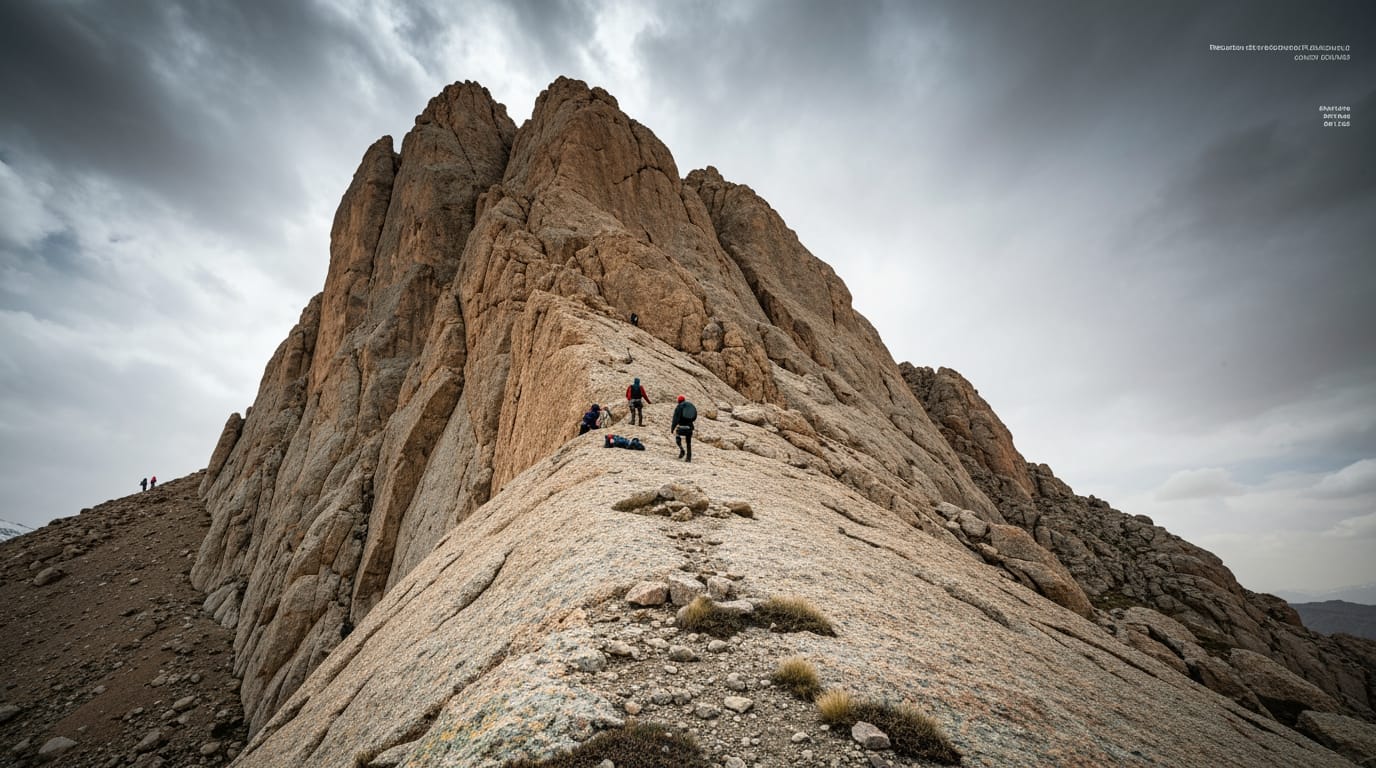
In the escalating geopolitical landscape of the Middle East, a formidable and secretive Iranian installation, colloquially known as "Pickaxe Mountain," has emerged as a focal point of international concern and a significant strategic challenge. This deeply buried underground site, officially the Shahid Alimohammadi facility and known in Persian as Kuh-e Kolang Gaz La, represents a critical element in Iran's nuclear infrastructure and a potential flashpoint in its contentious relationship with Western powers and regional adversaries. Its construction, shrouded in secrecy and fortified against attack, underscores Iran's determination to safeguard its nuclear ambitions, presenting a complex dilemma for nations seeking to curb the spread of nuclear weapons.
The Mountain's Concealed Core
Located approximately 225 kilometers (140 miles) south of Tehran and a mere 1.5 to 2 kilometers (1 to 1.2 miles) from the Natanz nuclear enrichment complex in Isfahan province, Pickaxe Mountain is strategically nestled within Iran's rugged Zagros mountain range. The facility's origins trace back to a 2020 incident, when an explosion, widely attributed to sabotage by external actors, severely damaged an above-ground centrifuge assembly plant at Natanz. In response, Iranian officials initiated the construction of the underground facility, stating its purpose was to replace the destroyed manufacturing site for advanced centrifuges.
While Iran maintains that Pickaxe Mountain is intended solely for the peaceful production and assembly of centrifuges, a critical component in uranium enrichment, international observers and intelligence agencies express deeper concerns. Israeli intelligence, in particular, has suggested that Iran has clandestinely transferred thousands of uranium enrichment centrifuges to the subterranean complex, potentially positioning it for active enrichment operations. This allegation, though unverified by independent international bodies like the International Atomic Energy Agency (IAEA) which has been denied access to the site, intensifies fears about Iran's potential to rapidly advance its nuclear capabilities.
Engineering an Impregnable Fortress
What renders Pickaxe Mountain an exceptionally difficult target is its sheer depth and the meticulous engineering employed in its construction. Experts estimate the facility is buried between 80 meters (260 feet) and 100 meters (328 feet) below the mountain's surface, with some analyses suggesting depths exceeding 100 meters (328 feet) into solid bedrock. This subterranean placement makes it considerably deeper and more fortified than other known Iranian nuclear sites, including the Fordow enrichment facility, which itself is heavily protected.
The defenses extend beyond geological advantages. Satellite imagery reveals multiple tunnel entrances, meticulously reinforced with concrete and earth, designed to withstand significant conventional attacks. The complex is further safeguarded by a robust security perimeter, including extensive fencing, a double fence-and-wall system with a patrol route, and the constant vigilance of Iran's paramilitary Revolutionary Guard. Anti-aircraft batteries are also deployed in the vicinity, creating a multi-layered defensive shield around the sensitive installation.
These fortifications pose a formidable challenge to any potential military strike. Even the most powerful bunker-buster munitions in the American arsenal, such as the GBU-57, designed to penetrate up to 60 meters (200 feet) of earth before detonation, might prove insufficient to neutralize a facility buried so deeply within granite rock. Military strategists acknowledge that a direct penetration might be impossible, suggesting that any offensive action would likely focus on disabling surface infrastructure such as tunnel entrances, ventilation systems, or electrical grids, rather than attempting to reach the core facility. The sheer scale and complexity of the underground network further complicate any military assessment or operational planning.
A Dangerous Dance of Threats and Defiance
The existence and deepening fortification of Pickaxe Mountain are inextricably linked to the volatile geopolitical climate in the Middle East. The site has become a particular point of contention, drawing explicit threats from former U.S. President Donald Trump, who has repeatedly warned of military action against it. These threats follow a period of heightened tensions, including a 12-day conflict in 2025, dubbed "Operation Midnight Hammer" by the U.S., during which American and Israeli strikes targeted other Iranian nuclear sites like Fordo, Isfahan, and the above-ground components of Natanz. Significantly, Pickaxe Mountain remained untouched during these earlier bombardments, allowing construction to continue unabated.
Iran's response to these threats has been unequivocal. Tehran has warned that any attack on its nuclear facilities would precipitate a wider regional war, promising a "powerful assault" against U.S. interests and those of its allies. This stance is consistent with Iran's broader military doctrine, which relies on extensive underground "missile cities" and hardened facilities to ensure a second-strike capability and deter aggression. The ongoing construction and suspected operationalization of Pickaxe Mountain, therefore, are not merely defensive measures but integral components of Iran's strategic posture, designed to project strength and resilience in the face of external pressure.
The Unseen Threat and Global Implications
The lack of access for IAEA inspectors to Pickaxe Mountain remains a significant source of international concern. Without direct verification, the international community cannot definitively ascertain the nature or extent of activities conducted within its depths. This opacity fuels speculation and deepens mistrust, raising profound questions about Iran's commitment to nuclear transparency and non-proliferation. The possibility that Iran could be developing advanced enrichment capabilities in an undeclared and virtually impenetrable facility represents a substantial challenge to the global non-proliferation regime.
The strategic implications extend beyond immediate military considerations. Should Pickaxe Mountain indeed become an operational enrichment site, it would provide Iran with a hardened, secure location to continue uranium enrichment, even in the event of sustained conventional attacks on its other nuclear facilities. This capability could significantly shorten the time frame for Iran to produce weapons-grade material, fundamentally altering the regional balance of power and potentially triggering a dangerous nuclear arms race in the Middle East.
Conclusion
Iran's Pickaxe Mountain stands as a testament to the nation's strategic determination and engineering prowess, creating a deeply buried and heavily fortified nuclear site that challenges conventional military capabilities. Its ambiguous purpose, coupled with the refusal of international oversight, casts a long shadow over global non-proliferation efforts. As geopolitical tensions continue to simmer, this subterranean complex remains a potent symbol of Iran's defiance and a critical flashpoint that could define the trajectory of regional stability for years to come. The international community faces a delicate balance: addressing the proliferation risks posed by Pickaxe Mountain while navigating the perilous path of de-escalation in a region already fraught with conflict.