Iran's Security Forces Issue Stark Warning to Protesters: 'Finger on the Trigger'
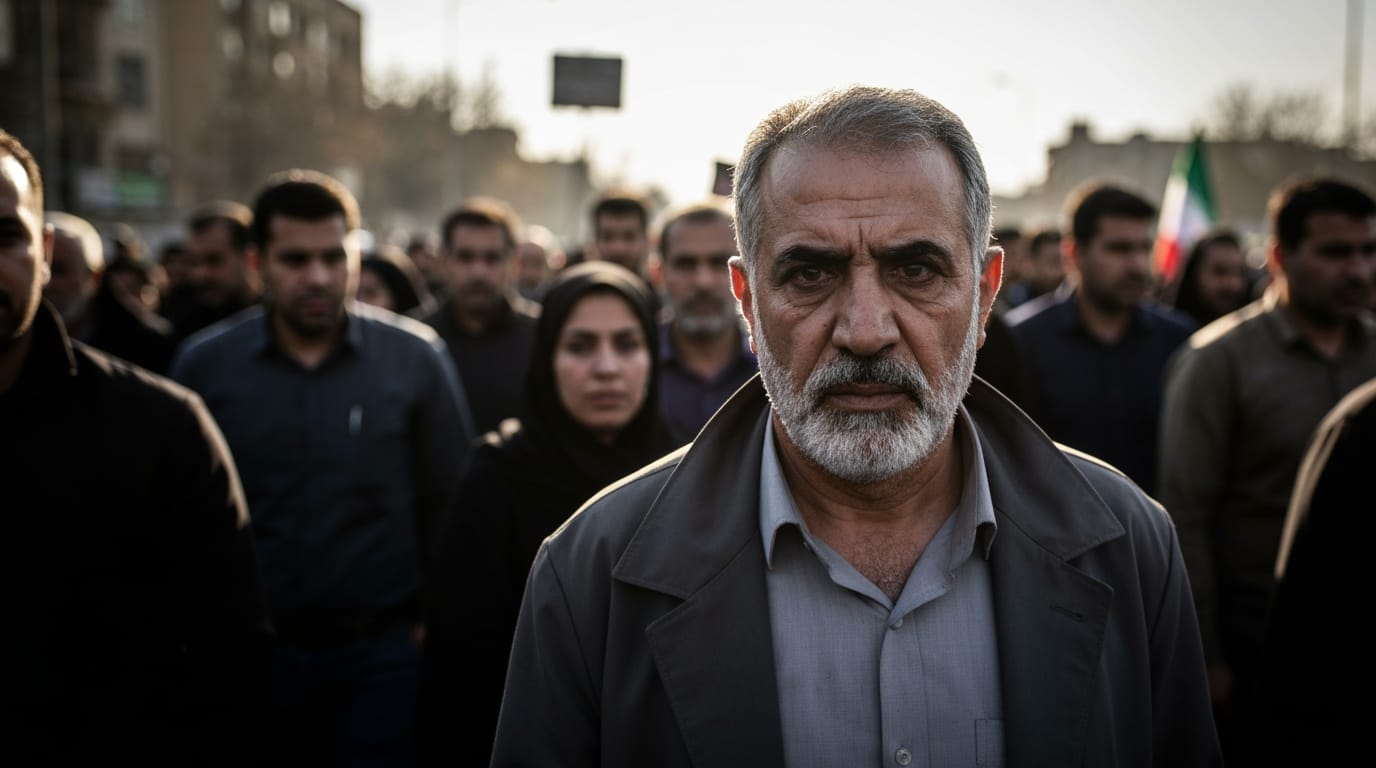
Tehran, Iran – In a dramatic escalation of rhetoric amidst ongoing nationwide protests, Iran's police chief, Ahmad-Reza Radan, has issued a severe warning to demonstrators, stating that security forces have their "finger on the trigger" and will treat those protesting "at the enemy's request" as adversaries. This uncompromising declaration underscores the regime's hardening stance against dissent that has gripped the country for months, fueled by economic hardship and demands for fundamental change.
The warning, delivered on state television on March 10, 2026, comes as Iran grapples with widespread unrest and a deepening crisis that has seen thousands killed and communications severely restricted. Radan's statement leaves little ambiguity regarding the government's intent to quash any further demonstrations with extreme prejudice, explicitly threatening lethal force against those who challenge the Islamic Republic.
The Escalation of Repression
Police Chief Radan's recent statement is a chilling affirmation of the Iranian government's intensified crackdown on a protest movement that began in late 2025. He asserted that any individual who takes to the streets "at the enemy's request" will be "confronted as an enemy, not a protester." He further emphasized the readiness of security forces, declaring, "All of our men have their fingers on the trigger and are ready to defend their revolution, to support their people and their homeland." This stern message aligns with previous warnings from January 2026, where General Mohammad Pakpour of the Revolutionary Guards similarly declared the force had its "finger on the trigger," though that warning was more broadly directed at the United States and Israel in the wake of mass protests.
The government's hardline approach has been evident in its response to the demonstrations, which have seen security forces deployed extensively, both overtly and in plain clothes. Witnesses in Tehran have reported an atmosphere akin to martial law, with armored vehicles and checkpoints becoming commonplace in the capital. The authorities have also intensified surveillance and issued warnings that even nighttime chanting from private residences is being monitored and will lead to arrests. Justice Minister Amin Hossein Rahimi previously stated that anyone involved in gatherings since January 8, 2026, would be considered a "criminal," a designation echoed by Supreme Leader Ali Khamenei, who denounced protesters as "rioters."
Roots of Unrest and Deadly Crackdown
The current wave of protests ignited on December 28, 2025, fueled by a severe economic crisis characterized by the sharp depreciation of the Iranian rial, soaring inflation, and widespread shortages. What began as expressions of economic frustration quickly evolved into broader calls for fundamental change and an end to the clerical rule that has governed Iran since the 1979 Islamic Revolution. The movement has spread to over 100 cities across the country, marking it as one of the largest uprisings in recent Iranian history.
In response, Iranian authorities have unleashed an unprecedented and deadly crackdown. Security forces, including the Islamic Revolutionary Guard Corps (IRGC), its Basij battalions, and various divisions of the national police force (FARAJA), have used unlawful force, firearms, and other prohibited weapons against demonstrators. Verified videos and eyewitness accounts reveal that security personnel positioned on streets and rooftops have repeatedly fired rifles and shotguns loaded with metal pellets, frequently targeting protesters' heads and torsos.
The human cost of this repression has been staggering. Mass killings primarily occurred on January 8 and 9, 2026, when the death toll surged into the thousands. While the Iranian government confirmed 3,117 deaths, human rights organizations present far higher figures. The U.S.-based Human Rights Activists News Agency (HRANA) has confirmed at least 7,015 deaths, including 6,508 protesters, with other estimates from Time, The Guardian, and Iran International reaching as high as 36,500 for the period of January 8-9 alone. Mass arrests have also swept across the country, ensnaring thousands, including children as young as 14. Many of those detained have been subjected to enforced disappearance and incommunicado detention, placing them at serious risk of torture and other ill-treatment.
A Pattern of Warnings and International Dimensions
The "finger on the trigger" warning by Police Chief Radan echoes earlier, similarly severe pronouncements from the regime. In early 2026, the commander of Iran's Revolutionary Guards, General Mohammad Pakpour, issued a warning to the United States and Israel, stating that the force was "more ready than ever, finger on the trigger," following the mass protests. This pattern of strong warnings underscores a strategy of deterrence and intimidation employed by the Iranian government to maintain control.
The latest warning also comes amid broader geopolitical tensions. The "enemy's request" rhetoric used by Radan appears to reference external calls for regime change. Both former U.S. President Donald Trump and Israeli Prime Minister Benjamin Netanyahu have publicly urged Iranians to take to the streets and overthrow their government in recent weeks. This external encouragement, combined with recent U.S.-Israeli strikes on Iranian targets, creates a complex backdrop for the internal crackdown. Iranian officials, in turn, have accused protesters of collaborating with foreign interests, labeling some as "mercenaries." The international community has largely condemned the violence, with France, Britain, and Germany urging restraint from Iranian authorities. Trump had also previously warned Iran against killing peaceful demonstrators, indicating that "all options remain on the table" for the U.S.
Human Cost and Global Scrutiny
The Iranian government has employed extensive internet blackouts to stifle communication and conceal the full extent of its crackdown. These shutdowns have been described as the longest ever imposed by the authorities, severely limiting the flow of information both within and outside Iran. This communication blackout amplifies the isolation and vulnerability of protesters and citizens seeking to document the unfolding events.
The scale of casualties and arrests has drawn significant international attention and condemnation. The severe repression of the 2025-2026 protests marks one of the deadliest periods in Iran's modern history, surpassing previous crackdowns in 2019 and 2022. The overwhelming use of violence has led to despair among segments of the Iranian public, with some reportedly hoping for external intervention, according to reports. The ongoing human rights abuses and the regime's uncompromising stance ensure continued global scrutiny of the volatile situation in Iran.
Conclusion
Police Chief Ahmad-Reza Radan's stark warning that security forces have their "finger on the trigger" signifies a profound and unwavering resolve by the Iranian regime to suppress dissent through any means necessary. This declaration, issued amid a backdrop of extensive protests over economic grievances and demands for political change, serves as a grim indicator of the perilous environment for anyone challenging the established order. With thousands already dead, countless arrested, and communications severely hampered, the situation remains acutely volatile. The uncompromising stance of the Iranian authorities, coupled with the deep-seated frustrations of the populace and the backdrop of international tensions, points to an uncertain and potentially tragic trajectory for the nation.


