Iraq Faces Dire Financial Crisis Amidst Escalating Iran Conflict
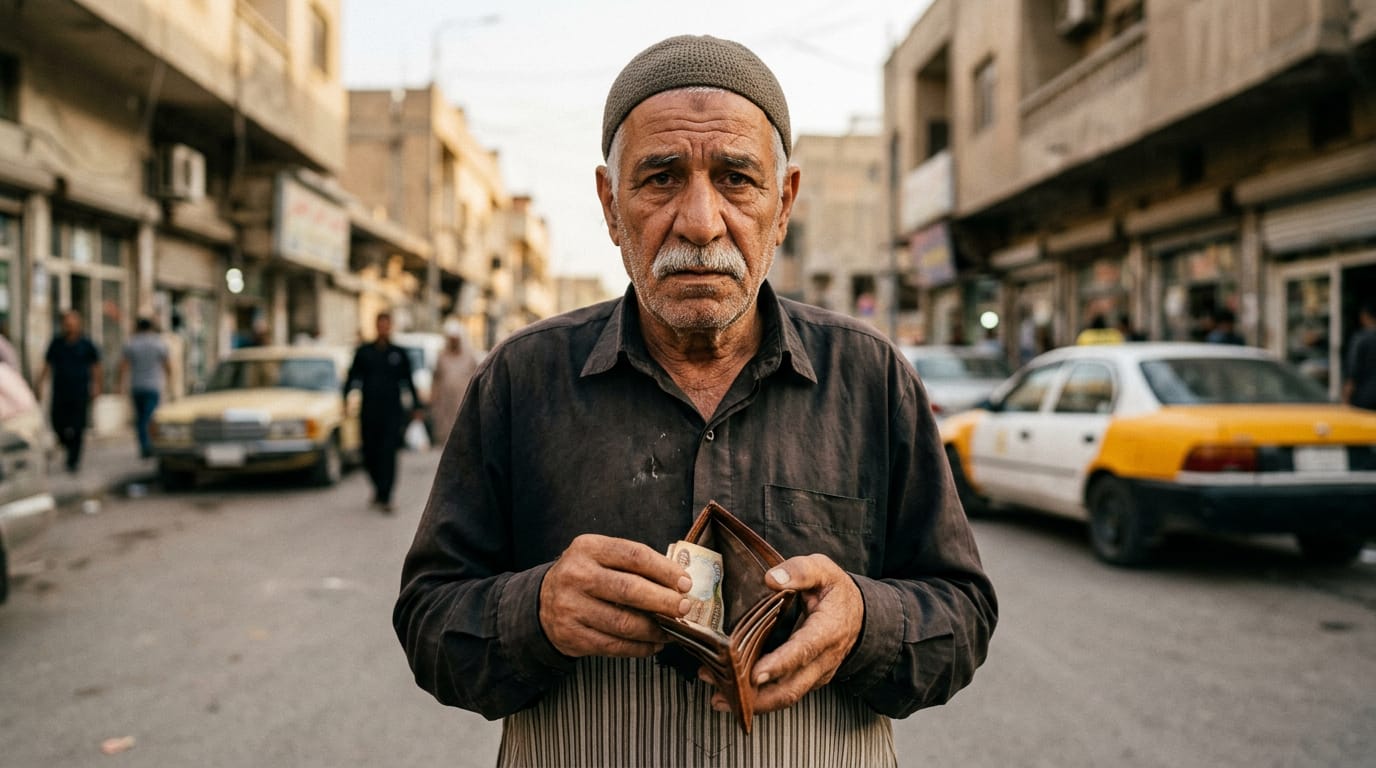
Baghdad, Iraq – A burgeoning financial crisis threatens to destabilize Iraq as the nation grapples with the severe economic fallout from the ongoing conflict with Iran. Decades of conflict and a profound reliance on oil revenues have left Iraq's economy vulnerable, a fragility now starkly exposed by the recent hostilities that have crippled its vital petroleum exports. With billions of dollars in losses accumulating rapidly and essential public expenditures in jeopardy, Iraqi officials are sounding alarms, warning of an unprecedented liquidity crunch that could have far-reaching consequences for the war-weary nation.
Oil Exports Decimated, Coffers Draining Fast
The current economic emergency stems directly from the "Iran war," which began with U.S.-Israeli strikes on Iran in late February 2026. This escalation quickly led to Iran's blockade of the crucial Strait of Hormuz, a choke point through which a significant portion of the world's oil, including Iraq's, transits. The impact on Baghdad's finances has been immediate and catastrophic. Mazhar Mohammed Saleh, the financial adviser to Iraq's prime minister, estimated that the conflict has cost Iraq between $40 billion and $45 billion in lost revenues and stalled development projects between February 28 and mid-June 2026. Another government official placed the losses closer to $50 billion.
Before the current hostilities, Iraq was exporting approximately 3.3 million barrels of crude oil per day, generating an estimated $88 billion annually. However, following the February 28 escalation and the Strait of Hormuz blockade, exports plummeted to less than 10 percent of their normal levels. Iraqi Oil Minister Bassem Mohammed Khudair confirmed the drastic reduction, stating that monthly oil revenues, which typically amounted to $7 billion to $8 billion, have sharply declined to around $1.5 billion. This precipitous drop has left the Iraqi government struggling to meet its basic financial obligations. Monthly public-sector salaries, wages, pensions, grants, and social welfare programs alone demand roughly $5.9 billion (8 trillion Iraqi dinars). When other essential amenities are included, monthly spending surges to approximately $8.24 billion (11 trillion dinars). The widening gap between dwindling revenues and persistent expenditures has created a stifling liquidity crisis, with the government prioritizing the payment of civil servant salaries.
A Troubled Economic Legacy: The Shadow of Past Conflicts
Iraq's current financial predicament is not merely a consequence of the latest conflict but is deeply rooted in a history of wars that have repeatedly devastated its economic infrastructure and fiscal stability. Prior to the Iran-Iraq War (1980-1988), Iraq was an economic powerhouse in the region. In 1979, the nation boasted an estimated $35 billion to $36 billion in foreign exchange reserves and virtually no long-term foreign debt, effectively operating as a creditor nation. Oil production was robust, reaching 3.5 million barrels per day, and annual oil revenues were substantial.
The eight-year war with Iran, however, irrevocably altered this trajectory. It transformed Iraq from a wealthy, creditor nation into one burdened by immense debt. The conflict is estimated to have cost Iraq a staggering $352 billion to $450 billion (in 2002 dollars), equivalent to roughly ten times its pre-war gross domestic product. Military expenditures soared, while oil production capacity was severely curtailed by Iranian attacks and the closure of key export routes, such as the pipeline through Syria in 1982. To sustain its war effort and maintain a semblance of domestic stability, Iraq accumulated massive foreign debts. By the end of the war, estimates of its foreign debt ranged from $40 billion to $80 billion, with a significant portion, almost $40 billion, owed to Gulf allies like Saudi Arabia and Kuwait, who had provided substantial financial assistance during the conflict.
This historical experience left Iraq's economy in shambles by 1989, with half of its oil revenue dedicated to servicing its debt and cash reserves barely sufficient for three months of imports by mid-1990. The crushing debt burden and perceived lack of flexibility from creditor nations ultimately contributed to Saddam Hussein's decision to invade Kuwait in 1990, triggering yet another devastating conflict that further plunged Iraq into economic isolation and hardship.
Undiversified Economy: A Perpetual Achilles' Heel
Iraq's persistent economic vulnerability can largely be attributed to its undiversified economy, heavily reliant on oil exports for national income. The petroleum sector typically accounts for approximately 90 percent of the nation's revenues. While immense oil reserves offer potential for wealth, this singular dependence makes the country acutely susceptible to global oil price fluctuations and, more critically, to disruptions in export capabilities. Each major conflict or geopolitical tension in the region has underscored this weakness, leading to periods of severe financial distress.
Despite efforts over the years to foster economic diversification, these initiatives have largely faltered amidst ongoing instability, corruption, and the sheer magnitude of reconstruction needs following decades of warfare. The country's infrastructure remains fragile, and non-oil sectors have struggled to develop sufficiently to provide a buffer against external shocks. This economic monoculture means that any significant impediment to oil production or export immediately translates into a national financial crisis, directly impacting the government's ability to provide essential services and maintain public order.
Seeking Lifelines Amidst Growing Desperation
In response to the current financial emergency, the Iraqi government is actively seeking solutions. The Iraqi parliament is contemplating an emergency session to address the worsening financial situation, with particular concern for securing public sector salaries. Simultaneously, Baghdad has initiated preliminary discussions with the International Monetary Fund (IMF) and the World Bank, exploring the possibility of securing loans to help finance the national budget.
However, the path to recovery remains fraught with challenges. The deep-seated issues of economic diversification, institutional reform, and regional stability are long-term undertakings. While international financial assistance may offer a temporary reprieve, a sustainable solution for Iraq's economy will necessitate a fundamental shift away from its overwhelming dependence on oil and a sustained period of peace that allows for reconstruction and economic growth. The immediate concern, however, remains the increasingly real possibility of the government running out of funds to support its basic functions, a scenario that carries significant humanitarian and political risks for Iraq and the wider Middle East.


