Israel Expands Military Footprint in Syria Amidst Post-Assad Instability
Israel has significantly intensified its military operations and expanded its ground presence in southern Syria, particularly since the collapse of the Assad regime in December 2024. These actions, which include frequent airstrikes and the establishment of new military bases, are primarily driven by concerns over security threats emanating from post-war Syria, the ongoing efforts to counter Iranian entrenchment, and the prevention of advanced weaponry transfers to Hezbollah. The strategic shift marks a departure from previous intermittent strikes to a more sustained, on-the-ground control, fundamentally redrawing the security landscape of the volatile border region.
A New Era of Direct Engagement
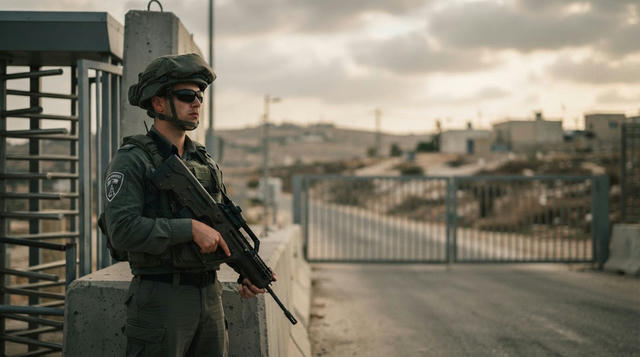
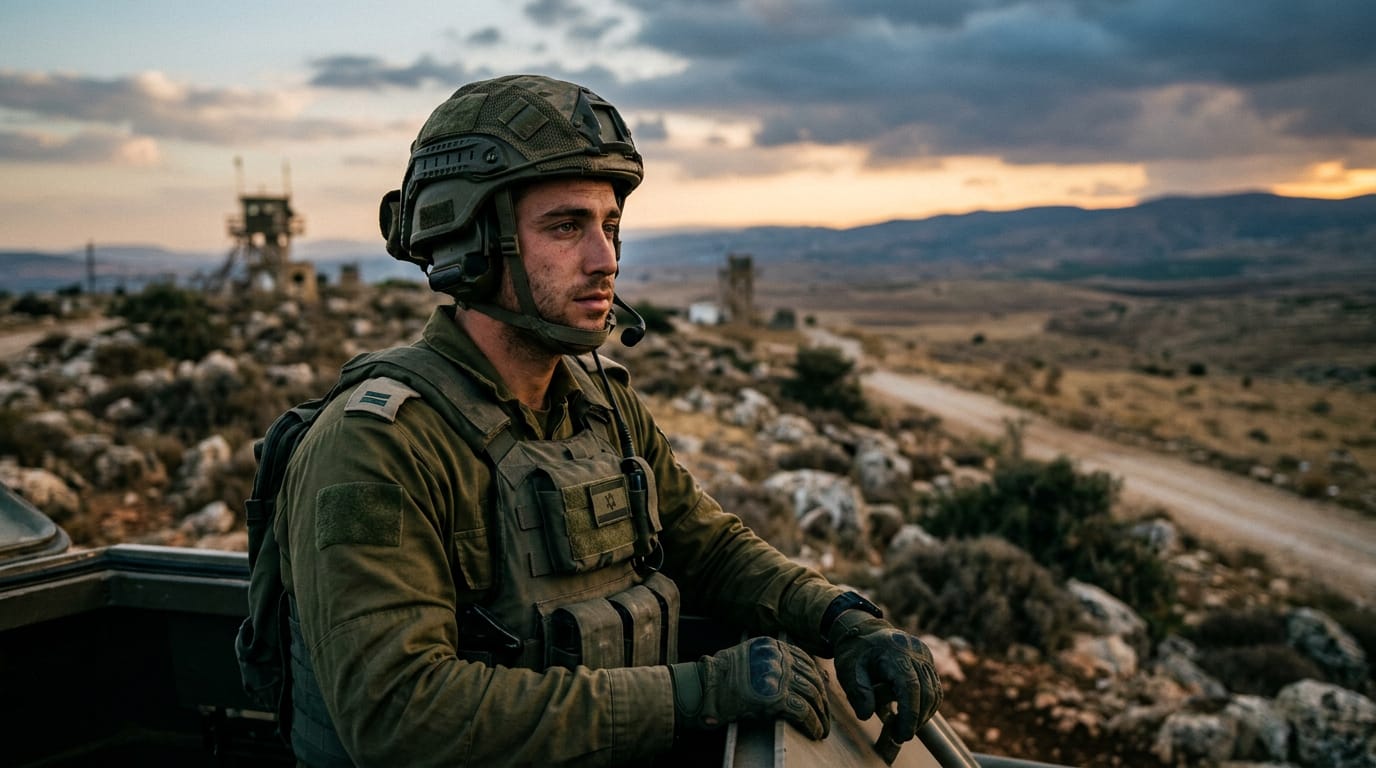
Following the rapid fall of the Syrian government on December 8, 2024, Israeli forces swiftly moved to secure its northern border. Armored units crossed into the demilitarized buffer zone adjacent to the Israeli-occupied Golan Heights, rapidly establishing control over key strategic positions. This initial advance, which included towns like Khan Arnabah and Quneitra, was accompanied by a comprehensive airstrike campaign aimed at crippling the Syrian Armed Forces and preventing their re-establishment in southern Syria. Israel's defense minister at the time, Israel Katz, issued orders for the Israeli Defense Forces (IDF) to secure complete control over the buffer zone and establish a security zone beyond it, focused on removing heavy weaponry and terrorist infrastructure. Within hours of the Assad regime's collapse, Israeli military forces launched a large-scale ground operation, capturing approximately 350 square kilometers of territory stretching from Mount Hermon to the Yarmouk Basin. Residents in villages such as Beit Jin have reported increased incursions and raids, with checkpoints now operated by Israeli personnel instead of Syrian forces.
Countering Iran's Shadow and Hezbollah's Arsenal
A central motivation behind Israel's escalating military involvement is its long-standing objective to prevent Iran from solidifying its military presence in Syria and to interdict the transfer of advanced weapons to Hezbollah in Lebanon. For years, Israel has conducted what it describes as a "war between wars" through surgical airstrikes, targeting Iranian-backed proxy forces and weapons convoys within Syria. The fall of the Assad regime, a key ally of Iran, presented both a challenge and an opportunity for Israel to intensify these efforts. Israeli officials have voiced concerns that an unstable post-Assad Syria could become an even more fertile ground for Iranian influence or for militant groups like Hamas and Islamic Jihad to launch attacks.
Israel's focus has been particularly sharp on preventing the flow of precision-guided munitions and other sophisticated weaponry from Iran, through Syria, to Hezbollah. These efforts involve tracking flights, monitoring weapons factories, and intercepting suspicious ground convoys. Despite Israel's sustained campaign, completely dismantling Hezbollah's extensive arms pipeline through Syria remains challenging due to the group's entrenched networks, adaptable logistics, and the continued support from Iran. However, recent reports indicate that the new Syrian leadership in Damascus has shown a willingness to counter Hezbollah activities on its soil, presenting a potential avenue for future security coordination.
Establishing "Red Lines" and a Security Buffer
Israel has consistently articulated "red lines" regarding its security interests in Syria, which include preventing Iranian military entrenchment near its borders, stopping the transfer of advanced weapons to Hezbollah, and ensuring no military infrastructure emerges that could pose a threat. The current expansion into southern Syria and the establishment of at least nine new military bases are designed to enforce these red lines with a more direct and permanent presence. This strategy aims to create a security belt, ranging from 5 to 12 kilometers in width, along the Syrian highlands bordering the Israeli-occupied Golan.
Beyond airstrikes against military sites and weapons depots, Israeli forces have undertaken ground operations that include laying minefields, seizing and demolishing homes, and clearing agricultural land. This proactive approach reflects Israel's "forward defense" doctrine, seeking to keep potential conflicts on Syrian territory rather than within its own borders. The Israeli government views these measures as essential for national security, preventing any "potential threat" from post-war Syria and guarding against a scenario where southern Syrian areas could become launching grounds for future attacks.
Regional Implications and International Scrutiny
Israel's deepening military presence has introduced new complexities into the already fractured Syrian landscape and regional geopolitics. While Russia, a significant player in Syria, has historically 'tolerated' Israeli strikes, there have been instances where Russian forces have reportedly intercepted Israeli missiles. The United Nations has repeatedly condemned Israeli airstrikes as "worrying violations" of Syria's territorial integrity and airspace, calling for an end to such military actions.
The new Syrian government, led by Ahmad al-Sharaa, has expressed concerns over these actions, labeling them as unjustified acts of aggression. Despite some initial hopes for rapprochement after the fall of the Assad regime, Israel remains suspicious of the new leadership due to its past militant associations. The military inferiority of the new Syrian army, severely degraded by years of civil war and recent Israeli bombardments, limits its ability to resist the Israeli expansion effectively. This vulnerability further complicates the prospects for long-term stability and could deepen humanitarian concerns, with reports of civilian casualties and displacement following Israeli military operations.
An Unfolding Strategy
Israel's sustained and expanded military presence in Syria underscores a strategic commitment to shaping the security environment along its northern frontier. Driven by a determination to prevent the resurgence of threats and the consolidation of adversarial forces, Israel has moved beyond a policy of limited aerial intervention to one of direct ground control in a vital buffer zone. While these actions are intended to safeguard Israeli security, they also raise significant questions about Syria's sovereignty, regional stability, and the long-term implications for all actors involved. The ongoing situation suggests that the Syrian-Israeli border will remain a flashpoint, reflecting a complex interplay of national security imperatives, regional power dynamics, and international reactions.