Israel Intensifies Airstrikes on Syrian Air Defenses Following Assad's Ouster
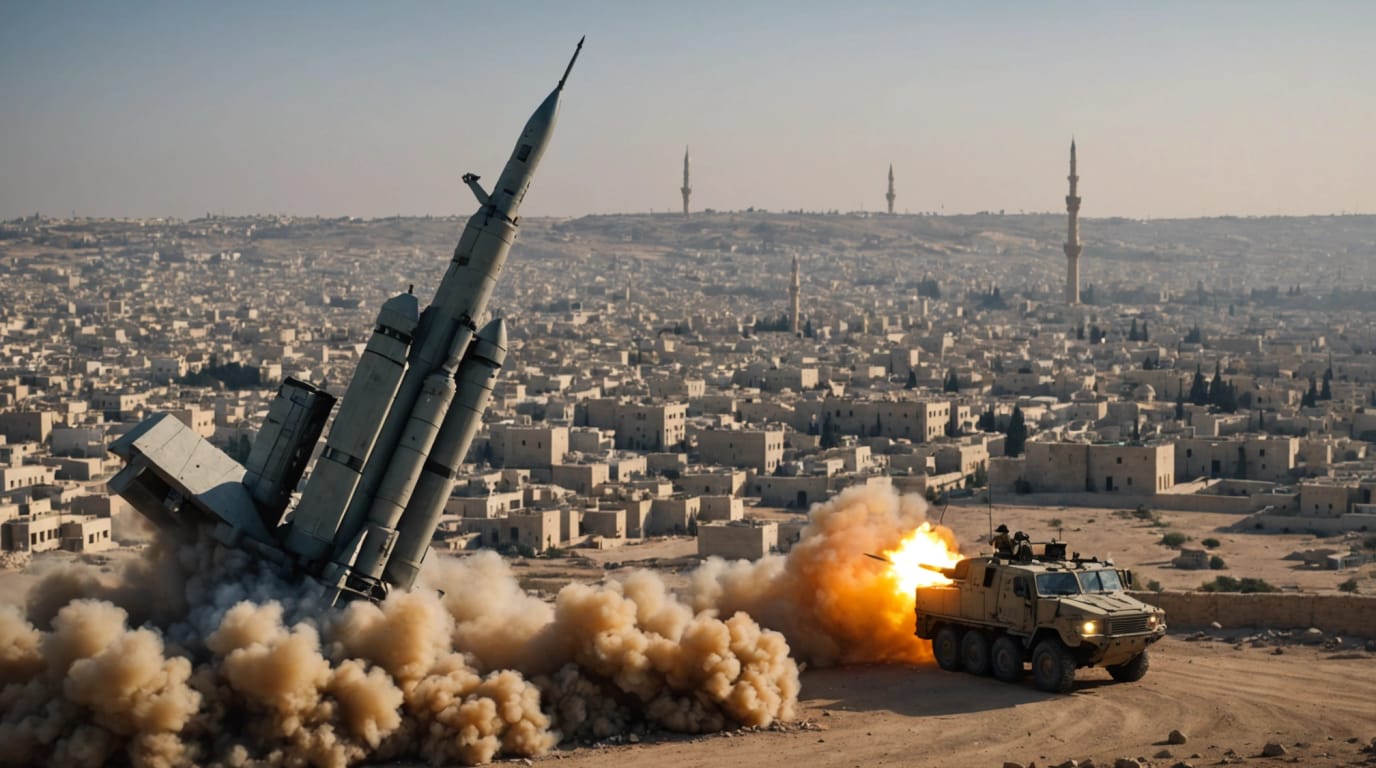
Since the fall of President Bashar al-Assad's regime in December, Israel has significantly escalated its military operations within Syria, primarily targeting air defense systems and strategic military installations. These near-daily airstrikes, which Israel claims are necessary for its self-defense, have raised concerns about regional stability and the potential for further escalation.
Daraa Governorate Under Repeated Attack
On Monday, Israeli warplanes struck multiple Syrian military sites in the Daraa governorate, according to reports from the Daraa governorate's official Telegram channel and Israel's Channel 14. The strikes focused on the 12th Brigade in Izra and the artillery battalion of the 89th Regiment in Jbab. Israeli media further specified that the targets included weapons depots, radar installations, tanks, and artillery that rebel forces had attempted to seize.
These strikes in Daraa are part of a broader pattern of Israeli military activity in the region following the change in Syrian leadership. The ouster of Assad, who had been in power for nearly 25 years, occurred after anti-regime groups took control of Damascus on Dec. 8, effectively ending the Baath Party's regime that had been in power since 1963. Assad reportedly fled to Russia.
Expansion in the Golan Heights
Taking advantage of the power vacuum in Syria, Israel has expanded its occupation of the Syrian Golan Heights by seizing the demilitarized buffer zone. This move violates the 1974 disengagement agreement between Israel and Syria, further complicating the already tense situation.
Targeting Air Defense Capabilities
Beyond Daraa, Israel has conducted numerous airstrikes targeting military sites and assets across Syria. These strikes have included fighter jets, missile systems, and air defense installations, according to various reports. On March 3, Israeli airstrikes hit a Syrian air defense battalion near the coastal city of Tartus. Syrian state media reported that the strikes hit the outskirts of Tartus, with no immediate reports of casualties. A local TV channel said the attack targeted an air defense battalion in Tartus. The Syrian Observatory for Human Rights, a war monitor, reported a large explosion at Tartus Port, coinciding with the presence of unidentified aircraft, believed to be Israeli.
Rationale for the Strikes
Avichay Adraee, a spokesperson for the Israeli military, stated that the Israel Defense Forces (IDF) had struck a military site in Qardaha, a town near Tartus and the hometown of former Syrian President Bashar al-Assad. Adraee said that the IDF targeted a military site used for storing weapons belonging to the deposed Syrian regime and that the strikes were in response to "recent developments in the region."
Israeli officials have told the Wall Street Journal that the purpose of the airstrikes in Syria is to protect Israel's borders and citizens against extreme scenarios, such as a potential attack from a new, hostile Syrian government.
Concerns and Implications
The ongoing Israeli airstrikes in Syria have drawn international attention and raised concerns about regional stability. Some experts suggest that the strikes are part of a strategy to diminish Syria's air defense capabilities and air forces. The targeting of Tartus, a base for Syrian naval forces, is particularly significant.
The strikes have also raised questions about potential chemical weapons production in the region. Following attacks in Tartus in December, Al Jazeera reported that some experts speculated that the targeted sites might have been involved in chemical weapons production.
Future Outlook
With Israel continuing its campaign of airstrikes and expanding its presence in the Golan Heights, the situation in Syria remains volatile. The international community is closely watching the developments, with some countries calling for de-escalation and a peaceful resolution to the conflict. The future of Syria and its relationship with Israel remains uncertain.


