Israel Intensifies Operations in Rafah Amidst International Condemnation
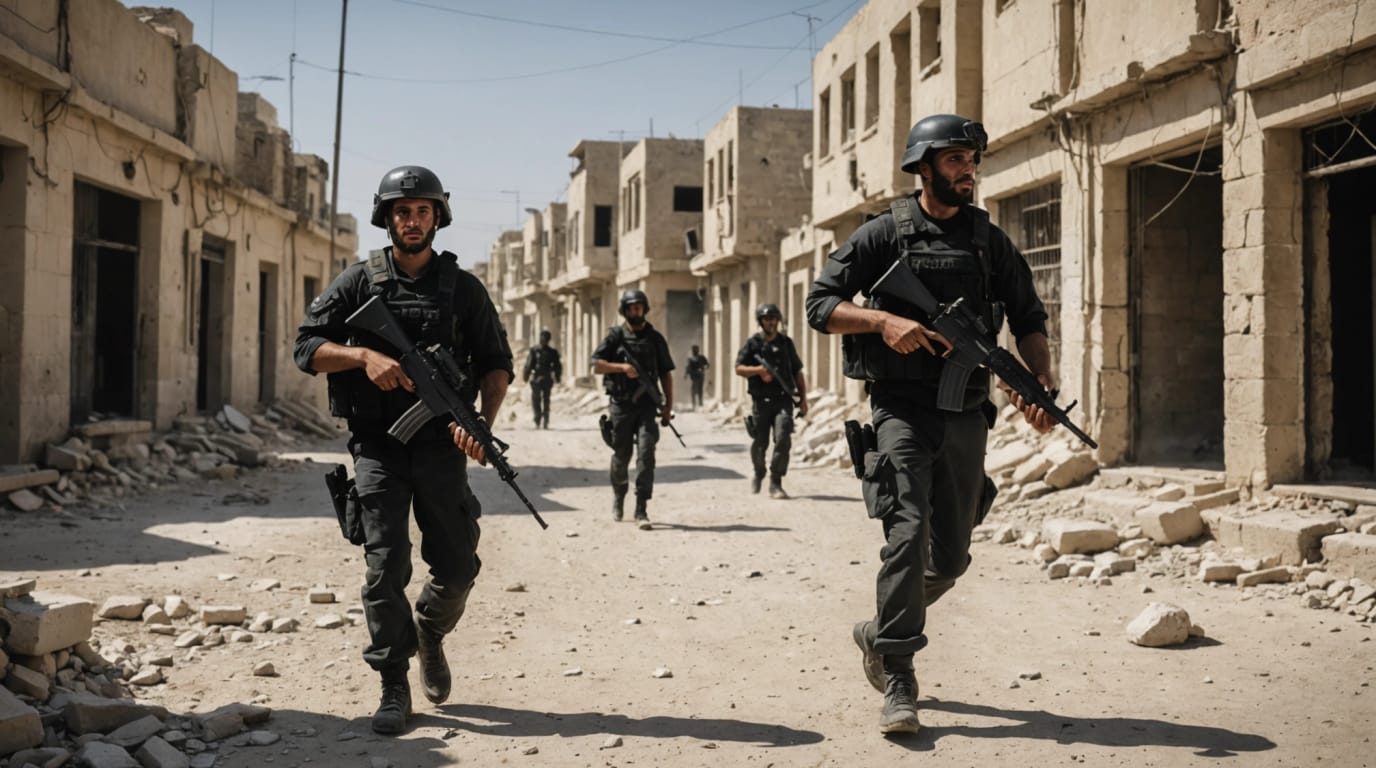
Rafah, Gaza Strip – Israeli forces have escalated their military operations in Rafah in recent days, despite growing international condemnation and warnings of a humanitarian catastrophe. The intensified attacks come as efforts to secure a ceasefire between Israel and Hamas remain stalled, leaving civilians trapped in the crossfire.
Military Operations Expand
The Israeli military announced it is expanding its ground offensive in Rafah, accompanied by intensified airstrikes and artillery shelling. Witnesses reported Israeli forces pushing deeper into populated areas, specifically in the Al-Jenenah and Al-Salam neighborhoods. The military claims its operations target Hamas militants and infrastructure, asserting that it is taking measures to minimize civilian casualties. However, these claims are disputed by international organizations and local health officials.
The Israel Defense Forces (IDF) have stated that they have killed numerous militants, uncovered tunnel shafts, and destroyed missile launching sites since the offensive began in May 2024. They also released a drone video alleging the presence of militants at a UNRWA logistics center. Hamas, on the other hand, claims to have inflicted casualties on Israeli forces, reporting the destruction of IDF vehicles and clashes with soldiers in eastern Rafah.
Humanitarian Crisis Deepens
The ongoing military operations have exacerbated the already dire humanitarian situation in Rafah. The United Nations and other aid organizations estimate that over a million Palestinians have been displaced from Rafah since the start of May 2024, many of whom had already been displaced multiple times from other parts of Gaza. These displaced people are now struggling to find shelter, food, water, and medical care in overcrowded and under-resourced areas.
The Rafah border crossing, a vital entry point for humanitarian aid, has been largely closed since Israeli forces took control of it on May 7, 2024. This has severely hampered the delivery of essential supplies to the Gaza Strip, further compounding the suffering of the civilian population. Medical facilities in Rafah are struggling to cope with the influx of wounded, and the healthcare system is on the brink of collapse.
International Response
The international community has reacted with increasing alarm to the escalating violence in Rafah. The International Court of Justice (ICJ) has ordered Israel to "immediately halt its military offensive and any other action in the Rafah Governorate which may inflict on the Palestinian group in Gaza conditions of life that could bring about its physical destruction in whole or in part." However, Israel has rejected the ICJ's ruling, with officials calling the charges of genocide "false, outrageous, and morally repugnant."
Several European countries, including Germany and Spain, have strongly criticized Israel's actions in Rafah, with some accusing Israel of violating international law. The United States, Israel's closest ally, has also expressed concerns about the humanitarian consequences of a full-scale offensive in Rafah, but has stopped short of demanding an immediate halt to the military operations.
Rafah Border Crossing
The Rafah border crossing, which borders Egypt, is a crucial point for aid and the evacuation of those who are able to flee. Israel seized control of the Palestinian side of the crossing on May 7, 2024. The crossing was reopened on January 31, 2025, after being closed for nine months, but only for medical evacuations. The European Union has also restarted its civilian mission to monitor the border crossing.
A Region in Crisis
The situation in Rafah is part of a broader crisis in the Gaza Strip, which has been ongoing since the start of the Israel-Hamas war in October 2023. More than 49,000 Palestinians have been killed in Gaza, and a further 1,004 in the West Bank. At least 111,000 people have been injured in Gaza and a further 16,000 in the West Bank. In Israel, 1,195 died following the attacks on October 7, 2023. A further 5,432 have been injured.
Uncertain Future
As the Israeli military continues its operations in Rafah, the future of the city and its inhabitants remains uncertain. The lack of a ceasefire agreement, the ongoing humanitarian crisis, and the international community's inability to effectively pressure Israel to halt its offensive paint a grim picture for the people of Rafah. The world is watching as the situation unfolds, with the hope that a peaceful resolution can be found before more lives are lost.


