Israel Rejects US-Proposed Gaza Governance Lineup, Citing Concerns Over Regional Influence
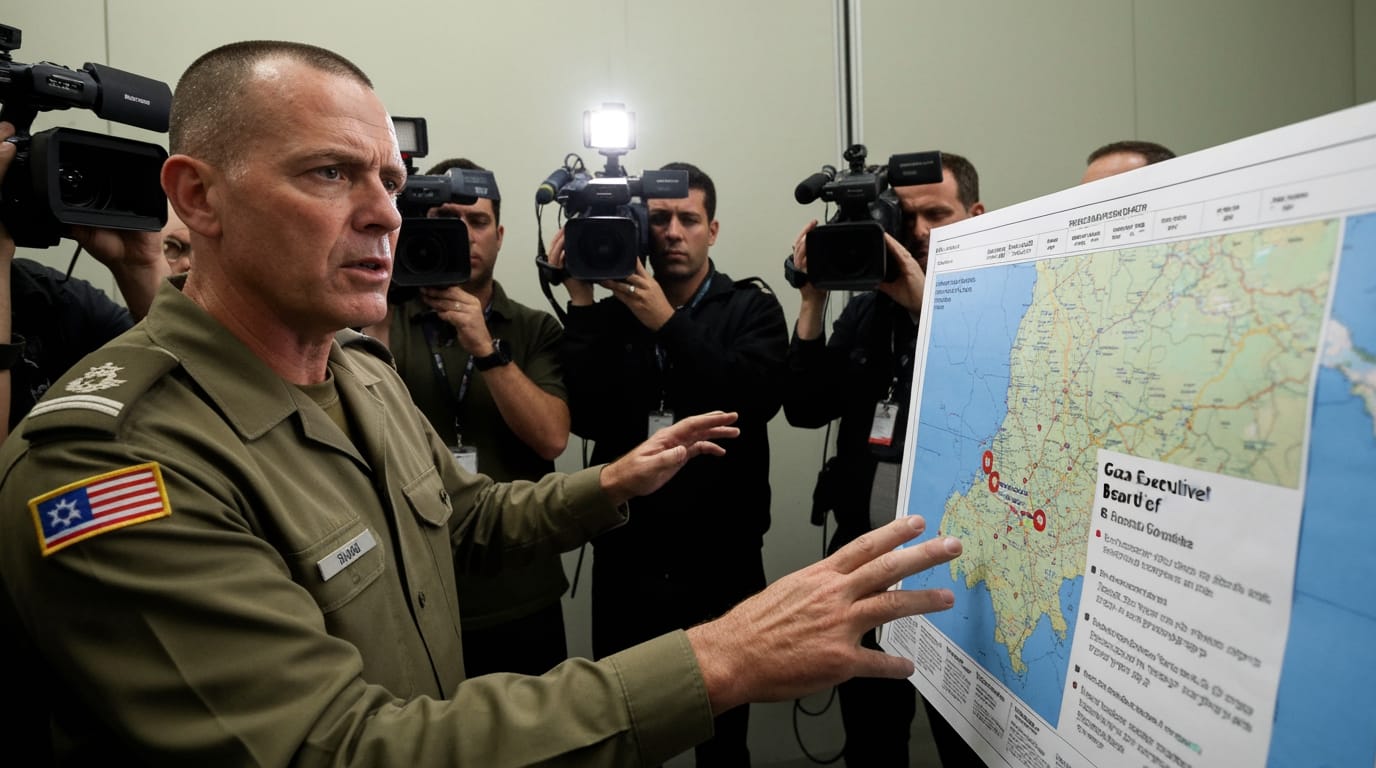
TEL AVIV – A significant diplomatic rift has emerged between the United States and Israel following Jerusalem's strong objections to the proposed composition of a US-backed "Gaza executive board" intended to oversee post-conflict governance in the Palestinian territory. Israel's Prime Minister Benjamin Netanyahu's office explicitly stated that the announced lineup was "not coordinated with Israel and runs contrary to its policy," particularly raising concerns over the inclusion of officials from Turkey and Qatar. This rare public disagreement between the close allies underscores the deep complexities and challenges in establishing a stable future for Gaza.
The contentious announcement came as the US launched the second phase of President Donald Trump's comprehensive peace plan for Gaza, shifting focus from a fragile ceasefire to demilitarization, technocratic governance, and extensive reconstruction efforts. While the overarching "Board of Peace" includes prominent international figures and US officials, it is the subordinate "Gaza executive board" – tasked with the operational specifics of rebuilding Gaza – that has triggered immediate and vocal opposition from the Israeli government, threatening to complicate crucial post-war stabilization efforts.
The Uncoordinated Announcement and Israel's Stance
On Friday, the White House unveiled key members of the Gaza executive board, a body designed to implement the strategic vision of the larger "Board of Peace," which President Trump chairs. The Board of Peace itself comprises a high-profile roster including US Secretary of State Marco Rubio, presidential son-in-law Jared Kushner, US Special Envoy Steve Witkoff, and former British Prime Minister Tony Blair. Invitations were also extended to leaders from Egypt, Turkey, Argentina, and Canada to join this top-tier oversight body.
However, the specific members named to the Gaza executive board — notably Turkish Foreign Minister Hakan Fidan and a Qatari official, identified in some reports as diplomat Ali al-Thawadi — immediately drew Jerusalem's ire. Prime Minister Netanyahu's office released a statement on Saturday, unequivocally asserting that the announcement regarding this executive committee's composition lacked prior coordination with Israel and clashed directly with its policy objectives. In response, Netanyahu instructed Israel's Foreign Affairs Minister to contact Secretary Rubio to address the matter directly. This diplomatic instruction signals the gravity with which Israel views the proposed lineup, elevating it to a direct point of contention between the two nations.
Geopolitical Distrust: The Turkish and Qatari Inclusion
At the core of Israel's objection lies its deep-seated distrust of Turkey and Qatar, nations Israel alleges maintain close ties with Hamas, the militant group that previously governed Gaza. Israeli officials contend that the inclusion of representatives from these countries on a key governance body would effectively "reward Hamas for the October 7th massacre" and could jeopardize Israel's long-term security by inadvertently ensuring the militant group's survival or influence.
This sentiment was echoed by hardline elements within Netanyahu's government. Finance Minister Bezalel Smotrich, a prominent far-right ally, took to social media to declare that "the countries that kept Hamas alive cannot be the ones that replace it." Similarly, National Security Minister Itamar Ben-Gvir backed the Prime Minister's stance and called for the military to be ready to resume hostilities, underscoring the acute security concerns driving Israel's position. For Israel, the governance of post-conflict Gaza must prioritize the complete eradication of Hamas's capabilities and influence, a goal it perceives as undermined by the presence of perceived Hamas sympathizers on the executive board.
The US Vision for Gaza's Future: Phase Two of the Peace Plan
The controversy erupts as the US-backed peace plan for Gaza transitions into its second, more ambitious phase. This phase, outlined by US Special Envoy Steve Witkoff, aims for a comprehensive transformation from ceasefire maintenance to "demilitarization, technocratic governance, and reconstruction." The larger "Board of Peace" is envisioned to provide strategic oversight, mobilize international resources, and ensure accountability throughout Gaza's transition.
Integral to this framework is the "National Committee for the Administration of Gaza" (NCAG), a separate 15-member Palestinian technocratic committee designed to manage Gaza's day-to-day affairs. Headed by Dr. Ali Shaath, a Gaza native and former Palestinian Authority deputy minister, the NCAG is tasked with restoring public services, rebuilding civil institutions, and stabilizing daily life. Furthermore, the plan includes the deployment of an International Stabilization Force (ISF) to provide security and train a new police force, an element crucial for maintaining order and preventing a resurgence of militant activity. The overarching goal is the "full demilitarization" of the Gaza Strip, including the disarmament of all unauthorized personnel, particularly Hamas. The ceasefire, initiated in October of the previous year, has been fragile, marked by sporadic clashes and accusations of violations from both Israeli and Hamas sides, further highlighting the precariousness of the current situation.
Conflicting Visions and Regional Scrutiny
The immediate backlash from Israel, coupled with previous criticisms from Palestinian factions, underscores the formidable challenge of forging a consensus on Gaza's future. While Israel objects to the inclusion of Turkey and Qatar, the Palestinian militant group Islamic Jihad has also expressed dissatisfaction with the composition of the Board of Peace, paradoxically claiming it served Israel's interests and reflected Israeli "specifications." This stark contrast in criticisms illustrates the difficulty of crafting a post-conflict governance model acceptable to all principal parties.
Hamas, for its part, has indicated a willingness to dissolve its governmental structures in Gaza once the new Palestinian committee (NCAG) takes office. However, it has shown no clear intention of dismantling its military wing or security forces, a critical component of the US demilitarization plan and a major security imperative for Israel. This enduring reluctance by Hamas to disarm presents a significant hurdle, as Israel has explicitly stated it might resume military action if the International Stabilization Force fails to compel or persuade Hamas to lay down its weapons. The current diplomatic friction over the executive board's composition highlights the narrow and contested path toward any lasting resolution for Gaza, where distrust runs deep and geopolitical interests frequently diverge.
A Precarious Path Forward for Gaza
The public disagreement between the United States and Israel over the Gaza executive board signals a complex and potentially fraught period for post-conflict planning in the territory. While the US-led peace plan offers a detailed blueprint for demilitarization, technocratic governance, and reconstruction, the immediate challenge lies in navigating the deep-seated political and security concerns of key regional actors, particularly Israel. The inclusion of Turkey and Qatar, viewed by Israel as sympathetic to Hamas, has exposed a significant fault line in the allied relationship and underscored the difficulty of achieving a unified vision for Gaza's future.
The path toward stable and effective governance in Gaza remains highly precarious. The success of any international effort hinges on achieving a delicate balance between security imperatives, humanitarian needs, and political legitimacy, a balance that currently appears elusive amidst conflicting interests and a history of profound distrust. The diplomatic exchange between Washington and Jerusalem will be a critical indicator of how these profound disagreements might be managed, or whether they will further impede the long and arduous journey towards a sustainable peace in the devastated enclave.


