Israel Severs Ties with EU Foreign Policy Chief Kaja Kallas Over Alleged "Apartheid" Remarks
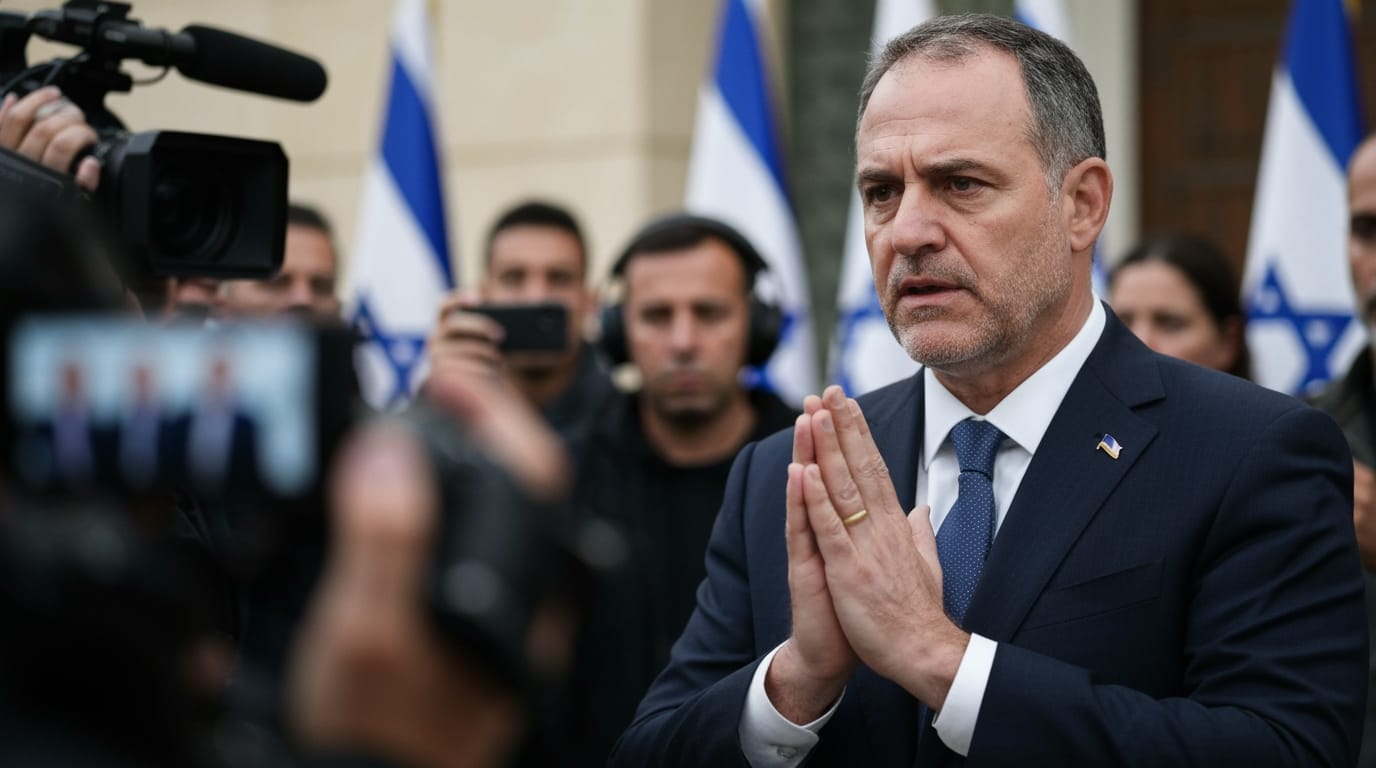
JERUSALEM – In a significant diplomatic escalation, Israel announced Thursday it is severing all ties with European Union Foreign Policy Chief Kaja Kallas, following reports that she compared Israel's policies to South Africa's apartheid regime. The move by Israeli Foreign Minister Gideon Sa'ar marks a deepening rift between Israel and the leadership of the European Union, threatening to further strain already tense relations.
The decision came after an unverified report emerged from the Euractiv news website in early June, claiming Kallas had made the controversial comparison during closed-door conversations with diplomats in Mexico City in late May. According to the report, Kallas referenced an emotional visit to the Apartheid Museum in Johannesburg and drew parallels to the situation in the Israeli territories today. Israeli officials accused Kallas of "obsessiveness and blatant unfairness" in her approach to the Jewish state, demanding a retraction of what they termed a "blood libel."
The Inciting Remarks and Israel's Swift Reaction
The diplomatic firestorm ignited with the publication of an exclusive report on June 12 by Euractiv, which detailed alleged remarks made by Kaja Kallas. The report, citing officials and diplomats present, stated that Kallas, during a high-level summit in Mexico City between May 20-22, drew a comparison between Israel's treatment of Palestinians in Gaza and the West Bank and South Africa's former system of legally enforced racial segregation. She reportedly shared that she was deeply moved by a visit to the Apartheid Museum in Johannesburg, using this experience to frame her comments on the current situation.
These alleged statements quickly drew sharp condemnation from Israel. Foreign Minister Gideon Sa'ar wasted no time in responding, issuing a public statement on Thursday, June 18, announcing the immediate cessation of all contact with Kallas. Sa'ar accused Kallas of acting "obsessively and with blatant unfairness" against Israel. He emphasized that Kallas had neither denied nor clarified the reported remarks, which he described as a "blood libel" against "the only Jewish state that is also the only democracy in the Middle East". The Israeli foreign minister stated unequivocally that the severing of ties would remain in effect until Kallas retracted her alleged comparison. He also expressed appreciation for other European elected representatives who had condemned these "serious things".
Kallas's Role and the EU's Divided Stance
Kaja Kallas, a former Estonian Prime Minister, assumed the influential role of High Representative of the Union for Foreign Affairs and Security Policy and Vice-President of the European Commission in December 2024. In this capacity, she is tasked with leading the EU's foreign policy, aiming for a more strategic and assertive approach on the global stage. While Kallas has been known for her strong stance on issues such as Russia's war against Ukraine, her comments on Israel have consistently positioned her within the more critical wing of EU foreign policy.
The European Union's official position on the Israeli-Palestinian conflict is nuanced. While acknowledging Israel's right to self-defense, the bloc has consistently criticized the scale of Israel's response in Gaza and condemned illegal Israeli settlements in the West Bank as an obstacle to a two-state solution. However, explicitly comparing Israel to an apartheid state is not the official policy of the European Union, a point highlighted by an EU diplomat cited in the Euractiv report. The EU itself remains deeply divided on Israel, with some member states being more supportive of Jerusalem while others lean towards a pro-Palestinian stance. This internal division often sees Kallas navigate a complex landscape, where her public statements can be perceived as aligning with one faction over another.
A History of Strain and Broader Implications
The current diplomatic fallout is not an isolated incident but rather another low point in what has been a period of increasing strain between Israel and the EU's foreign policy leadership. Diplomatic relations have been under considerable pressure since the outbreak of the Gaza war in October 2023 and ongoing concerns regarding Israeli settler violence in the West Bank. Israeli officials noted that while Kallas was initially perceived as relatively balanced compared to some other senior EU figures, her tone has reportedly shifted over the past year, aligning with a broader hardening of positions among many EU leaders toward Israel.
Israel had previously boycotted Kallas's predecessor, Josep Borrell, who also faced criticism from Jerusalem over his positions on the conflict. This pattern underscores a fundamental divergence in perspectives on the Israeli-Palestinian issue that repeatedly surfaces between Jerusalem and Brussels, particularly concerning the EU's top diplomat. The latest development further complicates the prospect of constructive dialogue on critical regional issues.
Kallas's Measured Response and an Unresolved Standoff
In the immediate aftermath of Sa'ar's announcement, Kaja Kallas took to X (formerly Twitter) to respond. Her message, addressed directly to Gideon Sa'ar, reaffirmed the EU's commitment to a "constructive relationship" with Israel and emphasized the importance of dialogue, even when disagreements arise. She reiterated the EU's long-standing position in support of a two-state solution as the only viable path to peace and condemned illegal Israeli settlements in the West Bank, asserting these points as established EU policy.
Crucially, Kallas's public response did not directly address or deny the specific allegations regarding her apartheid comparison. This omission was quickly noted by Sa'ar, who publicly responded that her failure to deny the remarks "speaks for itself" and maintained his decision to sever contact until a clarification or retraction is issued. The standoff leaves a significant diplomatic fissure, with Israel demanding a specific repudiation that Kallas has, thus far, opted not to provide. The episode highlights the delicate balance required in international diplomacy, especially when addressing deeply sensitive and contentious geopolitical issues.


