Israel Strikes Beirut for First Time Since November Ceasefire
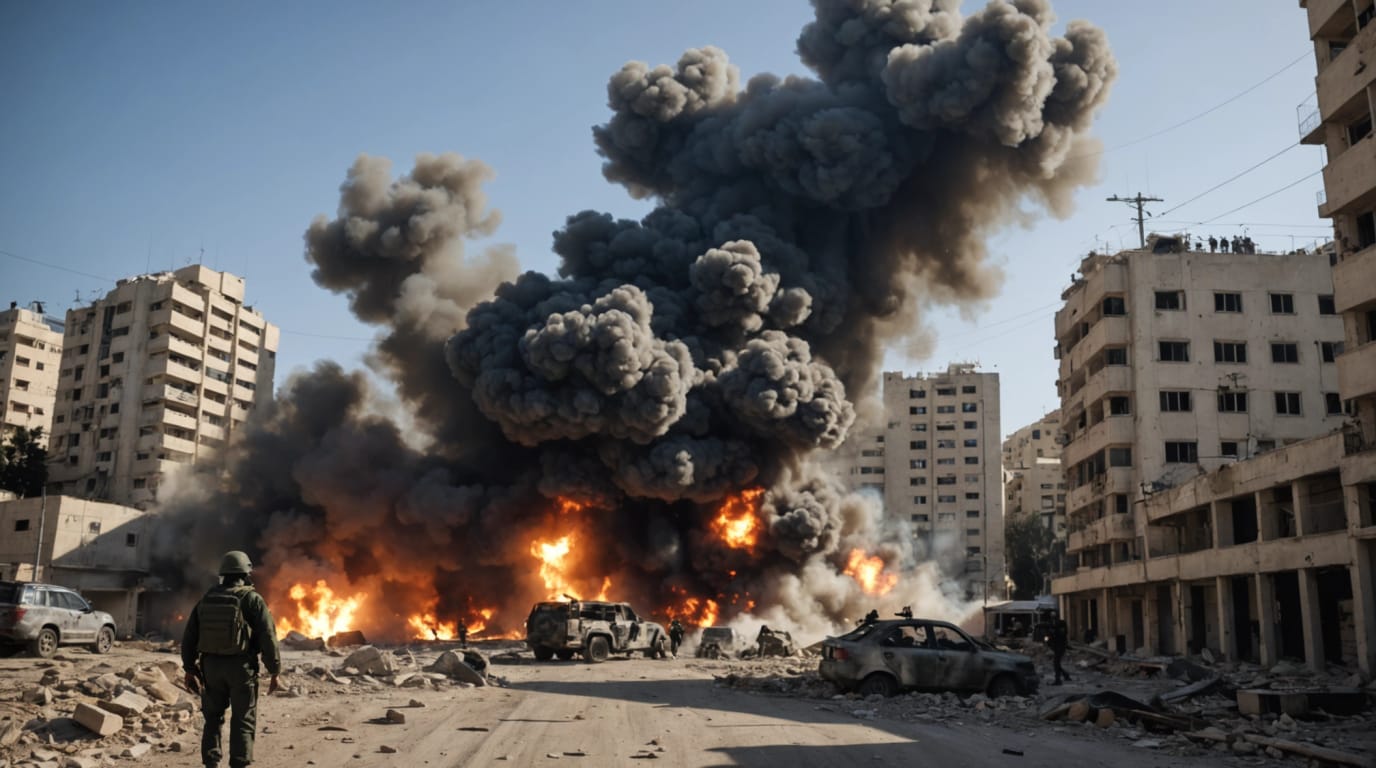
Beirut, Lebanon – In a significant escalation of tensions, Israel launched an attack on Beirut Friday, marking the first strike on the Lebanese capital since a ceasefire agreement with Hezbollah took hold on Nov. 27, 2024. The renewed hostilities threaten to unravel the fragile peace and raise concerns about a wider conflict.
The Israeli military said the strike targeted a Hezbollah drone storage facility in the Dahiyeh neighborhood, a southern suburb of Beirut. Dahiyeh is considered a key stronghold for the militant group. Associated Press reporters in Beirut reported hearing a loud explosion and witnessing smoke rising from the targeted area.
The attack follows a warning from the Israeli army, which urged residents to evacuate parts of the Beirut suburb, vowing retaliation for strikes allegedly launched from Lebanon into northern Israel. Israel's defense minister stated that peace in Beirut would be unattainable if peace was not achieved in Israel's northern communities.
Hezbollah has denied firing rockets into northern Israel and accused Israel of seeking a pretext to continue its attacks on Lebanon. The Lebanese government ordered the closure of all schools and universities in Hadath, a southern suburb of Beirut, in response to the escalating situation. Residents were seen fleeing the area in cars and on foot ahead of the strike.
Targeted Strike and Evacuation Warnings
The Israeli military said it issued advanced warnings to civilians in the targeted area, claiming that Hezbollah uses civilians as human shields. The area struck is a residential and commercial zone with at least two schools in close proximity. Shooting could be heard in some parts of the southern suburbs, further urging people to leave their homes.
The Israel Defense Forces (IDF) said the targeted facility was a Hezbollah drone storage site located in Dahiyeh. Israel has long maintained that Dahiyeh serves as a key Hezbollah stronghold.
Reactions and Condemnation
Lebanon's President, Joseph Aoun, speaking from Paris, condemned the strike as a continuation of Israel's violations of the ceasefire agreement, which was sponsored by France and the U.S. French President Emmanuel Macron echoed this sentiment, calling the Israeli strike "unacceptable" and a "violation of the ceasefire" that would "play into the hands of Hezbollah."
The UN Special Coordinator for Lebanon, Jeanine Hennis-Plasschaert, expressed deep concern over the exchange of fire, stating, "This is a critical period for Lebanon and the wider region."
Ceasefire Violations and Ongoing Tensions
While this was the first strike on Beirut since the November ceasefire, Israel has continued to strike targets in southern Lebanon almost daily. These actions have fueled ongoing tensions and raised questions about the commitment to the ceasefire agreement.
Under the ceasefire deal, Israeli forces were initially supposed to withdraw from all Lebanese territory by late January. Although the deadline was extended to Feb. 18, Israel has maintained its presence in five locations in Lebanon, across from communities in northern Israel.
In the weeks leading up to the Beirut strike, Israeli airstrikes in other parts of Lebanon resulted in casualties. Last week, strikes on several locations killed six people. On Friday, separate Israeli strikes in the southern village of Kfar Tibnit killed three people and wounded 18, including women and children, according to Lebanon's health ministry.
Background of the Conflict
Hezbollah began launching rockets, drones, and missiles into Israel the day after Hamas' Oct. 7, 2023, attack on southern Israel, which ignited the ongoing war in Gaza. The conflict between Israel and Hezbollah escalated into all-out war in September, with Israel conducting waves of airstrikes and killing most of the militant group's senior leaders. The fighting resulted in over 4,000 deaths in Lebanon and displaced approximately 60,000 Israelis living near the border.
Hezbollah, a U.S.- and Israeli-designated terrorist organization, remains a powerful political force in Lebanon.
Implications for the Region
The Israeli strike on Beirut threatens to further destabilize an already volatile region. The renewed hostilities could lead to a wider conflict, drawing in other regional actors and exacerbating existing tensions. The international community is closely monitoring the situation, with calls for restraint and a return to the ceasefire agreement. The long-term consequences of this escalation remain uncertain, but the immediate impact is a heightened sense of fear and uncertainty among the Lebanese population.


