Israeli Airstrikes Target Hezbollah in Eastern Lebanon, Raising Escalation Fears
BEIRUT, Lebanon – Israeli airstrikes struck deep into eastern Lebanon on Friday, February 20, 2026, targeting sites associated with the Iran-backed Hezbollah group in the Baalbek area of the Bekaa Valley. The attacks resulted in at least 10 fatalities and 24 injuries, including several senior Hezbollah commanders, marking one of the deadliest such incidents in the region in recent weeks and significantly heightening concerns about a broader escalation of hostilities.
The strikes represent a significant geographical expansion of Israeli operations, which have largely concentrated on southern Lebanon since the onset of the ongoing conflict. Israel’s military confirmed the operations, stating they targeted Hezbollah command centers allegedly used to plan and execute attacks against Israeli forces and territory. The targeted facilities, according to Israeli defense officials, stored weapons and funds and constituted a violation of the understandings between Israel and Lebanon.
Deadly Blows in the Bekaa Valley
The primary focus of Friday's Israeli operations was the Baalbek area, a traditional stronghold for Hezbollah in the Bekaa Valley, located approximately 100 kilometers from the Israeli border. Lebanese health officials reported at least 10 people killed and 24 wounded in the strikes, with three children among the injured. The Lebanese state news agency, NNA, and security sources later confirmed that senior Hezbollah leader Hussein Yaghi was among those killed. Reports from Saudi media outlet al-Hadath, cited by The Jerusalem Post, also identified two other Hezbollah commanders, Ali Zeid al-Moussawi and Muhammad Ibrahim al-Moussawi, among the deceased in Baalbek. Hezbollah itself subsequently mourned Hussein Mohammad Yaghi, affirming his death "in defense of Lebanon and its people."
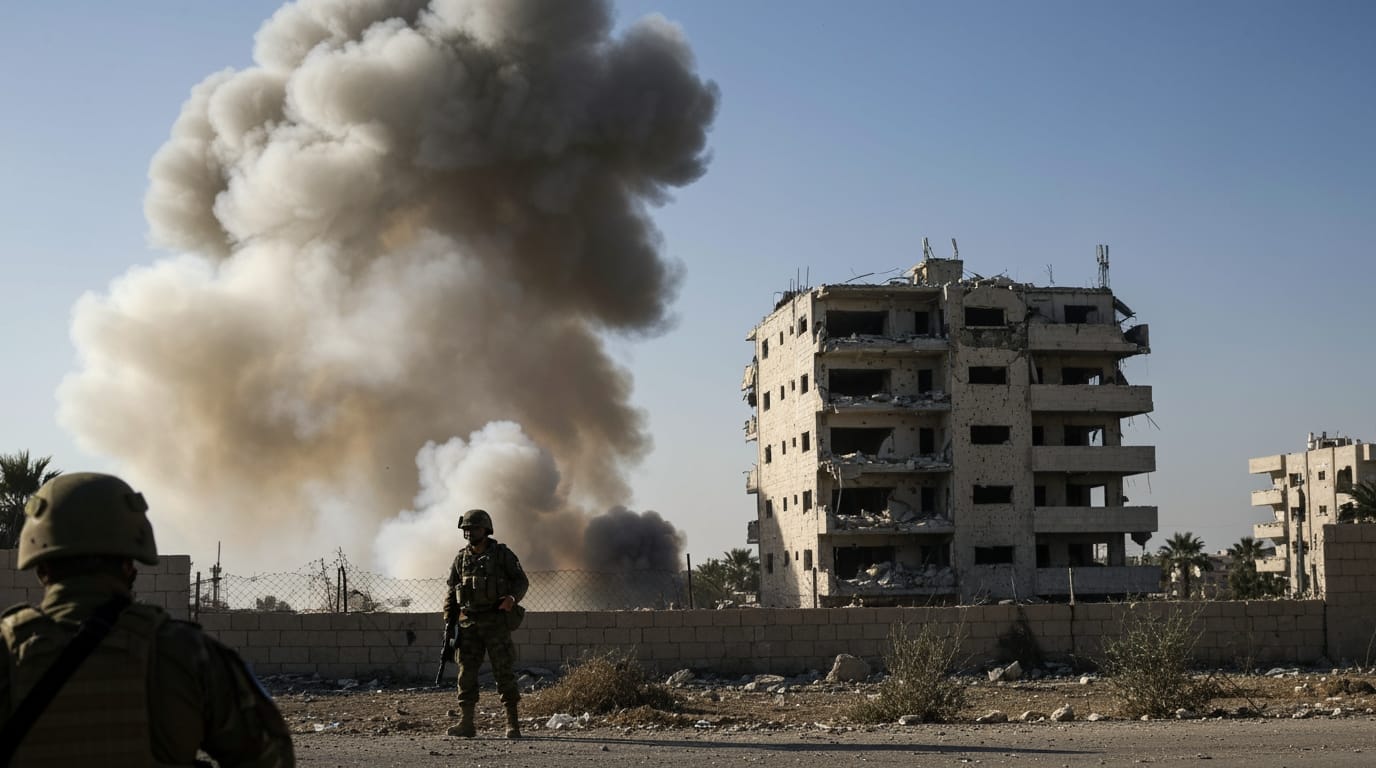
Eyewitness accounts and local television footage depicted scenes of destruction, with one targeted site appearing to be an apartment building. Emergency crews were observed battling fires and sifting through rubble in search of survivors, highlighting the immediate humanitarian impact of the aerial assaults. Lebanese media reported that Israeli warplanes conducted a wave of intense airstrikes across the eastern and western mountain ranges in the Bekaa region, with explosions reverberating throughout the area. Specific locations hit included the Shaara area, a building near the Al-Qard Al-Hassan Foundation on the Riyaq–Baalbek highway, and the plains of Qasr Naba and Tamnine al-Tahta, west of Baalbek.
In a separate but related incident on the same day, an Israeli strike also targeted the Ain al-Hilweh Palestinian refugee camp near Sidon in southern Lebanon, resulting in two additional fatalities. The Israeli military claimed this strike hit a Hamas command center, a designation Hamas disputed, stating the building belonged to a joint security force maintaining camp security.
Context of Ongoing Tensions and Ceasefire Violations
The recent strikes occur within a volatile and protracted conflict between Israel and Hezbollah, which intensified following the October 7, 2023, attacks on Israel by Hamas. Hezbollah commenced firing rockets into northern Israel a day after the Hamas assault, expressing solidarity with Palestinian factions. This initial "low-level conflict" escalated into a full-scale war in September 2024, leading to significant displacement on both sides of the border. Approximately 90,000 people in Lebanon and 60,000 in Israel had been displaced by mid-May 2024 due to the cross-border exchanges.
A U.S.-brokered ceasefire agreement came into effect on November 27, 2024, aiming to de-escalate the situation. However, both sides have repeatedly accused each other of violating its terms. Israel asserts that Hezbollah has been attempting to rebuild its military capabilities and infrastructure, leading to near-daily strikes on what it identifies as militant targets and facilities in Lebanon. The Israeli military states that its recent actions are a response to these persistent ceasefire breaches. Conversely, Lebanese leaders and Hezbollah view Israel's continued military actions, including maintaining a presence in southern Lebanon and its ongoing strikes, as violations of the ceasefire.
The ceasefire understandings reportedly required Hezbollah to withdraw its fighters north of the Litani River, roughly 30 kilometers from the Israeli border, and for the Lebanese armed forces to deploy to monitor the region. However, Israel has retained the right to strike immediate threats in Lebanon.
Broader Regional Implications and Future Prospects
The expansion of Israeli airstrikes into eastern Lebanon, a region historically less affected by direct Israeli military action than the southern border area, carries significant regional implications. It signals Israel's willingness to target Hezbollah assets deeper within Lebanese territory, beyond the immediate border zone, in response to perceived threats and ceasefire violations. This strategy aims to degrade Hezbollah's capabilities and deter future attacks, but it simultaneously increases the risk of a wider conflagration.
The United States and Israeli officials have consistently pressed Lebanese authorities to disarm Hezbollah, while Lebanese leaders have cautioned that broader Israeli military actions could further destabilize a country already grappling with severe political and economic crises. The Lebanese government had committed to disarming Hezbollah last year, and the army had reportedly completed the first phase of its plan for the area near the Israeli border. However, the recent events underscore the fragility of such efforts and the persistent challenges in curbing Hezbollah's influence.
The latest strikes, especially given the casualties among Hezbollah commanders, threaten to unravel the fragile ceasefire and precipitate further retaliatory actions, potentially dragging the region deeper into conflict. The heightened tensions place immense pressure on international mediators to reinforce the ceasefire and prevent a full-scale confrontation between Israel and Hezbollah, which would have devastating consequences for both Lebanon and the broader Middle East. The situation remains highly volatile, with both sides closely monitoring each other's actions, and the international community watching with apprehension as the risk of wider escalation looms.


