Israeli Military Deploys Additional Troops Amid Prolonged Settler Siege on West Bank Homes
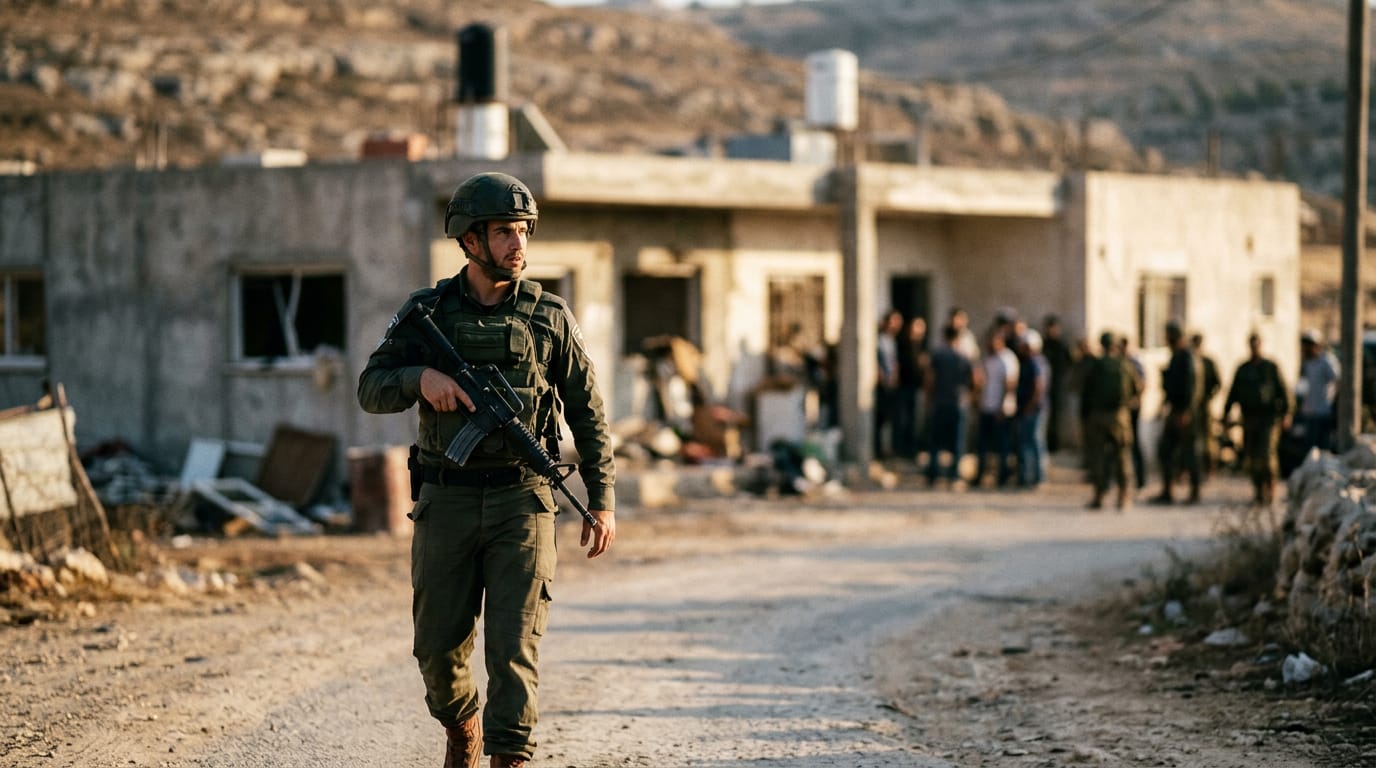
QUSRA, West Bank – The Israeli military has deployed additional forces to the Palestinian village of Qusra, south of Nablus, following a multi-day siege by Jewish settlers on three Palestinian homes. The prolonged blockade, which saw settlers cutting off essential services and preventing residents from leaving, has drawn sharp international condemnation and intensified concerns over escalating tensions in the occupied West Bank. The military's intervention aims to restore order, but the incident underscores the precarious reality faced by Palestinian communities and the persistent challenge of settler violence.
The latest escalation began on Sunday when a group of Jewish settlers established a perimeter around three Palestinian residences in Qusra, effectively trapping the families inside. Settlers reportedly closed off the main road leading to the homes, erected a tent in their front yards, and cut off both electricity and water supplies to the besieged properties. Residents, including Palestinian-American Loui Ridi and his brother Qusai Abu Rida, found themselves isolated, with access to food and medicine severely hampered. Abu Rida reported relying on solar panels for limited electricity as the siege continued for days. Eyewitnesses and residents described settlers throwing stones and attempting to dismantle a nearby stone wall, contributing to an atmosphere of intimidation and fear. The incident is perceived by Palestinians as a deliberate effort to forcibly displace them from their land.
Initially, the Israeli military's response faced scrutiny. Reports indicated that Israeli forces were filmed at the scene earlier in the week, appearing to interact with settlers and leaving without taking action to disperse them or lift the siege. However, as the situation drew more attention, the military issued a statement condemning the settlers' actions as "illegal, reprehensible and unacceptable activity that harms the residents of the areas and disrupts their daily lives". On Wednesday morning, the military declared the area a "closed military zone" and successfully removed the tent that settlers had erected. Despite this, settlers reportedly remained present in other parts of the village, prolonging the families' isolation. By Thursday, the Israeli military confirmed it had sent more troops to Qusra, with some soldiers taking positions inside Palestinian homes. Authorities also reported dismantling "two illegal outposts" near the affected homes and detaining one Israeli settler. While the military stated that soldiers were subsequently instructed to allow families to remain in their homes, some residents, like Abu Rida, indicated they were still unable to return to their original properties or freely leave the area. The military also announced plans to send an additional infantry battalion, with more soldiers on standby, signifying a heightened security presence in the area.
This siege in Qusra is not an isolated event but rather part of a broader, intensifying pattern of settler violence and displacement efforts in the West Bank. Palestinian communities have reported a significant surge in such incidents since the onset of the conflict in Gaza, with violence against Palestinians in the West Bank sharply increasing. Reports suggest that Israeli authorities have intensified efforts to drive Palestinian communities out of their homes and land, particularly in Area C, which constitutes over 60% of the West Bank and is under full Israeli civil and military control. A notable precedent occurred in July, when settlers reportedly occupied a Palestinian family's home in the nearby village of Jalud for over two weeks, leading to the residents fleeing and settlers gaining control of the property. Human rights organizations have consistently documented these trends, noting that settler assaults have intensified significantly over the past seven months. The Israeli military itself acknowledged receiving reports of settlers entering and taking control of Palestinian homes and land in the area.
The international community has voiced strong concern over the events in Qusra and the wider trend of settler violence. The U.S. ambassador to Israel reportedly characterized the siege as a "horrific act of terror," an unusually strong rebuke reflecting the gravity of the situation. This condemnation highlights the growing alarm among international observers regarding the humanitarian impact and the destabilizing effect of such incidents. Under international law, Israeli settlements in the West Bank, where over 500,000 Israelis reside among approximately three million Palestinians, are considered illegal. Israel has occupied the West Bank since 1967, and the continuous expansion of settlements and accompanying settler activities remain a significant point of contention in the Israeli-Palestinian conflict. The blocking of essential supplies and movement restrictions on Palestinian residents in Qusra have prompted calls for humanitarian access and protection for the affected families.
The events in Qusra serve as a stark reminder of the escalating tensions and deeply entrenched complexities in the West Bank. While the Israeli military's increased deployment and actions to dismantle illegal outposts indicate an attempt to assert control and restore order, the persistent presence of settlers and the displacement of Palestinian families underscore the ongoing challenges. The incident highlights the precarious daily existence for Palestinians in areas prone to settler activity and raises critical questions about accountability, protection, and the long-term prospects for stability in the region. As the international community continues to monitor the situation, the immediate focus remains on ensuring the safety and humanitarian needs of the besieged families and addressing the underlying drivers of conflict in the occupied territories.


