Italian Police Launch Major Investigation into Suspected Rail Sabotage Amidst Winter Olympics Opening
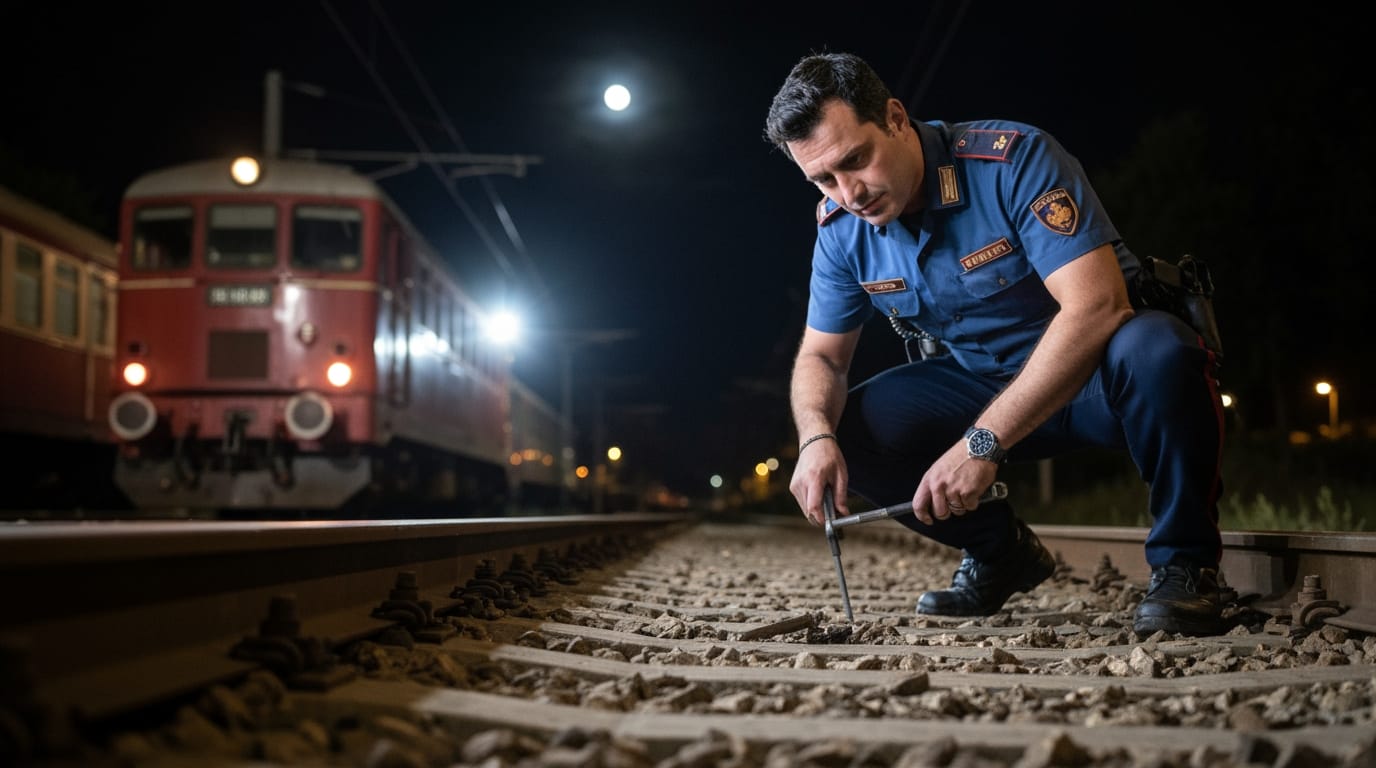
Italian authorities have initiated a comprehensive investigation into what the Transport Ministry has labeled "serious sabotage" targeting the nation's critical rail infrastructure. The incidents, which included damaged electrical systems, a cabin fire, and the discovery of an explosive device, unfolded on Saturday, February 7, 2026, coinciding with the inaugural full day of the Milan-Cortina Winter Olympic Games. The suspected coordinated attacks primarily impacted a vital railway hub near Bologna, causing extensive disruptions to train services across northern Italy.
The timing and nature of the acts have raised significant concerns regarding national security and the smooth execution of the Olympic events, with investigators exploring potential links to anarchist or anti-Olympic movements.
Coordinated Attacks Strike Key Rail Junction
The series of disruptive incidents began early Saturday morning, primarily centered around Bologna, a pivotal junction for Italy's east-to-west rail lines and a crucial link connecting the southern regions to major northern cities like Milan and Venice. State-owned railway operator Ferrovie dello Stato (FS) quickly ruled out technical failure as the cause, pointing instead to external interference.
Police reported at least three distinct incidents. Near the Adriatic city of Pesaro, along the Bologna-Ancona line, a cabin housing a track switch was set ablaze. Several hours later, in Bologna, electrical cables essential for detecting train speeds were discovered severed within a manhole on a high-speed line. Adding to the gravity of the situation, a rudimentary explosive device was located by a track on the Bologna-Padua regular line and subsequently removed.
These acts resulted in significant travel chaos, with delays for high-speed, Intercity, and regional services stretching up to two-and-a-half hours. Bologna's high-speed station experienced a temporary closure, and the affected lines included key routes between Bologna and Milan, Bologna and Venice, and those extending to the Adriatic coast. Numerous travelers experienced disruptions, with train boards in stations like Milan displaying extensive delays.
Olympic Connection Fuels Security Concerns
The incidents' synchronicity with the start of the Milan-Cortina 2026 Winter Olympics has drawn immediate attention from security forces and government officials. Milan is a co-host city for the Games, and Cortina is accessible via rail links from Venice, a city directly connected to the disrupted Bologna hub. The Italian Transport Ministry condemned the attacks, emphasizing their unprecedented seriousness and noting similarities to actions that affected France's TGV network during the Paris 2024 Summer Olympics, which also saw coordinated strikes ahead of the opening ceremony.
Deputy Prime Minister and Minister of Infrastructure and Transport Matteo Salvini remarked on the severity of the situation, characterizing it as an "attack" and an "act of delinquency." Salvini suggested that if the interruption of high-speed train services was a premeditated act on the Olympics' opening day, it indicated malicious intent towards Italy. While no specific group has claimed responsibility for the Italian incidents, the coordinated nature of the attacks points towards an organized effort.
Investigation Intensifies: Tracing Potential Motives
Italian police, including specialist transport police and the anti-terrorist Digos force, are leading the intensive investigation. Authorities are exploring various possibilities for the perpetrators' motives, with "anarchist-antagonistic sabotage" and "anarchic demonstration" being among the primary lines of inquiry.
The context of these acts includes broader societal unrest; thousands protested in Milan on the same day against issues such as soaring housing costs, deepening inequality, and environmental concerns. Some of these protests often include arguments that large-scale events like the Olympics represent a misallocation of public funds, diverting resources from more pressing social needs. While direct links between these protests and the rail sabotage have not been established, investigators will likely examine all potential connections and motivations that could drive such disruptive actions. The goal is to identify those responsible and prevent any further attempts to destabilize public infrastructure, particularly during a period of high national and international visibility.
Safeguarding Future Travel and National Image
The immediate aftermath saw rail traffic slowly returning to normal by Saturday afternoon, as emergency repairs were conducted. However, the impact on public perception and confidence in transportation security remains a key concern. The Transport Ministry asserted that these actions, despite their severity, would not tarnish Italy's global image, an image they believe the Olympic Games will further enhance.
Ensuring the uninterrupted flow of athletes, spectators, and goods is paramount for the success of the Winter Olympics and for maintaining Italy's reputation as a secure and capable host nation. The ongoing police investigation into the sabotage attempts serves as a stark reminder of the persistent threats faced by critical infrastructure and the continuous efforts required to safeguard public services and major international events from malicious intent. The outcome of the probe will not only determine the perpetrators but also inform future security strategies for similar high-profile occasions.


