Italy Moves to Ban Face Veils in Schools and Cap Foreign Enrollment in Classrooms
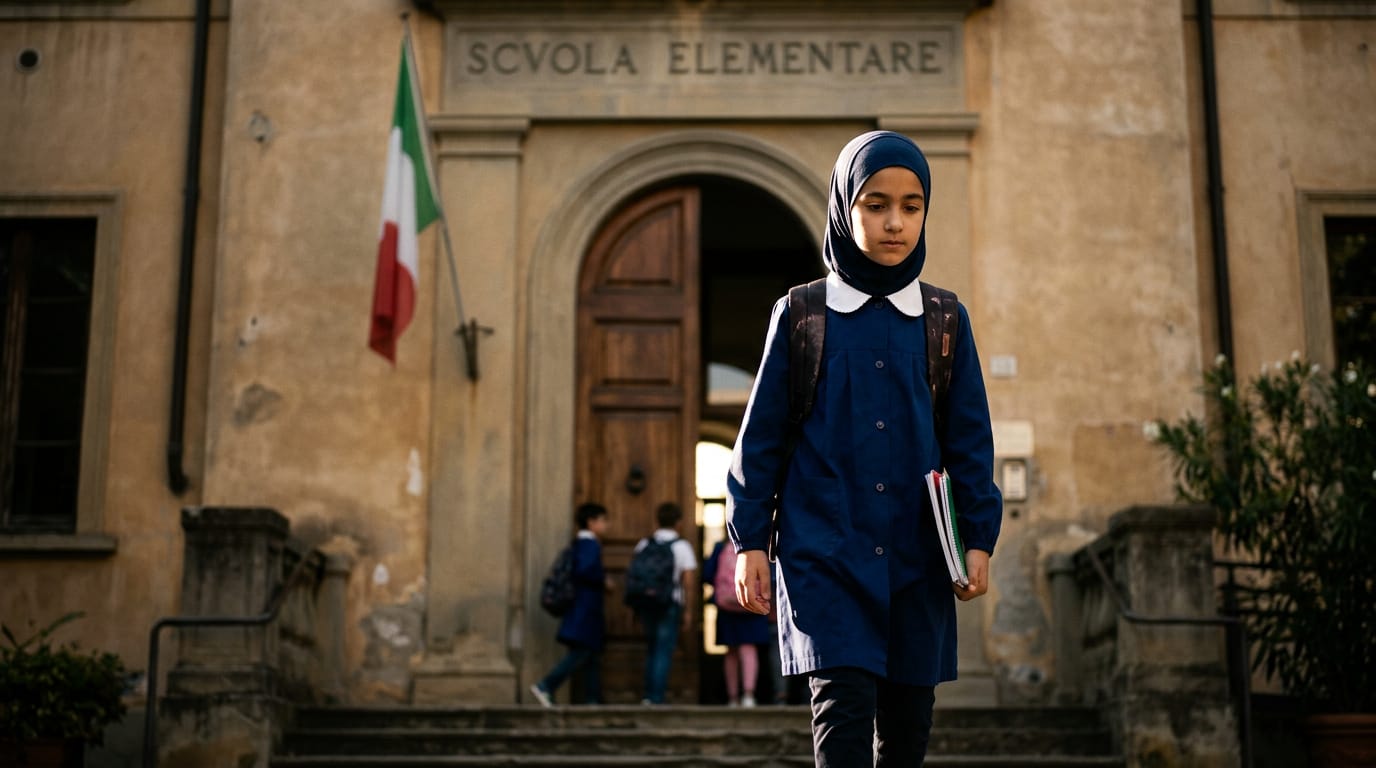
ROME — The Italian government has approved a decree-law prohibiting full-face Islamic veils in educational institutions and establishing a strict 30% ceiling on certain non-Italian students per classroom. The measure, framed by the cabinet as an integration push, has ignited a fierce national debate over secularism, immigration, and educational equity.
The decree directly targets garments such as the burqa and niqab while placing new restrictions on classroom composition based on language proficiency. Violations carry financial penalties of up to 1,000 euros, marking one of the most contentious education overhauls introduced by the conservative administration.
Direct Prohibition on Full-Face Coverings
Under the approved decree, wearing garments that conceal identity during school activities is prohibited across all Italian state and private schools. The rule specifically bans the burqa and the niqab. It does not extend to the hijab or other headscarves that leave the face visible.
Exceptions remain in place for legitimate medical or educational necessities. When violations occur, parents or legal guardians of minor students face fines ranging from 200 to 1,000 euros. Government officials have defended the ban as a necessary standard of public security, gender equality, and classroom communication, arguing that unobstructed facial recognition is fundamental in a shared learning environment.
The policy builds upon Italy’s longstanding public order laws, which historically prohibited the concealment of identity in public spaces without justified cause. The new decree formalizes these boundaries explicitly inside school grounds.
New Language Quotas and Classroom Limits
The second pillar of the legislation limits foreign pupils with poor Italian-language skills to no more than 30% of students in first-year classes. While Italy has had non-binding ministerial guidelines since 2010 suggesting a 30% cap on non-Italian citizens, the new decree codifies the restriction into statutory law with updated criteria focused on linguistic integration.
The rules differentiate requirements across academic levels:
- In primary schools, the 30% limit applies only to non-citizens who were born abroad and who have not attended at least two years of preschool in Italy. Foreign minors born in Italy are exempt from counting toward the ceiling.
- In lower and upper secondary schools, the ceiling covers non-citizens who have completed fewer than three years in the Italian national education system.
To support integration, the decree obligates parents to enroll in state-funded, free Italian language courses if social services and educators determine that their child faces severe integration difficulties. Parents who refuse to attend these required lessons can be fined up to 1,000 euros.
Demographic Shifts Across Italian Classrooms
The initiative addresses major demographic shifts across Italy’s public school network. According to data from the ISMU Foundation and the Ministry of Education, foreign citizens make up roughly 11.6% of the country’s 8 million primary and secondary students, representing about 900,000 enrolled children.
However, distribution across the country remains uneven. In northern industrial districts and larger metropolitan areas, foreign enrollment regularly exceeds 30% to 40% in certain primary school clusters, while rural and southern regions report much lower proportions. Official estimates indicate that around 34,000 classrooms nationwide currently have foreign student populations exceeding 30%, though ministry officials noted that many of those students already speak fluent Italian and will not fall under the new restrictions.
The government maintains that classrooms containing high concentrations of non-Italian speakers without adequate linguistic support hinder overall academic progress. By capping numbers and allocating dedicated language tutoring, authorities argue that newcomers can adapt more quickly to the curriculum without slowing overall classroom instruction.
Political Divisions and Practical Concerns
The announcement has highlighted sharp ideological divisions across Italy’s political spectrum. Supporters argue that setting linguistic limits prevents the formation of segregated school enclaves and protects standard academic achievement for all students. They also contend that banning face veils upholds equal rights and prevents the isolation of young women.
Conversely, opposition parties, educators, and humanitarian organizations express deep misgivings. Critics contend that the measures risk stigmatizing immigrant families and could create bureaucratic barriers to compulsory education. Child advocacy organizations have cautioned that shifting pupils away from neighborhood schools merely to satisfy administrative ratios could isolate vulnerable children, strain family transport arrangements, and create divides between different student groups.
School administrators also point to practical difficulties. Principals in high-density urban areas have questioned how regional education offices will redistribute non-Italian-speaking students if neighborhood schools exceed the 30% cap, especially when surrounding facilities are already at full capacity.
A Complex Road to Implementation
The decree-law takes immediate regulatory effect upon publication, but the classroom quota system is scheduled for phased rollout ahead of upcoming school calendar cycles. Meanwhile, parliamentary debate is anticipated to be intense as lawmakers deliberate whether to confirm or modify the decree's exact stipulations.
As Italy navigates shifting demographics, the new rules underscore the ongoing struggle across European nations to balance immigrant integration, religious freedoms, and national educational standards. Whether these classroom caps and face-veil restrictions succeed in accelerating linguistic fluency—or end up complicating school operations—will depend on how regional authorities manage the logistical realities of local classrooms.


