Japan Bids Farewell to Last Pandas Amid Deepening Diplomatic Freeze with China
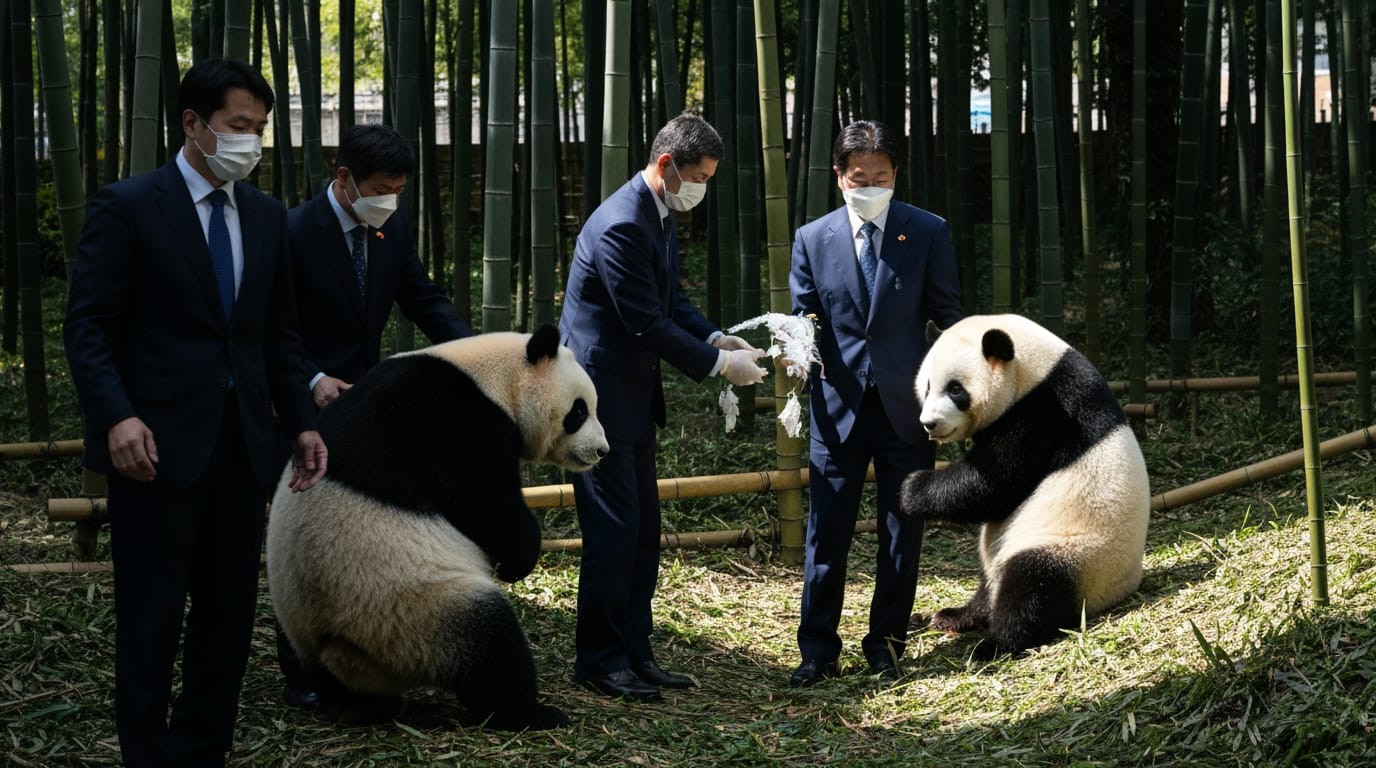
TOKYO – Japan is preparing to send off its last two giant pandas, twins Xiao Xiao and Lei Lei, back to China this week, marking the first time in half a century that the nation will be without the beloved bears. The departure of these iconic symbols of Sino-Japanese friendship comes at a moment of acutely strained diplomatic ties between Tokyo and Beijing, casting a long shadow over the future of "panda diplomacy" and highlighting escalating tensions in the region.
The twin pandas, born at Tokyo's Ueno Zoological Gardens in 2021, made their final public appearance on Sunday, January 25, 2026, before their scheduled flight to China on Tuesday, January 27. Their return concludes a chapter of continuous panda presence in Japan that began in 1972, a tradition that has seen generations of these captivating creatures captivate the Japanese public. While the departure is ostensibly due to the expiration of a breeding and research loan agreement, the current geopolitical climate between the two Asian powers imbues the event with profound symbolic weight.
A Fond Farewell and an Economic Void
The imminent departure of Xiao Xiao, a male, and Lei Lei, a female, has generated a wave of public sentiment across Japan. Thousands of dedicated fans flocked to Ueno Zoo for a last glimpse, enduring long queues and strict one-minute viewing limits to bid farewell to the creatures that have become integral to the city's identity. Souvenir shops and local businesses in the Ueno district, which have long thrived on panda-themed merchandise and tourism, face an uncertain future. Pandas are "a symbol of Ueno, a star," according to Asao Ezure, manager of a local souvenir shop. Economists estimate that the absence of pandas could lead to an annual loss of approximately 20 billion yen ($128 million) in tourism and related sales, underscoring their significant cultural and economic impact.
The twins were born to Shin Shin and Ri Ri, who arrived in Japan in 2011 and returned to China in September 2024. Their older sister, Xiang Xiang, had also made the journey back to China in February 2023. Under the terms of the loan agreements, China retains ownership of all giant pandas, including any cubs born abroad. Although the twins' lease was originally set to expire at the end of February 2026, discussions between Tokyo officials and Chinese authorities resulted in their return being moved forward by about a month.
The Shifting Landscape of Panda Diplomacy
China's practice of "panda diplomacy" dates back decades, utilizing the charismatic bears as powerful tools of soft power and conservation. The arrival of the first pandas in Japan, Kang Kang and Lan Lan, in 1972 was a direct gesture of goodwill following the normalization of diplomatic relations between the two countries. This initial period saw pandas often gifted outright, but by the 1980s, the model transitioned to tightly regulated breeding loans, reframing the initiative as conservation cooperation. Historically, the presence of pandas has been seen as an indicator of favorable bilateral relations, while their absence can signal diplomatic strain.
In recent years, the delicate balance of panda diplomacy appears to be tipping, particularly for Japan. The Tokyo Metropolitan Government reportedly sought new pandas to fill the void, but the prospects for securing replacements currently appear dim, largely due to the increasingly strained relationship between Tokyo and Beijing. Chinese Foreign Ministry spokesperson Guo Jiakun, when asked about sending new pandas to Japan, simply welcomed Japanese visitors to see the pandas in China.
Beneath the Surface: Deepening Diplomatic Fissures
The return of the pandas unfolds against a backdrop of the lowest point in Japan-China relations in years. A significant catalyst for the current diplomatic freeze stems from remarks made by Japanese Prime Minister Sanae Takaichi in November 2025. Takaichi stated in the Japanese parliament that a potential Chinese military action against Taiwan could constitute an "existential crisis for Japan" under existing security legislation, implying a possible Japanese intervention in collective self-defense. These comments drew a furious response from Beijing, which regards Taiwan as an integral part of its territory and views such statements as a grave interference in its internal affairs.
Prime Minister Takaichi has consistently refused to retract her remarks, leading to a series of retaliatory measures from China. These actions include issuing a travel advisory for Chinese citizens visiting Japan, restricting travel and cultural exchanges, and imposing a ban on Japanese seafood imports. Furthermore, Beijing has escalated economic pressure by restricting the export of dual-use items and rare earth materials to Japan, vital components for various industries. Diplomatic friction is also evident in the prolonged vacancy of the Japanese consul general post in Chongqing, awaiting Chinese approval for a replacement.
Beyond the immediate dispute over Taiwan, underlying tensions persist, including ongoing territorial disagreements in the East China Sea, historical grievances stemming from the 19th century, and broader economic and security competition in the Indo-Pacific region.
A Symbolic Departure and an Uncertain Future
The departure of Xiao Xiao and Lei Lei serves as a poignant symbol of the complex and increasingly strained relationship between Japan and China. While the animals themselves are apolitical, their role in "panda diplomacy" has inextricably linked them to the ebb and flow of bilateral relations. Their removal from Japan's zoos, coinciding with a severe downturn in political dialogue and heightened economic and security disputes, suggests that the symbolic olive branch they once represented has, for now, been withdrawn.
As Japan enters an unprecedented period without pandas, the hope for a swift return of these cherished ambassadors of goodwill appears to be contingent on a significant thaw in the icy diplomatic relations between Tokyo and Beijing. Until then, the empty enclosures in Ueno Zoo may serve as a stark reminder of the challenges confronting two of Asia's most influential nations.


