Japan Solidifies Male-Only Imperial Succession Amid Public Calls for Reform
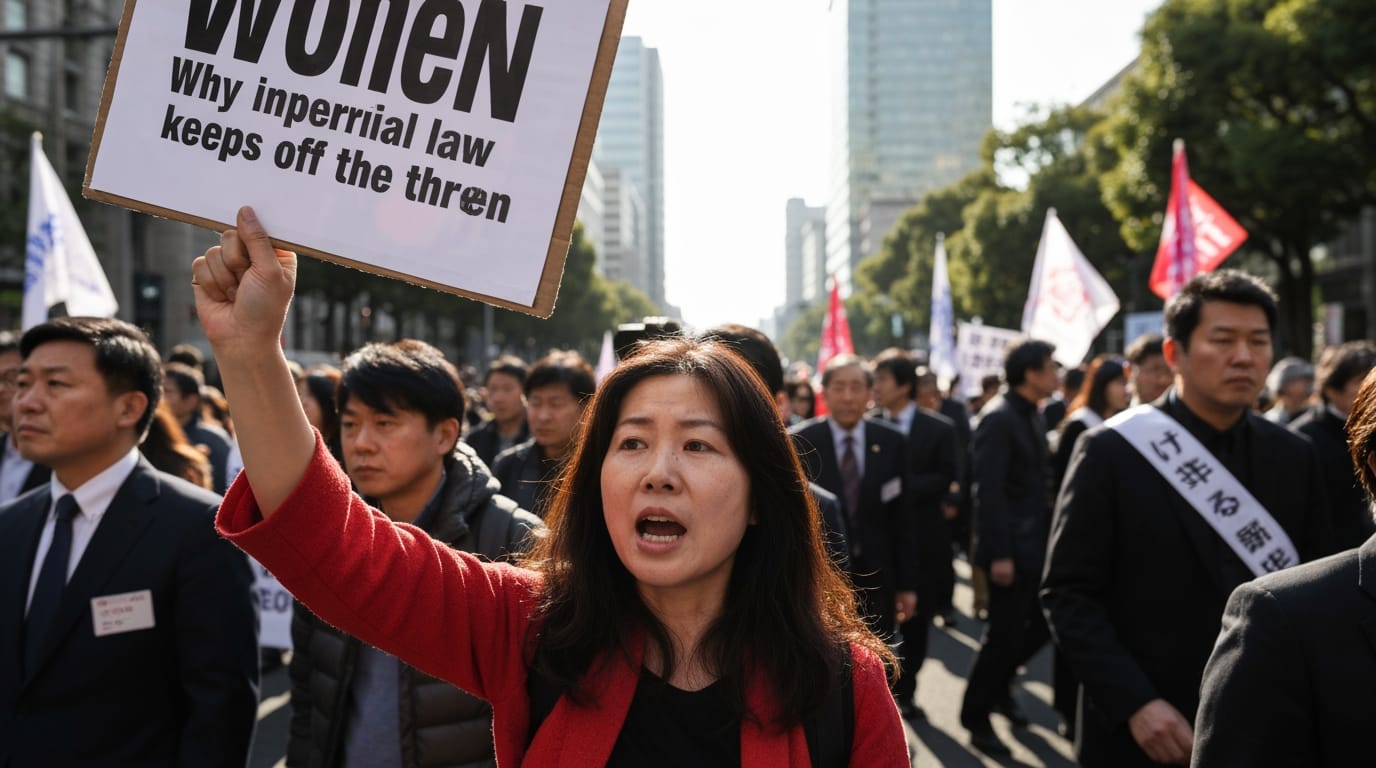
Tokyo, Japan – Japan's parliament has enacted a significant revision to the Imperial House Law, a move designed to stabilize the shrinking imperial family but one that conspicuously reaffirms the controversial male-only succession to the Chrysanthemum Throne. Despite overwhelming public support for allowing women to ascend the throne, the new legislation, passed in July 2026, sidesteps this pressing issue, instead focusing on bolstering the male lineage and preventing further reduction in the number of imperial family members. This legislative decision highlights a deep schism between traditionalist political forces and a modernizing public, raising profound questions about the long-term stability and popular relevance of the world's oldest hereditary monarchy.
The revised Imperial House Law introduces two primary changes. Firstly, it allows male distant relatives, aged 15 and older, from former imperial branch families to be adopted into the imperial family. These families, which lost their royal status after World War II in 1947, are required to be descended through the male line from past emperors. The male descendants of these adopted members would then be eligible for the imperial succession. This provision aims to expand the pool of potential male heirs, a critical concern given the dwindling size of the imperial family. Secondly, the law now permits female imperial family members to retain their royal status even after marrying commoners, a departure from the previous rule that saw them relinquish their titles and leave the imperial household. While this change addresses concerns about the diminishing number of royal women, it does not alter their ineligibility for the throne.
A Legacy of Empresses, A Future in Question
Historically, Japan has seen eight empresses regnant who ruled in their own right, with some even taking the throne twice under different names. These female rulers, such as the renowned Empress Suiko, who reigned from 592 to 628 and played a pivotal role in establishing Buddhism in Japan, demonstrated that women were capable leaders of the imperial institution. However, it is crucial to note that all these historical empresses were descendants of emperors through the male line and often served as temporary custodians of the throne until a suitable male heir was prepared to succeed. The practice of male-only succession was formalized with the Imperial Household Law of 1889, alongside the Meiji Constitution, and has remained a cornerstone of imperial tradition ever since.
Today, the imperial family faces an acute demographic challenge. With only 16 members, merely five of whom are men, and most being elderly, the line of succession is remarkably thin. The current Emperor Naruhito, 66, has only three direct male heirs: his younger brother Crown Prince Fumihito, 60; his nephew Prince Hisahito, 19; and his uncle Prince Hitachi, 90. This makes Prince Hisahito, the Emperor's nephew, the sole younger generation male in the line of succession, placing immense pressure on him to produce a male heir to ensure the continuity of the imperial line. Without a son from Prince Hisahito, the future of the 1,500-year-old dynasty could face an unprecedented crisis.
Public Sentiment Versus Political Imperative
The decision to maintain male-only succession stands in stark contrast to the prevailing public sentiment in Japan. Opinion polls consistently show strong support for allowing female emperors, with figures often ranging between 70% and 90%. A significant portion of this support is attributed to the popularity of Princess Aiko, Emperor Naruhito's 24-year-old only child, whom many Japanese citizens see as a suitable and legitimate successor. However, under the current law, Princess Aiko has no right to the Chrysanthemum Throne.
Conservative political factions, including Prime Minister Sanae Takaichi and her ruling coalition, vehemently argue that adhering to patrilineal succession is vital for preserving the imperial family's historical legitimacy and identity. They emphasize the concept of bansei ikkei, or the unbroken male-line succession, as central to the monarchy's tradition. Critics, including opposition lawmakers and academic experts, contend that the recent legislative revisions fail to address the core issue and are "far removed from public opinion." There is particular concern that the rushed enactment of the bill, which includes provisions for male descendants of adopted members to be eligible for succession, went beyond the scope of initial cross-party discussions, further alienating a public largely in favor of more inclusive reforms.
Implications for the Chrysanthemum Throne's Future
The implications of the newly revised Imperial House Law are far-reaching. While ostensibly aimed at securing the future of the imperial family, the legislation's refusal to consider female succession leaves the monarchy's long-term stability in a precarious position. The reliance on a single male heir from the younger generation places immense and potentially unfair pressure on Prince Hisahito. Experts warn that this "temporary bandage" approach may not provide a sustainable solution to the demographic challenges facing the imperial family.
Furthermore, by disregarding the strong public desire for female emperors, the government risks undermining popular support for the symbolic imperial system itself. The debate also touches upon broader issues of gender equality in Japanese society, with some arguing that the continued exclusion of women from the highest office is anachronistic and inconsistent with the nation's stated goals of achieving a more gender-balanced society. The current approach, prioritizing a specific interpretation of tradition over adaptation to modern societal values and demographic realities, leaves the future of the Chrysanthemum Throne embroiled in an ongoing, unresolved constitutional and social discourse.


